One Hunter vs up to four Survivors
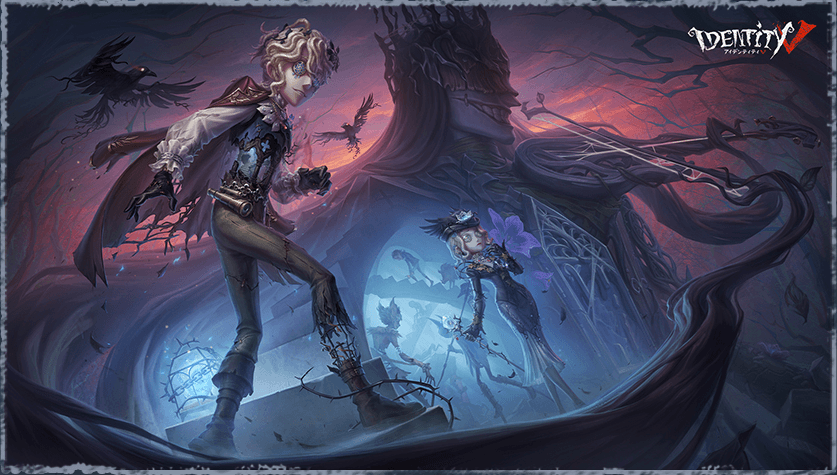
Identity V is built around asymmetric teams: one Hunter against up to four Survivors. Survivors decode cipher machines on the map, open the exit gate, and escape the manor. The Hunter tracks them down and stops the exit. Same map, different objectives and information—the chase-versus-escape split is the heart of every match.
Survivors do more than run
Four Survivors cooperate, but not by stacking on one task. Someone decodes, someone kites the Hunter, someone rescues from the chair—roles shift with the situation. While one player draws pressure, others push cipher progress. Personal survival and moving the whole team toward escape both matter.
Hunter play is tracking and judgment
With four Survivors on the board, tunneling one target forever lets the rest finish machines. Hunters choose who to chase, how long to commit, and when to rotate pressure across the map. Each Hunter kit changes how that pressure is applied, so the same rules play differently by character.
Character kits change strategy
Survivors and Hunters bring unique abilities, so roster choice shapes playstyle. Survivor lineups balance decoding, rescue, and chase endurance. Hunters lean on pursuit, mobility, or control in different ways. Character differences are why identical rules still produce different matches.
Co-op and mind games at once
Survivors share information, rescues, and decode splits. The Hunter's job is to break that coordination. Who is being targeted? Where should the chase happen? Is a rescue worth it now, or should ciphers take priority? Team play and reading the other side run in parallel—it is not pure co-op, and not a one-way game of tag.
Gothic tone and mystery
Beyond the match loop, Identity V leans on gothic visuals, the manor setting, and character backstory you can follow over time. Matches sit inside a larger mystery-and-cast framing, not only a bare arena shooter.
The tendency block above includes tags such as Dystopian Setting (75%), Dark Tone (70%), Story Depth (65%), Existential Themes (55%)—atmosphere and narrative sit alongside the asymmetric match structure on the GPA profile.
How the gameplay structure maps to GPA
The sections above this Deep Dive show tag weights and similar games. Below is how play structure lines up with those tags—not a repeat of every percentage.
Co-op (80%) reflects the four Survivors splitting decode, rescue, and chases. The tag describes survivor-side teamwork more than the 1v4 Hunter role.
Strategy (60%) matches target choice, chase commits, rescue timing, cipher priority, and ability use under pressure.
Horror (70%) and related dark, dystopian tags reflect manor tension and gothic tone during hunts—not just mechanical difficulty.
Graphics (65%) covers readable characters and map presentation during chases and decodes.
In short: role split, reads, character kits, and moment-to-moment calls stack into one asymmetric loop—the same shape the Co-op and Strategy weights on the chart suggest.
For exact scores and similar-game match %, use the GPA sections above this Deep Dive.
Who Identity V tends to suit
- Players who want asymmetric PvP as Survivor, Hunter, or both
- Groups looking for online co-op with clear roles
- Fans of chase pressure and escape tension
- Players who enjoy learning character kits and matchups
- Those who like in-match reads and role handoffs
- Fans of gothic horror-flavored settings
- Players who also care about cast lore and story framing
If ranked PvP stress or post-loss review loops are a poor fit, the format may feel less rewarding.
What makes a match click
The loop is four Survivors cooperating through a one-Hunter chase: someone buys time while others decode; rescues and kites create windows; the Hunter picks targets and decides when to switch pressure. Same 1v4 rules, different characters and calls— that variance is why runs stay fresh.