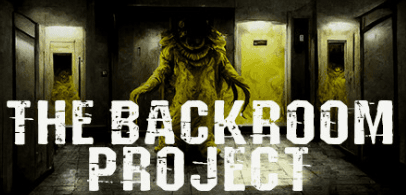
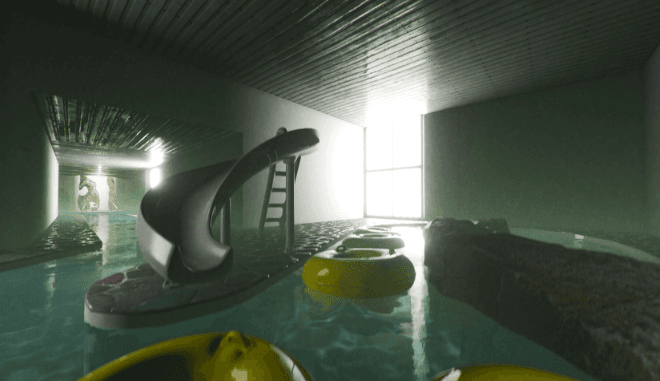
Backrooms: The Project starts in empty corporate offices before descending through level structures rendered in UE5. The photorealistic fluorescent corridors are the highest production value entry in the Backrooms genre. GPA scores it high on Horror and Graphics.
Game Characteristics
Dystopian Setting
85%
Horror
80%
Dark
70%
Graphics
65%
Existential Themes
60%
Puzzle
55%
Player profile fit
Recommended for: Intermediate to Advanced players (A score of 50 or higher indicates a good fit.)
Beginner
45
Intermediate
65 ✓
Advanced
55 ✓
Keywords
旧式オフィス探索Severance的演出手持ちカメラ表現複数階層構成UE5映像
Gameplay Profile Chart
Adjust tag ratios to instantly update similar titles in real time.
Dystopian Setting
85%
Horror
80%
Dark
70%
Graphics
65%
Existential Themes
60%
Puzzle
55%
Top 8 Tags — Radar Chart
CurrentOriginal
Games Similar to Backrooms The Project (474)
GPA match scores are calculated from gameplay profile tags. They are not editorial “feels like this game” ratings.
Scorn drops players into a world of biomechanical architecture drawn directly from H.R. Giger and Zdzisław Beksiński without explanation or dialogue. The environment is the horror. Puzzles use organs and living machinery. Ebb Software's debut. GPA scores it high on Dark World and Existential Themes — the art-horror game where the visual language is the entire experience.
Layers of Fear traps a mad painter in a mansion where every room rearranges itself to reflect his deteriorating mind. Environmental storytelling through portrait fragments and scattered writings builds the backstory. Bloober Team's breakout title. GPA scores it high on Horror and Existential Themes — the first-person psychological horror built entirely around architecture as a mental state.
Amnesia introduced the sanity meter — look at monsters and the player's vision deteriorates and strange sounds intrude. There are no weapons. The castle setting and helplessness design drove the early YouTube Let's Play phenomenon. Frictional Games' 2010 release established the template for first-person horror games for the following decade. GPA scores it high on Horror — the game that rewrote horror design conventions.
I'm on Observation Duty tasks players with monitoring security camera feeds across a house and flagging anomalies before a time limit expires. The series extends to eight entries. GPA scores it high on Horror and Puzzle — the anomaly detection mechanic applied to static surveillance footage rather than first-person traversal.
Visage explores a house with multiple dark histories through its past residents' chapters, with a sanity system that breaks down when players stay in darkness or witness disturbing events. The P.T.-inspired design delivers the full playable horror experience that Silent Hills never completed. GPA scores it high on Horror and Existential Themes — the most complete realization of the atmospheric haunted house genre.
The Complex: Found Footage renders Backrooms Level 0 through VHS processing that makes the yellow fluorescent corridors feel genuinely documented. The found footage framing is structural, not decorative. GPA scores it high on Horror and Graphics — the visual commitment to the format is the primary reason to play.
The Backrooms: Lost Media uses the visual language of discovered media — degraded footage, missing frames — to present its Backrooms content as documentation. GPA scores it high on Horror and Dark World — the found footage analog horror aesthetic runs through the presentation more deliberately than most Backrooms titles.
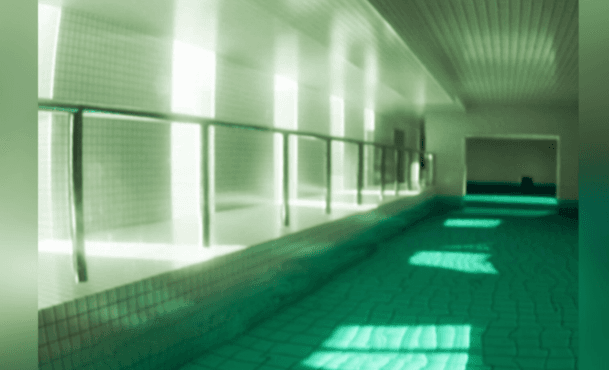
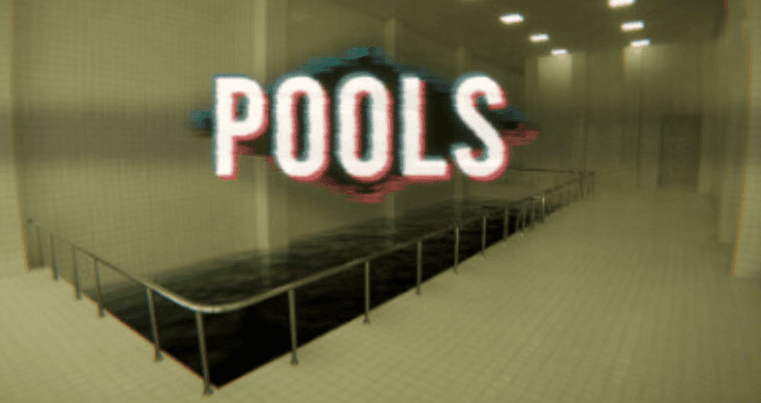
POOLS renders endless indoor swimming facilities through vintage video camera grain, using footsteps and water echoes as the entire audio design. There are no threats and no objectives. GPA scores it high on Dark World and Existential Themes — the experience is defined entirely by absence and atmosphere.
The Convenience Store sends a night shift worker through a closing routine in a store where the customers stopped coming. Chilla's Art's VHS filter and abrupt transitions carry the horror. GPA scores it high on Horror and Dark World — the combination that defines a liminal horror built around institutional spaces.
The Backrooms: Found Footage runs its maze survival on audio cues rather than visual information, reducing the yellow corridor environment to sound as the primary input. GPA scores it high on Horror — the design commits fully to sensory reduction as the horror mechanism.
Dreamcore builds its exploration spaces in UE5, rendering Y2K color palettes and institutional furniture in photorealistic detail. The nostalgia referenced is for spaces that never quite existed. GPA scores it high on Dark World and Graphics — a positioning that describes an aesthetic experience built around the uncanny rather than threat.
Confabulation photographs changes in a home where the player's memory of the layout is unreliable. The camera serves as both tool and metaphor for the game's central theme. GPA scores it high on Horror and Puzzle — the memory-photograph mechanic sits between Exit 8's anomaly logic and Observation Duty's surveillance framing.
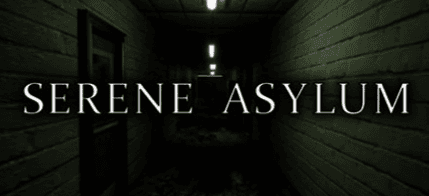
Serene Asylum wakes players on a surgical table in an asylum with a history that surfaces through documents. The infinite loop structure traps the space in repetition. GPA scores it high on Horror and Puzzle — a free-to-play horror that applies the loop mechanic to institutional architecture.
Generalized Anxiety Disorder renders mental health states as physical environments, making the architecture of each space correspond to an internal condition. The game's title is its central design statement. GPA scores it high on Existential Themes and Dark World — the combination that identifies a game built around psychological experience rather than gameplay systems.
LSD: Dream Emulator is available through emulation. The 1998 PlayStation title was built from ten years of dream diary entries, generating environments through a day counter system that produces different results over time. GPA scores it at the top for Existential Themes — the game predates the liminal space concept by twenty years while embodying it completely.
SEPTEMBER 1999 runs for five and a half minutes. A VHS recording moves through a house with something wrong. Free to play. GPA scores it high on Horror and Dark World — the entire game is a tone delivery system at minimum viable length.
The Backrooms 1998 processes its found footage through VHS degradation artifacts that make the yellow corridor footage feel like a discovered recording. The 1998 timestamp commits to the analog horror aesthetic. GPA scores it high on Horror and Dark World — the found footage framing is the design, not decoration.
Interior Worlds sends players through unlit rooms with only a flash camera for visibility. Each press of the shutter illuminates the space for a fraction of a second. GPA scores it high on Horror and Dark World — the mechanic makes darkness the primary material.
Anemoiapolis recreates malls, pools, and transitional spaces with the visual fidelity to make the emptiness feel accurate rather than digital. The term 'anemoiapolis' describes the game's central emotion: nostalgia for places you have never been. GPA scores it high on Dark World — the combination that places it at the purest end of the liminal space genre.
Blair Witch follows Ellis, a former police officer, into the Black Hills Forest with his dog Bullet in an official sequel to the 1999 film. Bullet functions as both companion and tool. Bloober Team's licensed horror. GPA scores it high on Horror and Dark World — the licensed horror game where the canine companion mechanic genuinely changes the emotional texture of the fear experience.
Backrooms: The Project(バックルームズ・ザ・プロジェクト) leads with its ファウンドフッテージホラー identity, anchored by the core feel of "Backrooms: The Project starts in empty corporate offices before descending through level structures rendered in UE5." The headline profile reads Dystopian Setting 85% / Horror 80% / Dark 70%, making it a strong pick for fans of Dystopian Setting and Horror. Balanced to appeal to a broad range of players.
▸Characteristics & Analysis
Our editorial team scored "Backrooms: The Project(バックルームズ・ザ・プロジェクト)" by using its feel of 旧式オフィス探索, Severance的演出, and 手持ちカメラ表現 as the primary lens, weighting Dystopian Setting and Horror most heavily. Top similar titles include "スコーン(Scorn)", "レイヤーズ・オブ・フィアー(Layers of Fear)", "アムネジア:ザ・ダーク・ディセント(Amnesia: The Dark Descent)".
Backrooms: The Project Analysis — When Empty Offices Become the Horror
Overview
“Backrooms: The Project” is a first-person horror adventure built around one of the defining ideas of liminal-space horror: familiar places become unsettling when the people and purpose normally associated with them disappear.
Rather than focusing solely on monsters and jump scares, the game places the player inside abandoned offices, endless corridors, empty halls, and other seemingly functional spaces that have somehow been stripped of human presence.
The result is a particular kind of unease. Nothing necessarily looks impossible at first glance. It simply feels wrong.
The Horror of the Empty Workplace
GPA gives the game an 85% score for its Decadent World, making it the strongest element of its profile.
That makes sense because “Backrooms: The Project” is less interested in conventional haunted-house imagery than in transforming ordinary architecture into something unsettling.
An office normally exists for a clear purpose. Desks, lights, corridors, and rooms all imply human activity. Remove the people, however, and the same environment becomes strangely meaningless.
That contrast is at the heart of the game's atmosphere.
The player isn't simply exploring a ruined building. They are exploring a place that looks as though it should still be functioning, yet has no obvious reason to exist anymore.
This gives the game a distinctly “business liminal” identity.
Found-Footage Presentation
The game's visual presentation is another major part of its horror.
“Backrooms: The Project” uses a found-footage aesthetic inspired by handheld camcorders from the 1980s and 1990s. Camera movement, depth of field, exposure, and other visual effects are designed to make the player feel as though they are recording the environment rather than simply controlling a character inside it. (Steam Store)
That approach is particularly effective for a game built around empty spaces.
Perfectly clean modern visuals can make an environment feel artificial. The imperfections of a camcorder image, on the other hand, leave room for uncertainty.
Is that movement in the distance?
Was that something in the corner of the frame?
Did the room actually look like that a moment ago?
The less information the image gives the player, the more their imagination fills in the gaps.
Exploration as a Horror Mechanic
The game also incorporates exploration and puzzle elements. Players search the environment for items and clues that can help them find a way out. (Steam Store)
GPA gives the game a 55% Puzzle score, placing this aspect somewhere in the middle of its overall profile.
That balance is important.
Exploration forces the player to pay attention to the environment. Instead of simply running toward the next objective, the player has to look around and question the space itself.
Where is the item I need?
Did I miss something in the previous room?
Was that corridor always there?
The act of searching therefore becomes part of the horror.
The environment isn't just the backdrop for the gameplay. It becomes the thing the player is constantly trying to understand.
Liminal Space and Existential Unease
GPA rates the game's Existential Theme at 60%.
That score reflects another important aspect of the Backrooms concept.
The fear doesn't necessarily come from knowing exactly what is happening. It comes from being unable to establish where you are, why the place exists, or whether there is even a meaningful destination ahead.
An office without workers.
A corridor without a destination.
A facility without a clear function.
These contradictions create an unsettling sense of purposelessness.
The Backrooms concept works particularly well because it removes the familiar relationship between a place and its purpose. A hallway should lead somewhere. An office should contain people. A building should have a reason to exist.
Once those assumptions disappear, even an ordinary room can become threatening.
GPA Analysis
Title tendency chart (Backrooms: The Project)
Decadent Worldview ◀
85%
Horror ◀
80%
Dark ◀
70%
Graphics
65%
Existential Themes
60%
Puzzle
55%
* Based on GPA sub-tag scores. Empty offices and found-footage presentation define the run.
The combination of 85% Decadent World and 80% Horror is probably the clearest way to understand the game's identity.
Its strongest weapon isn't necessarily the creature hiding around the next corner. It's the environment itself.
The empty office.
The fluorescent lights.
The endless corridors.
The feeling that something should be here, but isn't.
For players who enjoy liminal horror and the uneasy feeling of being trapped somewhere that looks familiar but fundamentally isn't, “Backrooms: The Project” offers a particularly focused take on the Backrooms formula.