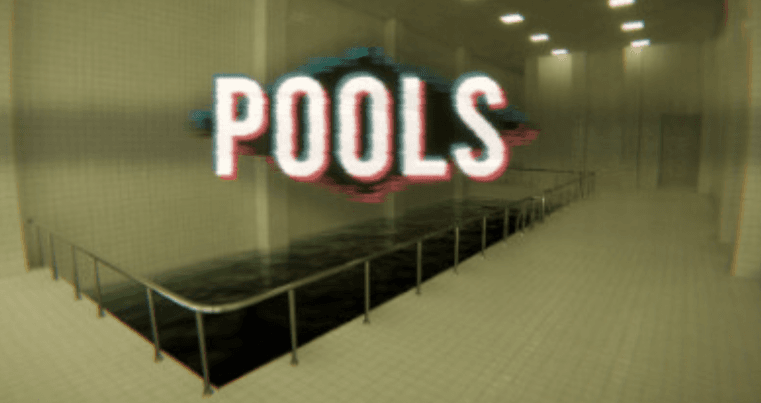
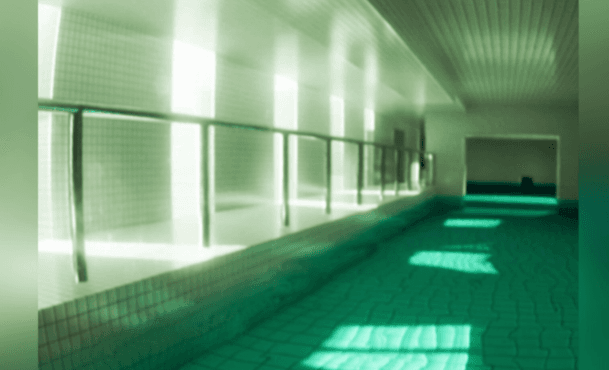
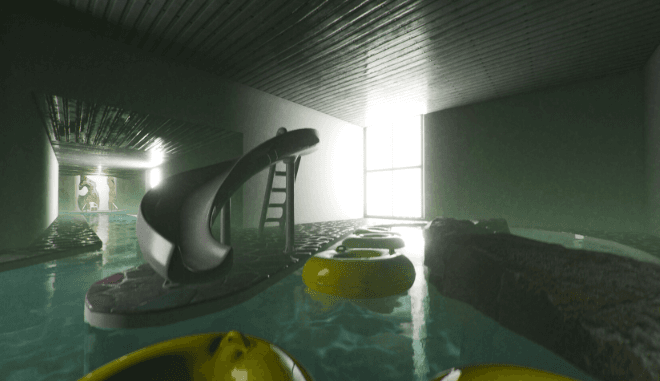
POOLS renders endless indoor swimming facilities through vintage video camera grain, using footsteps and water echoes as the entire audio design. There are no threats and no objectives. GPA scores it high on Dark World and Existential Themes — the experience is defined entirely by absence and atmosphere.
Game Characteristics
Dystopian Setting
90%
Graphics
75%
Horror
75%
Existential Themes
70%
Dark
70%
Player profile fit
Recommended for: Beginner to Advanced players (A score of 50 or higher indicates a good fit.)
The Complex: Found Footage renders Backrooms Level 0 through VHS processing that makes the yellow fluorescent corridors feel genuinely documented. The found footage framing is structural, not decorative. GPA scores it high on Horror and Graphics — the visual commitment to the format is the primary reason to play.
The Backrooms: Lost Media uses the visual language of discovered media — degraded footage, missing frames — to present its Backrooms content as documentation. GPA scores it high on Horror and Dark World — the found footage analog horror aesthetic runs through the presentation more deliberately than most Backrooms titles.
Dreamcore builds its exploration spaces in UE5, rendering Y2K color palettes and institutional furniture in photorealistic detail. The nostalgia referenced is for spaces that never quite existed. GPA scores it high on Dark World and Graphics — a positioning that describes an aesthetic experience built around the uncanny rather than threat.
The Backrooms: Found Footage runs its maze survival on audio cues rather than visual information, reducing the yellow corridor environment to sound as the primary input. GPA scores it high on Horror — the design commits fully to sensory reduction as the horror mechanism.
LSD: Dream Emulator is available through emulation. The 1998 PlayStation title was built from ten years of dream diary entries, generating environments through a day counter system that produces different results over time. GPA scores it at the top for Existential Themes — the game predates the liminal space concept by twenty years while embodying it completely.
The Convenience Store sends a night shift worker through a closing routine in a store where the customers stopped coming. Chilla's Art's VHS filter and abrupt transitions carry the horror. GPA scores it high on Horror and Dark World — the combination that defines a liminal horror built around institutional spaces.
The Backrooms 1998 processes its found footage through VHS degradation artifacts that make the yellow corridor footage feel like a discovered recording. The 1998 timestamp commits to the analog horror aesthetic. GPA scores it high on Horror and Dark World — the found footage framing is the design, not decoration.
Anemoiapolis recreates malls, pools, and transitional spaces with the visual fidelity to make the emptiness feel accurate rather than digital. The term 'anemoiapolis' describes the game's central emotion: nostalgia for places you have never been. GPA scores it high on Dark World — the combination that places it at the purest end of the liminal space genre.
Interior Worlds sends players through unlit rooms with only a flash camera for visibility. Each press of the shutter illuminates the space for a fraction of a second. GPA scores it high on Horror and Dark World — the mechanic makes darkness the primary material.
Generalized Anxiety Disorder renders mental health states as physical environments, making the architecture of each space correspond to an internal condition. The game's title is its central design statement. GPA scores it high on Existential Themes and Dark World — the combination that identifies a game built around psychological experience rather than gameplay systems.
SEPTEMBER 1999 runs for five and a half minutes. A VHS recording moves through a house with something wrong. Free to play. GPA scores it high on Horror and Dark World — the entire game is a tone delivery system at minimum viable length.
Infinitum loops players through suburban residential environments where nothing happens — until the repetition itself becomes the horror. The flag collection that enables escape requires attention to what hasn't changed. GPA scores it high on Dark World and Puzzle — a game where boredom is used as a controlled design element.
Backrooms: The Project starts in empty corporate offices before descending through level structures rendered in UE5. The photorealistic fluorescent corridors are the highest production value entry in the Backrooms genre. GPA scores it high on Horror and Graphics.
Scorn drops players into a world of biomechanical architecture drawn directly from H.R. Giger and Zdzisław Beksiński without explanation or dialogue. The environment is the horror. Puzzles use organs and living machinery. Ebb Software's debut. GPA scores it high on Dark World and Existential Themes — the art-horror game where the visual language is the entire experience.
Layers of Fear traps a mad painter in a mansion where every room rearranges itself to reflect his deteriorating mind. Environmental storytelling through portrait fragments and scattered writings builds the backstory. Bloober Team's breakout title. GPA scores it high on Horror and Existential Themes — the first-person psychological horror built entirely around architecture as a mental state.
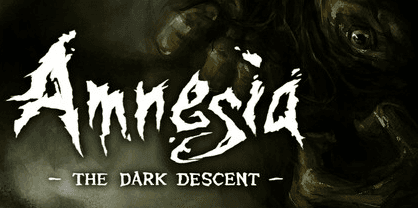
Amnesia introduced the sanity meter — look at monsters and the player's vision deteriorates and strange sounds intrude. There are no weapons. The castle setting and helplessness design drove the early YouTube Let's Play phenomenon. Frictional Games' 2010 release established the template for first-person horror games for the following decade. GPA scores it high on Horror — the game that rewrote horror design conventions.
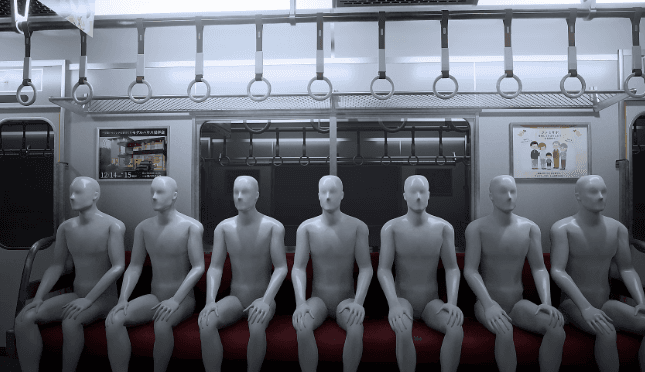
The Platform 8 traps players on a commuter train that never arrives, applying the anomaly detection mechanic from Exit 8 to a moving environment. GPA scores it high on Horror and Puzzle.
Shinkansen 0 uses the Shinkansen platform and car interior as its liminal setting, alternating between the empty station and the moving train. The anomaly detection runs across both environments. GPA scores it high on Horror and Puzzle — the combination that places it in the Exit 8 lineage of walking horror designed around observational attention.
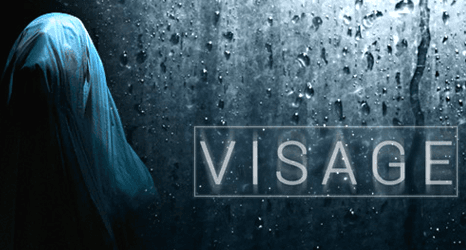
Visage explores a house with multiple dark histories through its past residents' chapters, with a sanity system that breaks down when players stay in darkness or witness disturbing events. The P.T.-inspired design delivers the full playable horror experience that Silent Hills never completed. GPA scores it high on Horror and Existential Themes — the most complete realization of the atmospheric haunted house genre.
Blair Witch follows Ellis, a former police officer, into the Black Hills Forest with his dog Bullet in an official sequel to the 1999 film. Bullet functions as both companion and tool. Bloober Team's licensed horror. GPA scores it high on Horror and Dark World — the licensed horror game where the canine companion mechanic genuinely changes the emotional texture of the fear experience.
POOLS(プールズ) leads with its Walking Simulator identity, anchored by the core feel of "POOLS renders endless indoor swimming facilities through vintage video camera grain, using footsteps and water echoes …." The headline profile reads Dystopian Setting 90% / Graphics 75% / Horror 75%, making it a strong pick for fans of Dystopian Setting and Graphics. Accessible enough for newcomers while offering enough depth to satisfy veterans.
▸Characteristics & Analysis
Our editorial team scored "POOLS(プールズ)" by using its feel of liminal spaces, プールルーム, and 無音恐怖 as the primary lens, weighting Dystopian Setting and Graphics most heavily. Top similar titles include "The Complex: Found Footage(ザ・コンプレックス)", "The Backrooms: Lost Media(ロストメディア)", "Dreamcore(ドリームコア)".
Review — POOLS: walking an empty pool facility forever
What kind of game is it — a walking sim through liminal pools
POOLS is a walking simulator through a deserted mega-pool complex. From Tensori, it adapts liminal-space aesthetics into play: no combat, no progression systems — just move forward through corridors and tiled halls, watching scenery and listening.
Flooded lanes, sterile walls, long hallways, dim light. Familiar yet impossible — that uncanny overlap is the hook. Steam markets it around explore, observe, and listen; the space itself is the game.
Gameplay analysis — nothing happening is the scare
POOLS withholds information. Typical horror telegraphs danger with monsters, stingers, or score cues. Here, empty time does the work.
Distant water sounds. Footsteps in vacant rooms. Corridors with no visible end. The sense that something might wait around the corner — even when nothing does. Steam reviews often describe knowing there are no enemies yet scaring yourself anyway.
Goals and controls stay minimal. Players wanting combat puzzles or story beats may bounce. Critics split between praising audiovisual immersion and noting thin interactivity. Our 30 liminal space horror picks list places it in type ① pure experience — sound and architecture only.
POOLS through GPA scores
Title tendency chart (POOLS)
Decadent World ◀
90%
Graphics ◀
75%
Horror ◀
75%
Existential Themes
70%
Dark Tone
70%
* Based on GPA sub-tag scores. Action is near zero — space, sound, and silence carry the run.
Decadent World 90% leads — worldview comes from emptiness, not cast or plot. Graphics 75% and Horror 75% mark the tiled facility and non-jumpscare dread. Existential Themes and Dark Tone at 70% echo “why am I here?” and the low-lit hush.
Reviewer's take
What surprised me is how much game lives in “nothing.” You only walk pools, yet orientation slips. Spaces that looked clean at first turn unsettling the longer you stay.
Sound does the heavy lifting — no bombastic score, just water, steps, and reverb until you start policing the room yourself. With nothing in sight, ears take over. If you browse liminal photos or Backrooms clips, being inside that mood beats watching it.
Not universal horror fare: no fights, riddles, or plot engine — the point is lingering in a wrong place. Different from anomaly hunts like The Exit 8; best for quiet spatial dread.
Summary — before you play
POOLS translates internet liminal aesthetics into something you can walk. It strips systems down so architecture, audio, and silence manufacture anxiety. Best if you like “scary because nothing happens,” empty places, or Backrooms mood — less if you need clear objectives or classic gameplay loops.
Q. How long?
Six chapters, roughly 20–30 minutes total — a compact intro to liminal horror. Replay runs shrink once you remember the layout.
Q. Who is it for?
Players who want to be dropped into a strange space more than beat or decode one. Skip if you need combat, puzzles, or guided story. GPA Decadent World 90% names the appeal plainly.