The Exit 8 gives players a looping underground passageway and one instruction: exit at 8 if nothing is wrong, turn back if something is. The anomaly detection loop runs on observation and iteration. GPA scores it at the top for Puzzle among walking horror titles — the mechanic distilled the genre to its most precise form.
Game Characteristics
Horror
80%
Logic
80%
Turn-Based
60%
Existential Themes
55%
Dystopian Setting
40%
Dark
40%
High Difficulty
30%
Graphics
30%
Action
20%
Player profile fit
Recommended for: Beginner to Advanced players (A score of 50 or higher indicates a good fit.)
The Stigmatized Property drops players into a Tokyo apartment building with a history of fatal incidents. Chilla's Art's signature found footage aesthetic and abrupt pacing create tension through restraint rather than spectacle. GPA scores it high on Horror and Dark World — the combination that defines the Japanese indie horror genre's most prolific studio.
Tag Similarity
Horror
80%
Logic
75%
Turn-Based
0%
Existential Themes
55%
Dystopian Setting
40%
Dark
40%
High Difficulty
30%
Graphics
25%
Chart tags: Horror / Logic / Turn-Based / Existential Themes / Dystopian Setting / Dark / High Difficulty / Graphics
Shinkansen 0 uses the Shinkansen platform and car interior as its liminal setting, alternating between the empty station and the moving train. The anomaly detection runs across both environments. GPA scores it high on Horror and Puzzle — the combination that places it in the Exit 8 lineage of walking horror designed around observational attention.
Tag Similarity
Horror
80%
Logic
80%
Turn-Based
0%
Existential Themes
60%
Dystopian Setting
75%
Dark
65%
High Difficulty
0%
Graphics
70%
Chart tags: Horror / Logic / Turn-Based / Existential Themes / Dystopian Setting / Dark / High Difficulty / Graphics
The Platform 8 traps players on a commuter train that never arrives, applying the anomaly detection mechanic from Exit 8 to a moving environment. GPA scores it high on Horror and Puzzle.
Tag Similarity
Horror
80%
Logic
80%
Turn-Based
0%
Existential Themes
65%
Dystopian Setting
80%
Dark
70%
High Difficulty
0%
Graphics
70%
Chart tags: Horror / Logic / Turn-Based / Existential Themes / Dystopian Setting / Dark / High Difficulty / Graphics
Interior Worlds sends players through unlit rooms with only a flash camera for visibility. Each press of the shutter illuminates the space for a fraction of a second. GPA scores it high on Horror and Dark World — the mechanic makes darkness the primary material.
Tag Similarity
Horror
85%
Logic
55%
Turn-Based
0%
Existential Themes
65%
Dystopian Setting
80%
Dark
85%
High Difficulty
0%
Graphics
70%
Chart tags: Horror / Logic / Turn-Based / Existential Themes / Dystopian Setting / Dark / High Difficulty / Graphics
Infinitum loops players through suburban residential environments where nothing happens — until the repetition itself becomes the horror. The flag collection that enables escape requires attention to what hasn't changed. GPA scores it high on Dark World and Puzzle — a game where boredom is used as a controlled design element.
Tag Similarity
Horror
75%
Logic
65%
Turn-Based
0%
Existential Themes
70%
Dystopian Setting
80%
Dark
70%
High Difficulty
0%
Graphics
60%
Chart tags: Horror / Logic / Turn-Based / Existential Themes / Dystopian Setting / Dark / High Difficulty / Graphics
The Backrooms 1998 processes its found footage through VHS degradation artifacts that make the yellow corridor footage feel like a discovered recording. The 1998 timestamp commits to the analog horror aesthetic. GPA scores it high on Horror and Dark World — the found footage framing is the design, not decoration.
Tag Similarity
Horror
90%
Logic
50%
Turn-Based
0%
Existential Themes
65%
Dystopian Setting
85%
Dark
85%
High Difficulty
0%
Graphics
60%
Chart tags: Horror / Logic / Turn-Based / Existential Themes / Dystopian Setting / Dark / High Difficulty / Graphics
Escape the Backrooms progresses through Backrooms levels with distinct environments and rulesets for each. The layer count is the largest in the genre. GPA scores it high on Horror and Puzzle — the combination that describes a game where the architecture of each level is its own survival problem.
Tag Similarity
Horror
85%
Logic
75%
Turn-Based
0%
Existential Themes
60%
Dystopian Setting
85%
Dark
80%
High Difficulty
0%
Graphics
65%
Chart tags: Horror / Logic / Turn-Based / Existential Themes / Dystopian Setting / Dark / High Difficulty / Graphics
KAKURENBO: Hide and Seek follows a child through an abandoned rural area using hand-illustrated 2.5D environments. Four endings. GPA scores it high on Horror and Multiple Endings.
Tag Similarity
Horror
70%
Logic
40%
Turn-Based
30%
Existential Themes
55%
Dystopian Setting
70%
Dark
60%
High Difficulty
0%
Graphics
50%
Chart tags: Horror / Logic / Turn-Based / Existential Themes / Dystopian Setting / Dark / High Difficulty / Graphics
Inside the Backrooms supports co-op play across its escape sequences, running puzzle solving and creature avoidance in parallel. The multi-floor structure gives each section distinct rules. GPA scores it high on Co-op and Horror — the combination that identifies the Backrooms game most committed to building conventional gameplay around the source material.
Tag Similarity
Horror
85%
Logic
70%
Turn-Based
0%
Existential Themes
60%
Dystopian Setting
80%
Dark
80%
High Difficulty
0%
Graphics
65%
Chart tags: Horror / Logic / Turn-Based / Existential Themes / Dystopian Setting / Dark / High Difficulty / Graphics
Phasmophobia tasks a team with identifying ghost types through evidence collection using voice recognition and sensor equipment. Calling out a ghost's name in the dark produces audible responses. GPA scores it at the top for Co-op and high on Horror — the combination that captures a game built entirely around cooperative tension.
Tag Similarity
Horror
90%
Logic
65%
Turn-Based
0%
Existential Themes
0%
Dystopian Setting
70%
Dark
60%
High Difficulty
65%
Graphics
40%
Chart tags: Horror / Logic / Turn-Based / Existential Themes / Dystopian Setting / Dark / High Difficulty / Graphics
SEPTEMBER 1999 runs for five and a half minutes. A VHS recording moves through a house with something wrong. Free to play. GPA scores it high on Horror and Dark World — the entire game is a tone delivery system at minimum viable length.
Tag Similarity
Horror
75%
Logic
0%
Turn-Based
0%
Existential Themes
55%
Dystopian Setting
70%
Dark
70%
High Difficulty
0%
Graphics
40%
Chart tags: Horror / Logic / Turn-Based / Existential Themes / Dystopian Setting / Dark / High Difficulty / Graphics
DREDGE sends a lone fisherman through an isolated archipelago where the fish are wrong and the nights are dangerous. The Lovecraftian horror escalates through item descriptions and environmental events rather than cutscenes. GPA scores it high on Dark World and Horror — the combination that separates it from other fishing games structurally.
Tag Similarity
Horror
65%
Logic
50%
Turn-Based
0%
Existential Themes
60%
Dystopian Setting
65%
Dark
60%
High Difficulty
40%
Graphics
60%
Chart tags: Horror / Logic / Turn-Based / Existential Themes / Dystopian Setting / Dark / High Difficulty / Graphics
The Backrooms: Found Footage runs its maze survival on audio cues rather than visual information, reducing the yellow corridor environment to sound as the primary input. GPA scores it high on Horror — the design commits fully to sensory reduction as the horror mechanism.
Tag Similarity
Horror
90%
Logic
0%
Turn-Based
0%
Existential Themes
60%
Dystopian Setting
85%
Dark
85%
High Difficulty
0%
Graphics
50%
Chart tags: Horror / Logic / Turn-Based / Existential Themes / Dystopian Setting / Dark / High Difficulty / Graphics
LSD: Dream Emulator is available through emulation. The 1998 PlayStation title was built from ten years of dream diary entries, generating environments through a day counter system that produces different results over time. GPA scores it at the top for Existential Themes — the game predates the liminal space concept by twenty years while embodying it completely.
Tag Similarity
Horror
65%
Logic
0%
Turn-Based
0%
Existential Themes
90%
Dystopian Setting
80%
Dark
60%
High Difficulty
0%
Graphics
40%
Chart tags: Horror / Logic / Turn-Based / Existential Themes / Dystopian Setting / Dark / High Difficulty / Graphics
The Backrooms: Lost Media uses the visual language of discovered media — degraded footage, missing frames — to present its Backrooms content as documentation. GPA scores it high on Horror and Dark World — the found footage analog horror aesthetic runs through the presentation more deliberately than most Backrooms titles.
Tag Similarity
Horror
85%
Logic
0%
Turn-Based
0%
Existential Themes
65%
Dystopian Setting
85%
Dark
85%
High Difficulty
0%
Graphics
55%
Chart tags: Horror / Logic / Turn-Based / Existential Themes / Dystopian Setting / Dark / High Difficulty / Graphics
The Convenience Store sends a night shift worker through a closing routine in a store where the customers stopped coming. Chilla's Art's VHS filter and abrupt transitions carry the horror. GPA scores it high on Horror and Dark World — the combination that defines a liminal horror built around institutional spaces.
Tag Similarity
Horror
85%
Logic
0%
Turn-Based
0%
Existential Themes
60%
Dystopian Setting
80%
Dark
80%
High Difficulty
0%
Graphics
55%
Chart tags: Horror / Logic / Turn-Based / Existential Themes / Dystopian Setting / Dark / High Difficulty / Graphics
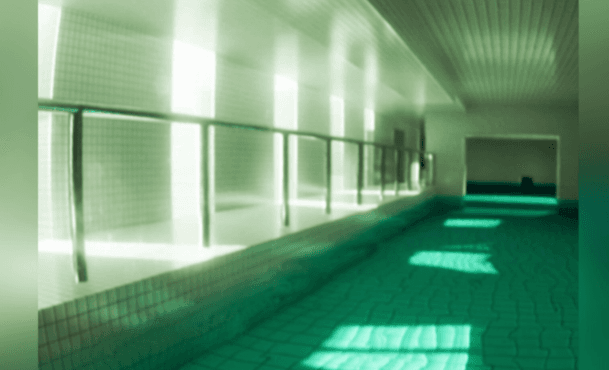
POOLS renders endless indoor swimming facilities through vintage video camera grain, using footsteps and water echoes as the entire audio design. There are no threats and no objectives. GPA scores it high on Dark World and Existential Themes — the experience is defined entirely by absence and atmosphere.
Tag Similarity
Horror
75%
Logic
0%
Turn-Based
0%
Existential Themes
70%
Dystopian Setting
90%
Dark
70%
High Difficulty
0%
Graphics
75%
Chart tags: Horror / Logic / Turn-Based / Existential Themes / Dystopian Setting / Dark / High Difficulty / Graphics
The Complex: Found Footage renders Backrooms Level 0 through VHS processing that makes the yellow fluorescent corridors feel genuinely documented. The found footage framing is structural, not decorative. GPA scores it high on Horror and Graphics — the visual commitment to the format is the primary reason to play.
Tag Similarity
Horror
85%
Logic
0%
Turn-Based
0%
Existential Themes
65%
Dystopian Setting
85%
Dark
80%
High Difficulty
0%
Graphics
90%
Chart tags: Horror / Logic / Turn-Based / Existential Themes / Dystopian Setting / Dark / High Difficulty / Graphics
About "The Exit 8"
▸Game Composition (GPA Analysis)
8番出口 leads with its Escape identity, anchored by the core feel of "The Exit 8 gives players a looping underground passageway and one instruction: exit at 8 if nothing is wrong, turn bac…." The headline profile reads Horror 80% / Logic 80% / Turn-Based 60%, making it a strong pick for fans of Horror and Logic. Skews toward a beginner-to-intermediate audience while still leaving room for more seasoned players.
▸Characteristics & Analysis
Our editorial team scored "8番出口" by using its feel of loop horror, escape, and set in Japan as the primary lens, weighting Horror and Logic most heavily. Top similar titles include "事故物件", "新幹線 0号(Shinkansen 0)", "8番のりば(The Platform 8)".
The Exit 8 — Gameplay and Similar Games
The Exit 8 (Japanese title: 8番出口) is a short walking simulator. You watch an underground passage that keeps going, look for what has changed, and try to reach Exit 8. It is also on Nintendo Switch.
Wall posters, the lights, people passing by. Your job is to notice when a familiar scene is not quite the same. Turn back if something is wrong. Keep going if it is not. Miss the change, or make the wrong call, and the way to the exit starts over.
There is no showy action and no complicated puzzle. Once something feels off, though, even the scenery you would normally ignore starts to look suspicious. The pleasure of finding what changed, and the tension of an everyday place turning slightly uncanny, are what make The Exit 8 feel like itself.
If that anomaly hunt clicks, The Platform 8, which also asks you to notice what feels wrong, and Inside, which draws an uneasy world without words, are other places to look. The similarity is only part of the experience. How they scare you, and how they play, are different.
How the neighbors differ
These three are easier to compare by what you want from the next game. Scores are the current values on each game's page.
Same anomaly hunt
The Platform 8 (8番のりば)
The KOTAKE CREATE follow-up. Instead of an underground corridor, you look for anomalies on a train that keeps moving. As of October 2026, it is listed on PS5 and Steam, with no confirmed Switch version.
Current GPA scores (key traits)
Dystopian Setting ◀
80%
Horror ◀
80%
Logic
80%
Graphics
70%
Dark
70%
Quiet Japanese horror
The Stigmatized Property (事故物件)
Chilla's Art apartment exploration. The scare is the quiet of a lived-in room, not a jump scare. As of October 2026, the confirmed listing is Steam, not Switch.
Current GPA scores (key traits)
Horror ◀
80%
Logic
75%
Existential Themes
55%
Dystopian Setting
40%
Dark
40%
Observation game on Switch
Inside
Playdead's wordless side-scroller. You guide a boy through unexplained facilities. It is not an anomaly hunt, but as of October 2026 it is on Nintendo Switch, PS5, PS4, Steam, and Xbox.
Current GPA scores (key traits)
Existential Themes ◀
85%
Dystopian Setting ◀
85%
Dark
85%
Graphics
75%
Logic
70%
The Exit 8 is a solo walking anomaly hunt. The Stigmatized Property is closer in quiet everyday dread, and The Platform 8 is closer in rules. If you need a Switch observation game, start with Inside.
Overview — an anomaly hunt you can explain in one screen
The Exit 8(Japan: 8番出口) is a first-person loop horror game from KOTAKE CREATE. You walk underground corridors, turn back when something looks wrong, and only advance through "normal" sections toward Exit 8. Miss an anomaly and you are sent to Exit 0 — back to the start.
After the 2023 release, streams carried it across English-speaking markets and Asia. The anomalies are easy to compare on screen, so a short clip can explain the rules. The name still comes up when people look for similar games.
Another Japan-born indie horror from Chilla's Art is The Stigmatized Property (Japan: 事故物件). Retro VHS visuals and dread inside a believable apartment — quiet horror at the edge of daily life, without leaning on jump scares. Short Japanese horror built from familiar spaces keeps traveling without AAA budgets, and these two are often mentioned together.
On GPA, Horror and Logic both score 80%. Although The Exit 8 is not turn-based in the traditional RPG sense, GPA gives it a 60% Turn-Based score because the loop is built around repeated forward-or-back decisions at each corridor segment. The 80% Logic rating reflects emphasis on observation, pattern recognition, and deduction— not slow puzzle-solving, but quick calls stacked into an observation-and-memory loop.
GPA tag snapshot — The Exit 8
Horror ◀
80%
Logic ◀
80%
Turn-Based
60%
Existential Themes
55%
Dystopian Setting
40%
Top tags shown here. Use the similarity explorer on this page for deeper comparison.
Liminal spaces and Backrooms — the "uncanny empty" born online
The Exit 8 gained traction overseas partly because it speaks the language of liminal space horror and Backrooms culture — empty familiar places where something feels slightly wrong.
Liminal spaces, in this context, are transit zones: hallways, waiting areas, fluorescent tunnels. They work when crowded; without people, purpose drains away and unease fills the gap. That aesthetic spread online from the late 2010s through image boards and TikTok.
Backrooms horror, which spread around 2019, imagines endless carpeted corridors behind reality's walls. Real building photos mixed with fiction; the fear of wandering in and never leaving spawned games and short films.
The Exit 8 fits both because a Japanese station underpass — white tile, flat lighting, repeated signs — reads instantly as liminal imagery. Backrooms-style repetition plus "one detail is off" is exactly what anomaly hunting asks you to do. Familiar spaces, isolation, emptiness, subtle changes, uncertainty — the game runs on the same fuel.
For horror fans abroad, a Japanese indie landing in that space mattered. Steam reviews and Reddit threads still call it "Backrooms but Japanese subway" and one of the clearest anomaly games — word of mouth that crossed language barriers.
Why a Japanese subway — and why station passages
The setting is Japan's subway and station connectors. Where Backrooms used generic offices, this game chose infrastructure specific to Japan — a choice that can feel familiar to domestic players and uncanny to everyone else.
Japanese horror film has often returned to subways and underground malls: gates that should be closed, platforms after last train, narrow maintenance paths — places where surface rules feel thin. The Exit 8 recreates that situation without exposition. Almost no dialogue; for many Japanese players, the atmosphere may echo real commutes, while overseas players often read the same halls as exotic liminal space.
KOTAKE CREATE did not pick the backdrop for looks alone — it is the game. Identical hall layouts let a poster angle, manhole count, or light color register as an anomaly. Subway passages supply endless near-duplicate stages for spotting differences.
Why Japanese subways feel uncanny — author perspective
Urban Japan packs subway lines especially dense in city centers; Tokyo alone runs many routes deep underground. Daily commute infrastructure that changes face by time of day — that split is where the creep starts.
Daytime: crowds, footsteps, announcements. Night: the same hall goes quiet. Shutters down, passengers gone, distant machinery — for many players who commute here, the moment when human presence vanishes can overlap with liminal-space photos seen online.
Subways also surface in news about accidents and crime. Essential, yet never fully comfortable — part of the unease comes from dark corners, blind spots for cameras, and confusing multi-line layouts. The game makes that latent anxiety visible through loops and penalties.
Overseas players often encounter "Japanese underground" as something unfamiliar; domestic players watch a space they half-recognize turn wrong. Same assets, two layers of fear — a core strength.
Subway as another world — ties to Japanese horror culture
Film, TV, and novels often treat subways and deep underground malls as borders to elsewhere: mapless floors beyond the gate, the same train arriving again after last service, multi-level complexes you cannot climb out of — horror, fantasy, and mystery all reuse the pattern.
Medium
How subways / underground space is used
Link to The Exit 8
Horror film / TV
Beyond the ticket gate / a corridor on the platform that should not exist
The deeper underground you go, the thinner reality's rules become — a recurring device
Urban legend / online horror
Stations after last train, closed gates, empty platforms
Connects naturally to Backrooms and liminal-space culture
Novel / manga
Multi-level underground malls and subway mazes
Complex subterranean stacks framed as stairs into another world
The Exit 8
Keep walking the same hall; trust only the feeling that something is wrong
Horror lives in the space itself, not exposition
The Exit 8 implements that "rules change as you go down" myth as a modern anomaly game. No monster jump — broken spatial logicis the event. J-horror's everyday underside meets Backrooms-style net horror on one line.
What makes it work — the psychological cost of reset to Exit 0
Walk past an anomaly and you return to Exit 0. Clear only normal sections until Exit 8 opens. Runs are short, but one wrong call wipes progress.
The stress differs from jump-scare horror. "Is it safe to go forward?" "Was that corner the same?" — you cannot afford to be wrong. Finding an anomaly hits hard; you want to walk again. The marketing line's "addictive" loop lives here — progress you can almost touch, then lose in an instant.
You only walk — so looking becomes the game
First-person movement and looking around. Almost no action. The load is observation, memory, focus — compare each segment to the last, name what feels off. Puzzle-like, but lower time pressure; instead, attention erodes in quiet halls.
Observation
Sign text, object counts, shadow direction — spot normal vs anomaly.
Memory
Without the previous layout in mind, you miss changes — even in short loops.
After a clear, communities debate missed anomalies and speed routes. Simple rules, endless discussion — one reason the game keeps being referenced.
Streaming — "where's the anomaly?" with the chat
Streamers drove a large share of discovery, and the design explains why. Everyone watches the same corridor; chat can spot an anomaly before the player does, or argue about whether to turn back. "Something wrong here?" "Do we go?" — a live detective session on one screen.
Horror streams often lean on loud scares; here the draw is fine detail on screen. Failures are obvious — a snap to Exit 0 needs no explanation — and viewers can hunt alongside the streamer. Short runs suit clips and vertical video across JP, EN, and Asian platforms.
GPA's "popular on stream" tag reflects that structure. The game works as watchable horror because the audience shares the same observation loop — co-watch anomaly hunting, not just reacting to screams.
Not a one-month fad — "Exit 8-like" as genre shorthand
On Steam and Reddit, the title still works as a genre reference. Every similar release gets compared to The Exit 8 first.
Labels like "Exit 8-like" and "anomaly games" stuck. New entries trigger clone debates and original-anomaly lists — a permanent fixture in those threads.
That is a design pattern, not just copying: familiar environment → repetition → anomaly → observation → forward/back decision → reset. Liminal aesthetic, penalized loop, observation puzzle — a checklist followers still use. The Exit 8 helped establish anomaly hunting games as a recognizable genre pattern.
The Japanese station setting and the clear anomaly rules are what traveled. A short clip can show the loop, so the game kept being named when people looked for similar horror.
From indie to worldwide — why a small game spread everywhere
While AAA chases fidelity, The Exit 8 bet on low-poly station halls and minimal UI. A small team's focused vision stands out on Steam's indie shelf.
Sold overseas as The Exit 8, it piled up English reviews quickly. Across Asia, rules that read on screen beat language barriers: anomaly — turn back; clean — forward. Short clears fuel streams, video, and word of mouth. An affordable price reached players who want horror without multi-hour survival runs.
GPA tags "short completion" and "Japanese developer" match that fit: design and timing aligned.
Lineage — after P.T., walking horror reinvented
Repeat a hall, hunt wrongness — P.T. (2014) made that loop famous. The Exit 8 did not copy it; it codified a different frame around station passages, Exit 0 penalty, and Exit 8 goal.
P.T. is psychological horror built on narrative mystery and an increasingly distorted corridor. The Exit 8 trades that for explicit rules, anomaly detection, and clear success/failure — observation and repeated attempts where memory does the heavy lifting. Both rely on repeated spaces, environmental changes, uncertainty, and memory mismatch — fear from trusting sameness you cannot trust.
P.T. twisted one L-shaped corridor; this game stacks many near-identical segments and varied anomalies. 2020s indie horror split into VHS-style, liminal, and anomaly branches. The Exit 8 took the clearest rules and became the comparison baseline for games like The Exit 8 — clone debates, not a shot-for-shot imitation of P.T.
Anomaly design — a spoiler-free catalog of wrongness
Anomalies are not set-piece disasters — they are swapped everyday details: one poster, a sign facing wrong, an extra object, unnatural silence. Managed public space breaking reads better than monsters for liminal horror.
Players carry a template of a normal Japanese station hall. The game trains you to build a mental picture of what "normal" looks like, then asks you to notice the smallest deviation from it. Uniform light, aligned tile, standard ads — deviation is the signal. First run: something feels off, hard to say what. Later: "Was this corner like that before?"
Exit 0 resets motivate memorizing lists — wikis, VODs, Reddit threads. Community knowledge spreads like other indie hits. GPA's 80% Logic score reflects that pleasure of noticing — observation, pattern recognition, and environmental reasoning woven into the core loop.
Sound and light — horror without jump scares
Graphics at 30% on GPA signals mood over spectacle: fluorescent hum, distant fans, your footsteps — audio stays restrained while silence carries weight.
Flat, bright lighting — not half-face shadow horror. Wrong color temperature or a dead light stands out as anomaly.
Existential Themes at 55% fits the question the space keeps asking: is there really an exit, or am I walking the same hall forever? The title keeps that question open.
Tokyo underground — scale and getting lost
Tokyo's network is among the world's largest. Operators, surface and basement levels, long transfers under identical tile — commuters often forget which exit they used.
The game turns mild real-world disorientation into fatal penalty for one missed anomaly. For many Japanese players, that can feel uncomfortably plausible.
Major hubs with three or four underground floors mirror horror's "stairs into elsewhere." Exit 0 reset feels like seeing the up escalator but never reaching the surface.
Editor's review — after walking the corridors
Editor's Review
If endless quiet halls scare you more than being chased, this lands hardest. Regular subway users may recognize the stillness of a night connector transplanted straight into the game — spatial dread without a monster onscreen.
Missing an anomaly and snapping back to Exit 0 stings most because progress feels tangible until it vanishes. That no-mistake pressure makes clearing a clean section feel like genuine relief rather than a formality.
Walk-only controls hide surprising depth: memory and observation still break down, solo or in debrief. The game invites post-run arguments about what you missed — simple inputs, contested readings.
Backrooms and liminal-space fans get a Japanese take that arrived through context, not budget. The global hit makes sense once you see everyday infrastructure reframed as horror grammar.
Frequently Asked Questions
Q: What is the English title of 8番出口?
A: The English title is The Exit 8. The Japanese title is 8番出口.
Q: What games like The Exit 8 are on Nintendo Switch?
A: As of this article's October 2026 update, Inside is the nearby observation game with a confirmed Nintendo Switch version. The Platform 8, the closest anomaly hunt, and The Stigmatized Property, a quiet Japanese horror game, do not show a Switch listing at this update. The Exit 8 itself is on Nintendo Switch, PS5, Steam, and Xbox. Use the platform filter at the top of this page for the latest listings. A Nintendo Switch 2 version was not listed at the time of this update.
Q: What is the difference between The Exit 8 and The Platform 8?
A: Both are anomaly hunts from KOTAKE CREATE. The Exit 8 walks an underground corridor and turns back when something is wrong. The Platform 8 watches a train that keeps moving. As of this update, The Platform 8 is listed on PS5 and Steam.
Q: What kind of game is The Exit 8?
A: It is a first-person loop horror game. You walk an underground passage, turn back when you spot an anomaly, and advance only through normal sections toward Exit 8. Missing an anomaly sends you back to Exit 0.
Q: Is The Exit 8 scary?
A: It favors slow unease over loud jump scares, but the reset pressure is real. Lower the volume and play in short sessions if you want to try it.
Q: How long is The Exit 8?
A: Many first-time players reach Exit 8 within a few hours. Learning the anomalies shortens later runs.
Q: Is The Exit 8 worth playing if you do not live in Japan?
A: The rules do not depend on language. For many players outside Japan, the underground station passage itself is the unfamiliar space.
Q: Is The Exit 8 difficult?
A: The controls stay simple. The challenge is observation and memory. One missed anomaly sends you to Exit 0.
Q: What are games like The Exit 8?
A: Later anomaly games often move the setting to a hospital, office, or school, or raise the difficulty. The Exit 8 remains the reference point because it established the Japanese station corridor and the Exit 0 / Exit 8 loop.
Q: Is The Exit 8 based on the Backrooms?
A: It is not a direct adaptation. It is a Japanese subway horror game with its own rules. It resonates with Backrooms and liminal-space horror because both use familiar empty places, repetition, and small details that feel wrong.
Q: Do streams spoil The Exit 8?
A: Specific anomalies spoil easily. The rules do not. Watching together and avoiding spoilers pull in opposite directions, and streams were a large part of how the game spread.
Who it fits — and who should skip
Target audience (recommended at 50+)
Beginner60
Intermediate75
Advanced50
* Primary range: beginners through advanced players (recommended at 50+). Controls stay light, but observation and memory load still bite on intermediate-plus runs.
Strong fit
·Liminal / Backrooms fans — want to walk it, not just view images
·Observation horror — wrong details over jump scares
·Short sessions — finish in an evening, replay friendly
·Stream viewers / co-op chat
·Subway uncanny resonates
Think twice if
·You want chase or combat horror
·Long plot and character drama first
·Identical scenery loops frustrate you
GPA positioning
Horror 80% and Logic 80% lead. Graphics and High Difficulty stay low, which matches a game built on spatial unease. Existential Themes at 55% matches the feeling of still being lost.
Turn-Based 60% reflects per-segment go / back decisions stacking toward Exit 8, not tactical RPG turns — each corridor is a small forward-or-back choice that adds up.
On this page's similarity slider, raising Logic brings up more puzzle-like games. Raising Horror brings up investigation horror played with other people. The Exit 8 sits with quiet logic horror, built on observation and deduction.
Bottom line — more than a short indie scare
The Exit 8 turned ordinary corridors into gameplay. Observation replaces combat; simple rules create tension; Japanese infrastructure became globally recognizable horror. It helped establish anomaly games as a design pattern people can name — familiar environment, repetition, a wrong detail, a binary choice, a reset.
Subways are daily life in Japan and a horror staple; abroad they read as liminal space horror textbook material. That overlap outlasted a fad — Exit 8-like and anomaly hunting games remain the vocabulary because this game made the loop legible.
Everyday spaces carry the scare. A tile pattern you cannot quite trust is enough.
Scores use GPA (Gamer's Profile Analyzer) tag weighting. Latest numbers and similarity ranks live on each game's detail page from the GPA home screen.