Meccha Chameleon asks players to paint their own body to match the wall behind them, scoring the disguise through the Overlooked Ranking system rather than simple survival. Three million copies in the first week. GPA scores it high on Co-op and Puzzle — the body-painting mechanic is the only entry in its category.
Game Characteristics
Co-op
50%
Logic
50%
Action
45%
Turn-Based
40%
High Difficulty
30%
Graphics
30%
Strategy
30%
Player profile fit
Recommended for: Beginner to Advanced players (A score of 50 or higher indicates a good fit.)
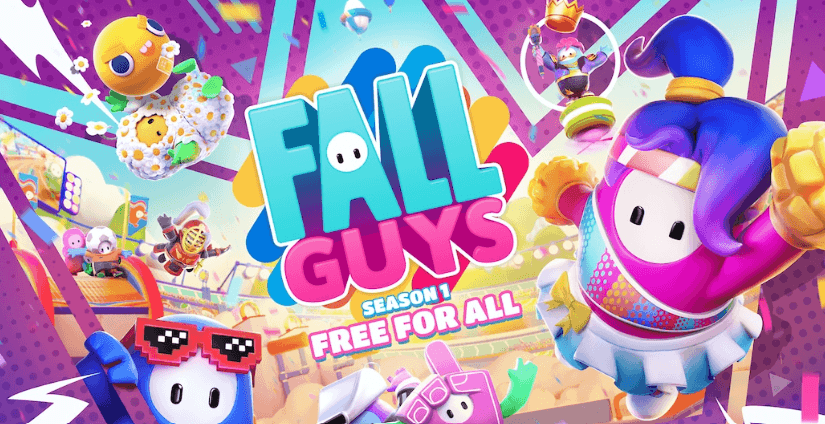
Fall Guys puts up to 60 players through randomized obstacle course rounds where only a percentage advance each stage. The physics-based knockback and unpredictable finishes produce moments that clip well. GPA scores it high on Co-op and Action — the party battle royale that removed the shooting skill gate from the format.
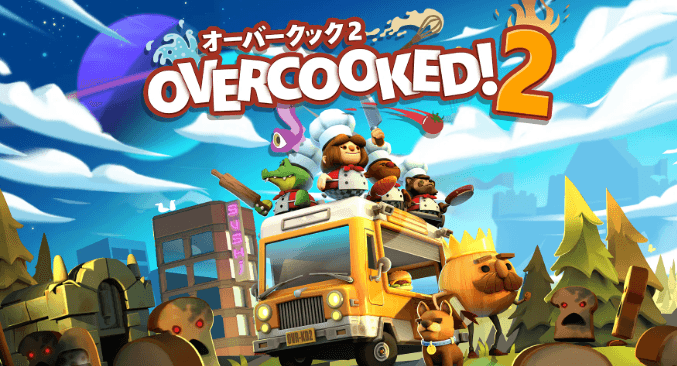
Overcooked! 2 runs its kitchen chaos across multiplayer levels that split, shift, and reconfigure the cooking space in real time. The co-op design produces communication pressure as effectively as competitive games. GPA scores it at the top for Co-op — the highest in the party game category — with Action above average reflecting the time pressure mechanics.
Midnight Ghost Hunt assigns ghost possession of furniture to one team and ghost-hunting equipment to the other, building weapon combat into the object transformation format. GPA scores it high on Co-op and Action.
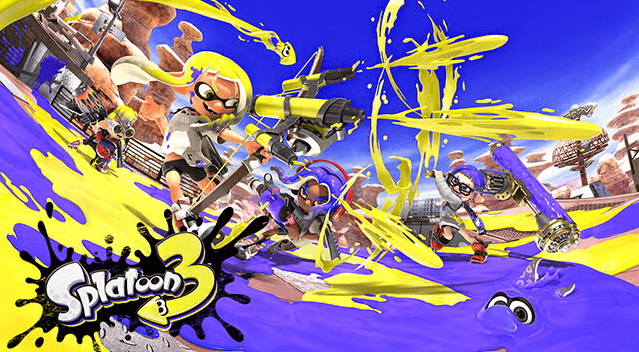
Splatoon 3 builds its 4v4 Turf War around ink coverage rather than elimination, with movement speed tied directly to painting the floor in your team's color. The weapon variety covers close, mid, and long range with distinct playstyle demands. GPA scores it high on Action and Co-op — the Nintendo competitive shooter that created its own rules for what a shooter can be.
Mario Kart 8 Deluxe remains the competitive standard for the racing party genre, with 96 courses and items balanced for both casual play and competitive time-trialing. The Booster Course Pass added 48 remastered tracks from prior entries. GPA scores it at the top for Co-op and high on Action — the party racer that runs on almost every shared screen.
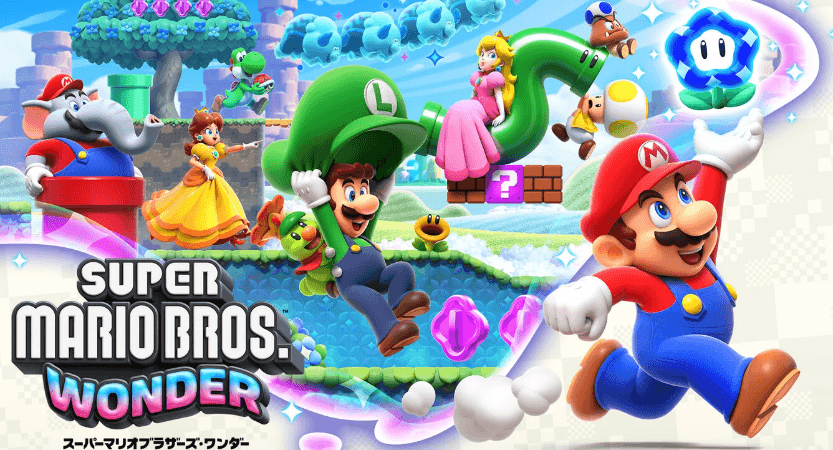
Super Mario Bros. Wonder adds the Wonder Flower mechanic that transforms levels in unpredictable ways, shifting the platform design conventions mid-stage. The badge system adds optional modifiers. GPA scores it at the top for Beginner and high on Action — the 2D Mario entry with the widest design variation between stages in the series.
PixelJunk Monsters 2 moves the original tower defense into 3D with four-player online co-op. Tikiman runs the map directly rather than placing towers from a menu. GPA scores it high on Strategy and Co-op.
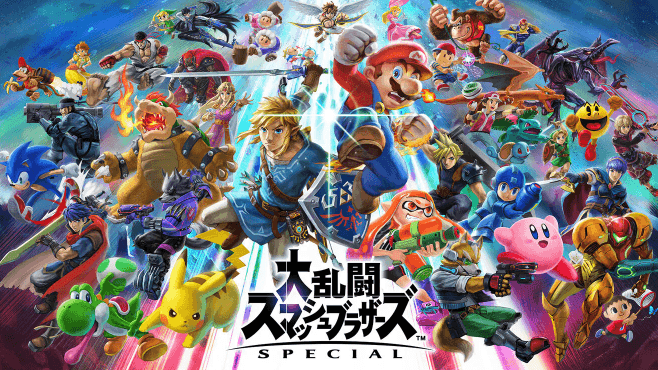
Super Smash Bros. Ultimate assembles every fighter from the series' history and adds 89 total, including third-party characters across a decade of licensing. The World of Light mode provides a solo campaign. GPA scores it at the top for Co-op and Action — the platform fighter whose roster scope has no equivalent in competitive gaming.
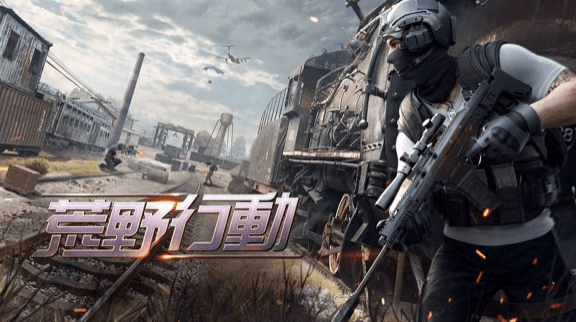
Knives Out (荒野行動) brought the battle royale format to mobile audiences in East Asia with controls designed for touchscreen play and progression systems tuned for daily sessions. GPA scores it high on Co-op and Action — the mobile battle royale that built the genre's East Asian player base before global competitors arrived.
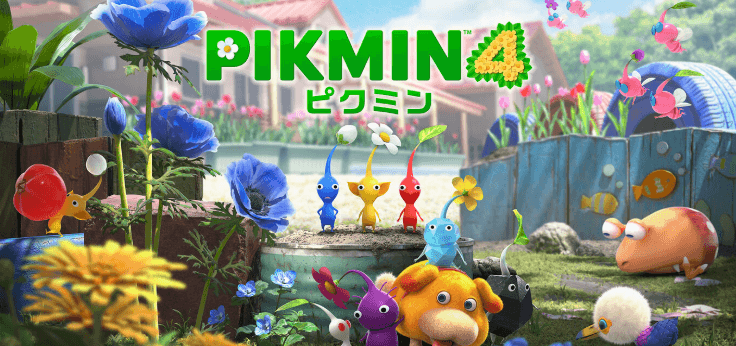
Pikmin 4 restructures the series with Oatchi as a permanent rideable companion who changes traversal options, alongside a night mode that shifts the loop toward tower defense survival. GPA scores it high on Strategy and Puzzle — the series entry most accessible to players new to the Pikmin format.
Boomerang Fu fights food-themed characters across 30+ arenas with a single boomerang that returns to its owner — catching it mid-flight is the key skill. 14 power-up combinations change each round. Cranky Watermelon. Switch, PS4/5, Xbox, PC. Won Best Gameplay at the 2020 Australian Game Developer Awards. GPA scores it high on Co-op and Action — the party game with the highest skill ceiling per round length ratio.
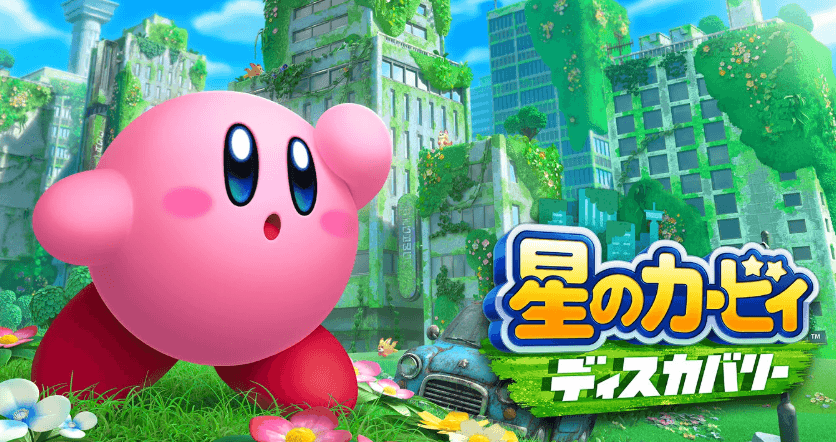
Kirby's first fully 3D platformer sends the pink protagonist through a post-civilization wilderness, absorbing enemy abilities to solve environmental puzzles. The Mouthful Mode transformation system adds a creative layer to the classic copy mechanic. GPA scores it high on the Beginner axis — accessible in a way that few 3D platformers achieve without sacrificing exploration depth.
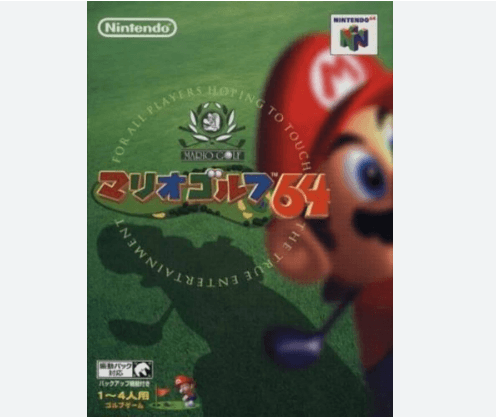
Mario Golf 64 uses a three-click swing mechanic with character-specific shot shapes that require course management adjustments per player. A Game Boy transfer pak feature let players import GB version characters. Available through Nintendo Classics. GPA scores it high on Strategy — the golf game where character selection is a tactical decision.
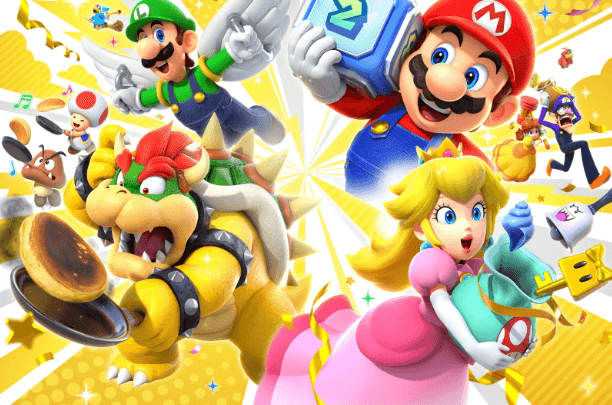
Super Mario Party Jamboree packs 112 minigames, seven Jamboree boards, and a 20-player online race mode into the series' largest single package. The Nintendo Switch 2 Edition added Jamboree TV mode in July 2025. Developed by Nintendo and NDcube (now Nintendo Cube). Switch and Switch 2. GPA scores it at the top for Co-op — the Mario Party entry that covers the widest range of play contexts from local family sessions to 20-player online competitions.
Helldivers 2 sends four Helldivers to hostile planets under the banner of Super Earth's democracy, calling in weapons and reinforcements through timed button sequences called Stratagems. The galactic war meta-game updates in real time across all players. Arrowhead Game Studios, PlayStation Studios. PS5, PC. GPA scores it at the top for Co-op — the squad shooter that made cooperative chaos the design goal rather than a side effect.
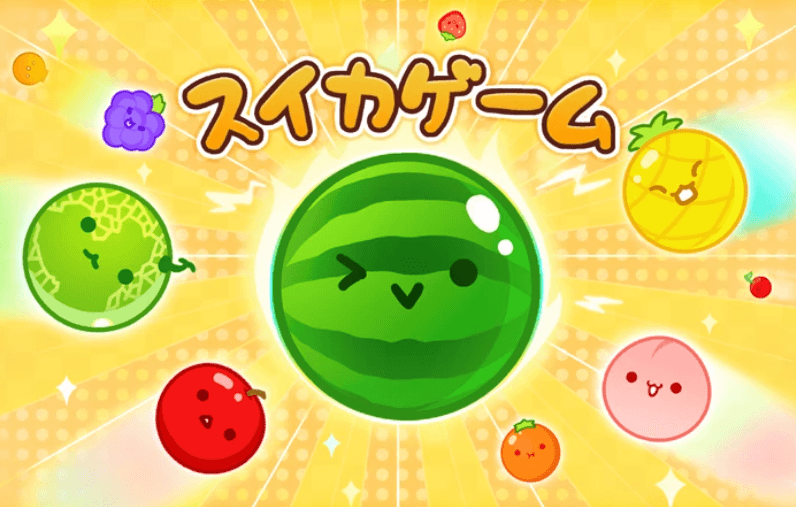
Suika Game is a simple physics-based puzzle game where players drop fruit into a container and merge matching pieces into larger ones, eventually aiming to create a watermelon. The rules are easy to understand, but the physics make each drop affect the rest of the board. As the container fills up, placement and planning become increasingly important, especially when chasing a high score.
THE FINALS runs team combat through a fully destructible game show environment where collapsing buildings, explosive barrels, and environmental weapons are as important as gunplay. Embark Studios, former Battlefield developers. Free to play. PS5, Xbox Series X|S, PC. GPA scores it high on Action and Co-op — the team shooter that made environmental destruction a primary tactical resource rather than a visual flourish.
Propnight fused DbD's generator repair structure with prop transformation disguise, letting survivors become furniture to avoid detection. The studio's 2024 closure ended the live service. GPA scores it high on Co-op and Horror — a hybrid that executed the obvious design combination before the studio ceased operations.
めっちゃカメレオン leads with its Draw-to-Hide Party Game identity, anchored by the core feel of "Meccha Chameleon asks players to paint their own body to match the wall behind them, scoring the disguise through the …." The headline profile reads Co-op 50% / Logic 50% / Action 45%, making it a strong pick for fans of Co-op and Logic. Skews toward a beginner-to-intermediate audience while still leaving room for more seasoned players.
▸Characteristics & Analysis
Our editorial team scored "めっちゃカメレオン" by using its feel of hide-and-seek, indie, and asymmetric PvP as the primary lens, weighting Co-op and Logic most heavily. Top similar titles include "PROPHUNT(プロップハント)", "Fall Guys(フォールガイズ)", "オーバークック2(Overcooked 2)".
Mecha Chameleon — Hide and Seek Got a Paintbrush, and Somehow That's Genius
A Solo Developer Just Out-Virated Every Studio in the Genre
In 2026, a one-person indie project called Mecha Chameleon showed up on Steam and broke three million copies in its first week. No marketing budget. No publisher push. Just a paintbrush mechanic simple enough to explain in one sentence: you hide by painting your own body to match the wall behind you.
LEMORION, the solo developer, didn't reinvent hide-and-seek. They gave it a tool. GPA scores it at 50% Logic, 50% Co-op, 45% Action — a distribution that tells you exactly what kind of game this is. It's not about reflexes. It's about reading a room and deciding how much you're willing to risk.
September 2026 Update: Switch 2 Surprise Launch at Nintendo Direct
During Nintendo Direct 2026.9.9 on September 9, 2026, Nintendo announced a Nintendo Switch 2 version of Mecha Chameleon — and released it on the Nintendo eShop immediately after the broadcast ended (Nintendo Co., Ltd.).
The Switch 2 edition is priced at ¥790 (20% off at ¥632 until September 17, 2026, 23:59 JST). It supports mouse input and cross-play with the PC version. By the time of the console launch, the PC release from June 10, 2026 had already passed 20 million copies sold. User-created stages are also planned to become playable within the year.
For streamers and party-game players, the important shift is platform access: a title that spread primarily through Steam clips is now playable on Switch 2 hardware, with cross-play keeping PC and console lobbies connected.
What's Actually Different Here
Asymmetric hide-and-seek games aren't new. Dead by Daylight built an empire on the format. Prop Hunt turned disguise into a genre of its own. What none of them tried is what Mecha Chameleon does: instead of becoming an object, you paint yourself to look like one.
That distinction matters more than it sounds. In Prop Hunt, you select a couch and the game handles the disguise. In Mecha Chameleon, you're holding a brush, picking up colors with an eyedropper tool, and manually matching your silhouette to a striped wallpaper pattern. The disguise is something you build, not something you select from a menu.
That's the entire pitch, and it's why a player with zero shooter experience can sit down and immediately understand what to do.
The Three-Phase Round Structure
Each round runs through three distinct phases, and the tension comes from how they overlap.
Phase One: Finding a Spot
Hiders get a timer to scout the procedurally generated map and pick a location. The randomization matters here — you can't memorize "the good spot" from last round, because the furniture layout, wall colors, and lighting shift every time. Every round is a fresh read of the room.
Phase Two: Painting (and This Is Where It Gets Interesting)
Once the location timer ends, painting begins — and it keeps going past the deadline. That overlap creates a specific kind of pressure: spend too long finding a spot, and you're rushing your paint job while the hunt phase has already started. Brush size, color-picking, multiple painting styles — there's a real toolset here, and a clean paint job is the difference between blending in and standing out for the wrong reasons.
Phase Three: The Hunt
The Hunter doesn't aim. There's no shooting mechanic at all. It's pure visual scanning — "did that shadow just move?" — which means new players can hunt competently in their first round. That's a deliberate design choice, and it's the reason this works as a party game rather than a competitive shooter with a paint gimmick attached.
The Scoring System That Rewards the Wrong Instinct (On Purpose)
Here's the mechanic that separates Mecha Chameleon from every game that resembles it on paper: the Overlooked Ranking.
Most hiding games reward survival. Stay hidden until time runs out, you win. Mecha Chameleon flips that. The harder your hiding spot is to find, the less it's worth. Stand in the middle of the room, directly in front of the couch, and replicate its pattern well enough to fool the Hunter standing three feet away — that's worth more points than curling up in a dark corner and waiting it out.
The effect is that every round forces a real decision. Play it safe in a dim corner for a modest, reliable score. Or paint yourself into the most exposed spot in the room and gamble on execution. Neither choice is wrong, but the game makes you choose every single round, and that choice is what GPA's Logic score is actually measuring — not reflex, not aim, just risk-reading under a clock.
Servers Tagged "Casual" and "Serious" — and Why That Matters
Mecha Chameleon supports player-hosted servers, and hosts can tag their room's intent — casual fun versus competitive precision. That sounds like a small UI detail. It's not.
Dead by Daylight's ranked structure creates one tone: tense, skill-gated, occasionally hostile to newcomers. Mecha Chameleon sidesteps that entirely by letting players self-select into the experience they actually want before the match starts. Someone who wants to laugh at failed paint jobs doesn't end up in a lobby with someone optimizing for the scoreboard. That's a party game decision, made correctly.
Eleven-language support reinforces the same instinct. The core joke — a person who has become indistinguishable from a couch — doesn't need translation. It travels through clips and Shorts without a single word of context, which is most of why this spread the way it did.
The Painting System Has More Depth Than the Premise Suggests
The disguise mechanic isn't a one-button action. You're choosing brush sizes, sampling colors with an eyedropper, and layering different painting techniques to match a pattern. Matching your arm to a striped wallpaper, recreating a couch's pattern across your shoulder, lining up your feet with wood grain on the floor — the painting itself becomes a small craft challenge, separate from the strategic layer of where you're standing.
The fact that you can keep painting after the hunt phase starts adds a live decision point most hiding games don't have: do you freeze and hope your current paint job holds, or keep working and risk movement giving you away? That overlap between phases is where GPA's 45% Action score comes from — not combat, but timing pressure inside a non-combat system.
Map Randomization Solves the Genre's Oldest Problem
Every asymmetric hider game eventually develops a "meta spot" — the corner everyone learns to camp because it works. Mecha Chameleon's procedural map generation removes that option entirely. Furniture layout, wall colors, and lighting reshuffle every round, so the spot that worked last time might not even exist this time.
That's a deliberate departure from Dead by Daylight's fixed-map, memorize-the-loop structure. Here, observation and improvisation matter every single round instead of rewarding players who've simply played the map more times. For a three-million-copy launch on a solo dev's first major release, that's the kind of design decision that keeps people coming back instead of solving the game in a weekend.
GPA's Asymmetric Hide-and-Seek Comparison
The genre has enough history now that positioning Mecha Chameleon against it tells you exactly what you're getting.
* Casual Factor is an editorial assessment for this comparison, not an official GPA metric.
Dead by Daylight runs on perk combinations and pallet/window mind games — GPA scores it 90% Co-op, 65% Difficulty, reflecting a genre veteran built for players who want real stakes and a decade of content behind it.
Propnightborrowed DbD's generator structure and fused it with prop transformation. It's a genuinely interesting hybrid, and its 2024 shutdown after the studio's financial collapse is a useful case study: a good idea with operational problems behind it.
PROPHUNT and Midnight Ghost Hunt both lean on object transformation with real combat weight — guns, melee, possession mechanics. Mecha Chameleon strips that out entirely. No transformation, no weapons, no aim requirement on either side. It sits at the most casual end of the genre by design, not by accident.
Editor's Review — Easy to Learn, Hard to Stop Choosing
Editor's Review
What works:
A group of four friends can learn the full rule set in thirty minutes and chain rounds back-to-back without friction. The Hunter's lack of an aim requirement means a friend with zero shooter background can hunt competently from round one. Server tags solve the tone-mismatch problem before it starts — pick a casual room, and a failed paint job becomes the funniest part of the night instead of a wasted round. The Overlooked Ranking is the system doing the most work here: it turns "just survive" into "how much are you willing to risk," and that single mechanic is why this doesn't feel like a Prop Hunt clone with a paint filter.
What doesn't:
If you're looking for long-term skill progression or ranked seasons, this isn't that game. It's built for "tonight's fun," not a competitive ladder. A Switch 2 version launched as a surprise release after Nintendo Direct 2026.9.9, with PC cross-play now available.
Who This Is For
Likely to click:
Groups who want a low-stakes party game with friends or on stream
Players who enjoy drawing or creative tools — the painting mechanic rewards genuine craft
Anyone curious about asymmetric multiplayer who's been put off by aim-heavy genre entries
Streamers and viewers who want clip-worthy moments without a steep learning curve
Worth knowing first:
There's no long-term progression system or battle pass structure — this is a session game, not a service game
Switch 2 edition available since Nintendo Direct 2026.9.9; cross-play connects PC and console lobbies
If you want Dead by Daylight's tension and stakes, this isn't a substitute — it's a different kind of game entirely
Featured Hide-and-Seek Titles
Platform-filtered list of titles discussed in this analysis:
Featured Titles (filter by platform)
Indies often ship on limited platforms, so we've listed available platforms below. Filter the table to find titles from the games featured in this GPA article.
DbD-era co-op hide-and-seek horror focused on friend-group tension.
steam
The GPA Summary
Dead by Daylight and Propnight sell tension and horror atmosphere. Mecha Chameleon sells creativity and laughter, and it does that by removing the two things that gatekeep most asymmetric multiplayer games: aim requirements and memorized meta spots.
The painting system gives hiders genuine agency over their disguise instead of picking from a list. The Overlooked Ranking turns survival instinct on its head and makes boldness a viable strategy. The randomized maps mean nobody's solving this game in a weekend.
If GPA's similar-games search surfaces PROPHUNT and Overcooked 2 alongside this one, that's not a coincidence — it's the Co-op and Action scores pointing at exactly the kind of communal, low-stakes energy this game is built around. The September 2026 Switch 2 release widens that audience further without splitting the player base thanks to cross-play.
GPA scores reflect experiential weight, not feature count. Logic 50% means decision-reading is central to play, not reflex-driven. Co-op 50% means the experience is built around shared play, even in a competitive format.