How to Play Suika Game: The Basic Rules
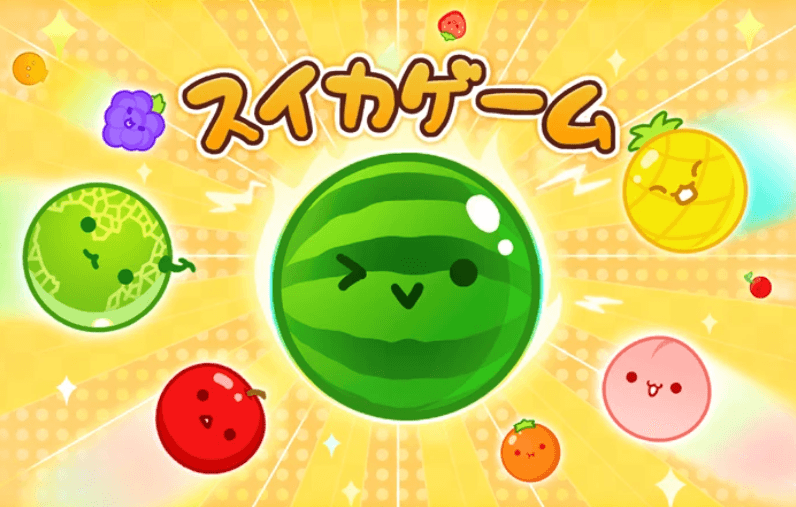
Suika Game starts with a simple idea: move a fruit left or right, drop it into the box, and merge it with another fruit of the same type. Each successful merge creates a larger fruit, gradually increasing the value of the next merge. The rules are easy to understand, which makes the game immediately accessible even to first-time players.
Suika Game is built around a simple loop: position a fruit, drop it into the box, and merge matching fruits as they come together. The controls are simple, but the growing pile of fruit gradually turns each drop into a meaningful decision.
Why Placement Matters in Suika Game
Placement is where Suika Game starts to become more strategic. Dropping a fruit near the wall can make it bounce or roll into a different position, while a seemingly harmless drop can change the shape of the entire pile. The best move is not always the one that creates an immediate merge. Sometimes, leaving space for the next fruit is the better decision.
Why Does Suika Game Get Harder?
Suika Game does not become harder because the controls become more complicated. The controls remain almost identical throughout a run. Instead, the board gradually becomes harder to manage. As the box fills up, there is less room for mistakes, and a single drop can affect several future merges. What starts as a simple physics puzzle gradually becomes a test of spatial judgment and decision-making.
Suika Game Strategy: Plan for the Next Fruit
The next fruit matters almost as much as the one you are dropping now. A move that looks good in the moment can create an awkward pile for the next few turns. As the board fills up, players need to consider not only where the current fruit will land, but also which merges that position will make possible later. This is where Suika Game moves beyond simple matching and starts rewarding forward planning.
How to Get a High Score in Suika Game
Chasing a high score changes the way Suika Game is played. Creating a watermelon is no longer the only goal. Players also need to build larger fruits efficiently, preserve enough space for future drops, and look for opportunities to create multiple merges without losing control of the board. The higher the target score, the more important board management and long-term planning become.
Reading Suika Game Through the GPA Profile
Suika Game's depth comes from a simple question: where should you put the next fruit? Early in a run, intuition is usually enough. As the box fills up, however, each drop starts to affect future merges, forcing you to think beyond the current move. The amount of decision-making naturally increases as the game progresses. That gradual shift from simple placement to forward planning is a major reason GPA gives Suika Game a 70% Logic score.
50% Turn-Based matches the one-piece-at-a-time flow—not a command menu, but a steady rhythm of drop, settle, read, repeat. High Difficulty at 30% and Strategy at 20% stay relatively low because the game never asks for rote solutions or long tactical scripts; a single good placement can matter without a textbook answer.
Graphics at 10% keeps focus on the box rather than spectacle. Audience fit at Beginner 90%, Intermediate 60%, and Advanced 30% mirrors the play arc: quick entry, then more board reading as you push score and survival time.