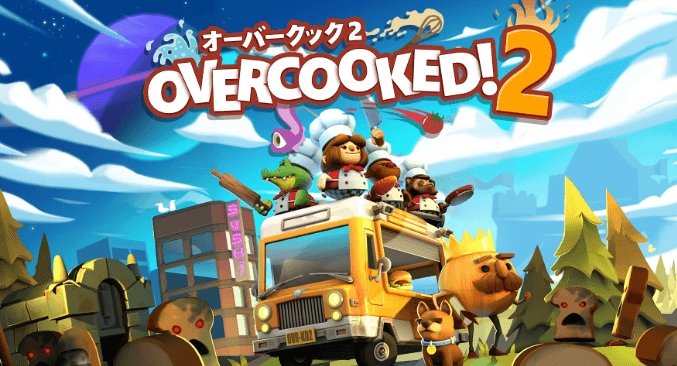
Overcooked! 2 runs its kitchen chaos across multiplayer levels that split, shift, and reconfigure the cooking space in real time. The co-op design produces communication pressure as effectively as competitive games. GPA scores it at the top for Co-op — the highest in the party game category — with Action above average reflecting the time pressure mechanics.
Game Characteristics
Co-op
95%
Action
70%
Graphics
70%
Strategy
65%
Logic
60%
High Difficulty
30%
Player profile fit
Recommended for: Beginner to Advanced players (A score of 50 or higher indicates a good fit.)
Mario Kart 8 Deluxe remains the competitive standard for the racing party genre, with 96 courses and items balanced for both casual play and competitive time-trialing. The Booster Course Pass added 48 remastered tracks from prior entries. GPA scores it at the top for Co-op and high on Action — the party racer that runs on almost every shared screen.
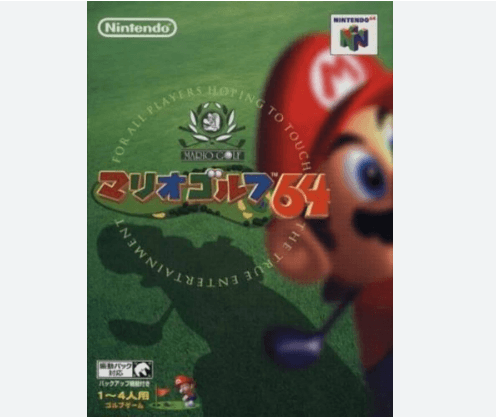
Mario Golf 64 uses a three-click swing mechanic with character-specific shot shapes that require course management adjustments per player. A Game Boy transfer pak feature let players import GB version characters. Available through Nintendo Classics. GPA scores it high on Strategy — the golf game where character selection is a tactical decision.
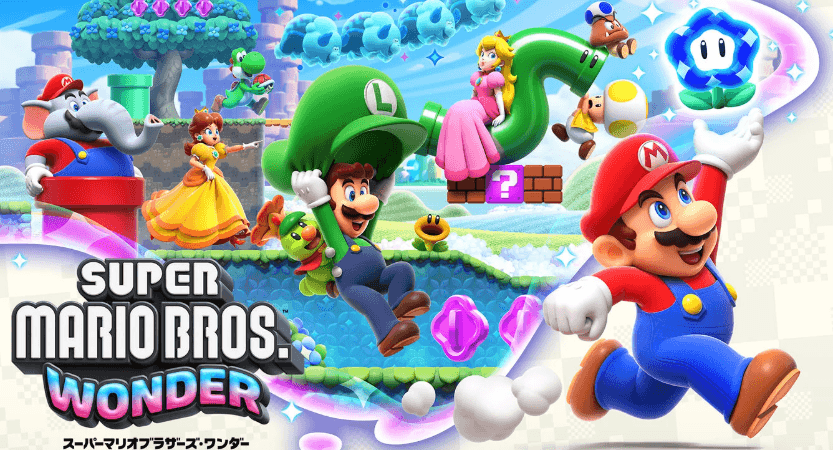
Super Mario Bros. Wonder adds the Wonder Flower mechanic that transforms levels in unpredictable ways, shifting the platform design conventions mid-stage. The badge system adds optional modifiers. GPA scores it at the top for Beginner and high on Action — the 2D Mario entry with the widest design variation between stages in the series.
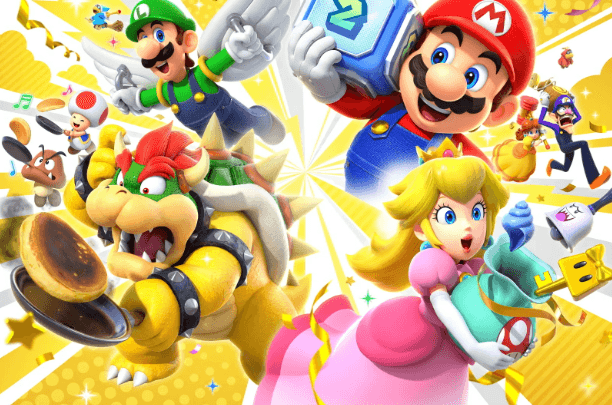
Super Mario Party Jamboree packs 112 minigames, seven Jamboree boards, and a 20-player online race mode into the series' largest single package. The Nintendo Switch 2 Edition added Jamboree TV mode in July 2025. Developed by Nintendo and NDcube (now Nintendo Cube). Switch and Switch 2. GPA scores it at the top for Co-op — the Mario Party entry that covers the widest range of play contexts from local family sessions to 20-player online competitions.
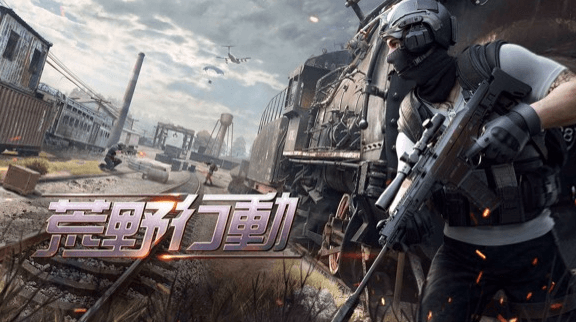
Knives Out (荒野行動) brought the battle royale format to mobile audiences in East Asia with controls designed for touchscreen play and progression systems tuned for daily sessions. GPA scores it high on Co-op and Action — the mobile battle royale that built the genre's East Asian player base before global competitors arrived.
PixelJunk Monsters 2 moves the original tower defense into 3D with four-player online co-op. Tikiman runs the map directly rather than placing towers from a menu. GPA scores it high on Strategy and Co-op.
Boomerang Fu fights food-themed characters across 30+ arenas with a single boomerang that returns to its owner — catching it mid-flight is the key skill. 14 power-up combinations change each round. Cranky Watermelon. Switch, PS4/5, Xbox, PC. Won Best Gameplay at the 2020 Australian Game Developer Awards. GPA scores it high on Co-op and Action — the party game with the highest skill ceiling per round length ratio.
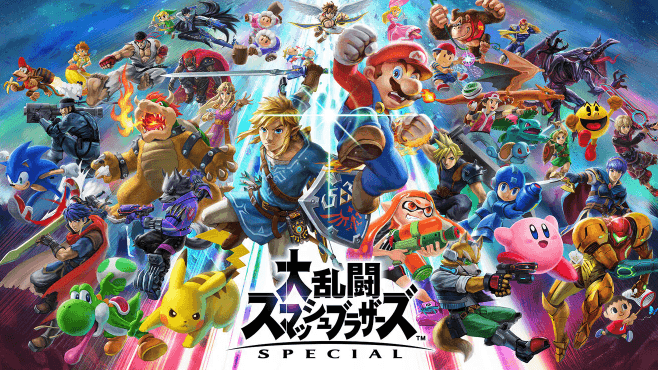
Super Smash Bros. Ultimate assembles every fighter from the series' history and adds 89 total, including third-party characters across a decade of licensing. The World of Light mode provides a solo campaign. GPA scores it at the top for Co-op and Action — the platform fighter whose roster scope has no equivalent in competitive gaming.
Meccha Chameleon asks players to paint their own body to match the wall behind them, scoring the disguise through the Overlooked Ranking system rather than simple survival. Three million copies in the first week. GPA scores it high on Co-op and Puzzle — the body-painting mechanic is the only entry in its category.
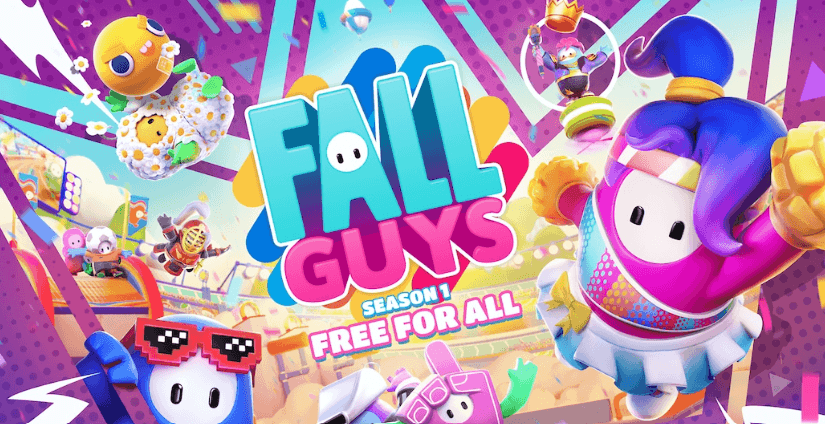
Fall Guys puts up to 60 players through randomized obstacle course rounds where only a percentage advance each stage. The physics-based knockback and unpredictable finishes produce moments that clip well. GPA scores it high on Co-op and Action — the party battle royale that removed the shooting skill gate from the format.
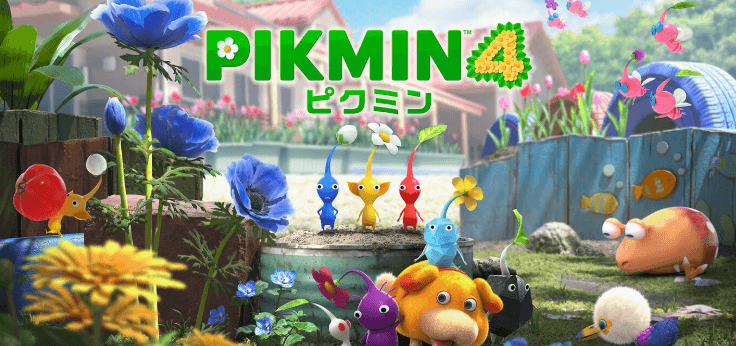
Pikmin 4 restructures the series with Oatchi as a permanent rideable companion who changes traversal options, alongside a night mode that shifts the loop toward tower defense survival. GPA scores it high on Strategy and Puzzle — the series entry most accessible to players new to the Pikmin format.
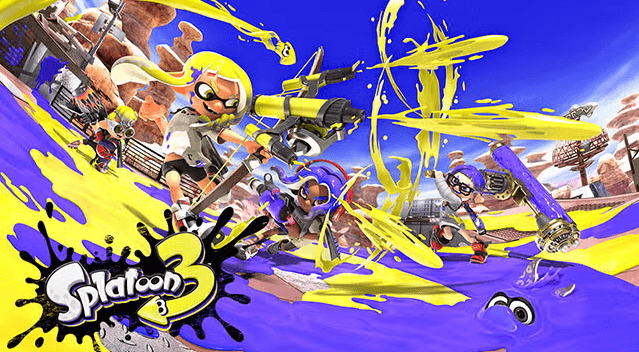
Splatoon 3 builds its 4v4 Turf War around ink coverage rather than elimination, with movement speed tied directly to painting the floor in your team's color. The weapon variety covers close, mid, and long range with distinct playstyle demands. GPA scores it high on Action and Co-op — the Nintendo competitive shooter that created its own rules for what a shooter can be.
Midnight Ghost Hunt assigns ghost possession of furniture to one team and ghost-hunting equipment to the other, building weapon combat into the object transformation format. GPA scores it high on Co-op and Action.
Mario Kart 64 brought the series into 3D with four-player split-screen multiplayer and courses that used the extra dimension for elevation changes. Rainbow Road's scale defined the series' visual ambition. Available through Nintendo Classics. GPA scores it high on Co-op — the multiplayer racing game that set the competitive party standard for living room gaming.
Mario Tennis 64 introduced character type distinctions — speed, power, technique — and an RPG tournament mode alongside the party multiplayer. Camelot's design framework for the series. Available through Nintendo Classics. GPA scores it high on Co-op — the sports multiplayer that brought character-type strategy to party tennis.
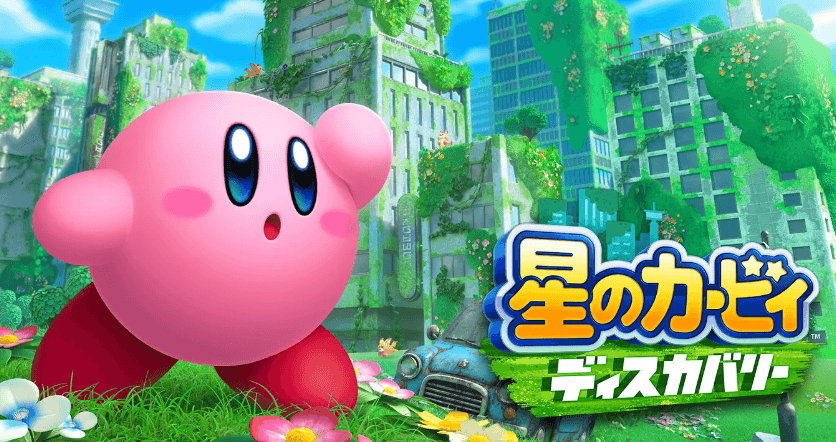
Kirby's first fully 3D platformer sends the pink protagonist through a post-civilization wilderness, absorbing enemy abilities to solve environmental puzzles. The Mouthful Mode transformation system adds a creative layer to the classic copy mechanic. GPA scores it high on the Beginner axis — accessible in a way that few 3D platformers achieve without sacrificing exploration depth.
Helldivers 2 sends four Helldivers to hostile planets under the banner of Super Earth's democracy, calling in weapons and reinforcements through timed button sequences called Stratagems. The galactic war meta-game updates in real time across all players. Arrowhead Game Studios, PlayStation Studios. PS5, PC. GPA scores it at the top for Co-op — the squad shooter that made cooperative chaos the design goal rather than a side effect.
Moving Out 2 continues the furniture-throwing co-op formula with new dimensions, portals, and sillier physics across a wider set of environments. SMG Studio, DevM Games, Team17. Switch, PS4/5, Xbox One/Series, PC. GPA scores it high on Co-op — the co-op party game that most successfully combines physics comedy with task completion satisfaction.
オーバークック2(Overcooked 2) leads with its Cooking Action identity, anchored by the core feel of "Overcooked! 2 runs its kitchen chaos across multiplayer levels that split, shift, and reconfigure the cooking space in…." The headline profile reads Co-op 95% / Action 70% / Graphics 70%, making it a strong pick for fans of Co-op and Action. Accessible enough for newcomers while offering enough depth to satisfy veterans.
▸Characteristics & Analysis
Our editorial team scored "オーバークック2(Overcooked 2)" by using its feel of co-op exclusive, party game, and 料理アクション as the primary lens, weighting Co-op and Action most heavily. Top similar titles include "マリオカート8 デラックス", "PROPHUNT(プロップハント)", "マリオゴルフ64(Mario Golf 64)".
Overcooked! 2 — A Co-Op Game Where Communication Is the Real Recipe
Game Overview
Overcooked! 2 is a chaotic cooking action game where up to four players work together to prepare dishes and complete orders before time runs out.
The tasks themselves are simple: chop ingredients, cook them, plate the food, deliver orders, and wash dishes. The problem is that the kitchens rarely stay simple for long. Platforms move. Kitchen layouts change. Routes become blocked. Fires break out. New orders arrive before the previous ones are finished.
Released in 2018, Overcooked! 2 expanded on the original with online multiplayer, dynamic kitchens, new recipes, new chefs, and the ability to throw ingredients across the kitchen. Up to four players can play together locally or online. (Team17) The result is a game where the real challenge isn't cooking. It's working together.
1. The Real Gameplay Is Communication
The most important skill in Overcooked! 2 isn't culinary knowledge or precise button inputs. It's knowing who is doing what next.
One player chops vegetables. Another handles the stove. A third plates the food, while the fourth delivers orders and washes dishes. When everything goes according to plan, the kitchen runs smoothly. Then three orders arrive at once.
Suddenly someone needs tomatoes, someone else needs a clean plate, something is burning, and the player carrying a finished dish can't reach the serving counter. That's when communication becomes part of the gameplay.
"I'm chopping!"
"Someone grab the plates!"
"It's burning!"
"Take that order first!"
The game naturally creates these conversations because the kitchen is shared by everyone.
2. Why GPA Gives Co-Op a 95% Score
GPA rates Overcooked! 2 at 95% for Co-op Play. (Similar game search) That isn't simply because the game supports four players. Cooperation is the actual foundation of the gameplay.
Everyone shares the same kitchen, but each player can handle different tasks. One person might prepare ingredients while another cooks. Someone else may focus entirely on delivering completed dishes. When that division of labor works, the kitchen becomes surprisingly efficient. When it doesn't, everything falls apart at once.
A dish burns. The plates run out. Someone is trapped on the wrong side of the kitchen. A player carrying an ingredient gets in everyone else's way. The game turns teamwork into something you can immediately see and feel.
3. Dynamic Kitchens Keep Players From Settling Into a Routine
One of Overcooked! 2's defining additions is its dynamic kitchens. Layouts can shift during a stage, forcing players to adapt while they are already trying to keep up with orders. Team17 specifically introduced these changing environments as one of the sequel's major new features. (Team17)
That matters because a fixed division of labor doesn't always work. You might start a stage thinking, "I'll handle the vegetables." Then the kitchen changes. Suddenly you need to deliver food, cross to another section, or help a teammate who is dealing with an entirely different problem. The best teams aren't the ones with the strictest roles. They're the ones that can change roles quickly when the situation changes.
4. Where the Strategy Comes From
GPA gives Overcooked! 2 a 65% Strategy score and a 60% Brain score. (Similar game search) The strategy here isn't about complicated statistics or long-term character builds. It's about organizing a limited amount of time and manpower.
Which order should you prioritize? Who should prepare the next ingredient? Should someone stop cooking and wash dishes? Is it worth finishing one order immediately, or should the team prepare several dishes at once? These decisions may seem small, but they quickly add up.
For players chasing higher scores, completing orders in the correct sequence can also build combos and increase the score multiplier. (Team17) That creates a natural progression from simply surviving a kitchen to learning how to run it efficiently.
5. A Low Difficulty Score That Works in Its Favor
GPA gives the game a 30% High Difficulty score. That doesn't mean Overcooked! 2 never gets stressful. It absolutely can. But its difficulty isn't built around punishing the player. Failure is usually followed by an immediate realization: "Okay, we should do that differently next time." And then everyone tries again.
That's especially important in a party game. New players can jump in, make mistakes, laugh about them, and gradually figure out how to work together. For more experienced players, there is also New Game+, which adds a fourth star for players who have already earned three stars across the kitchens. (Team17) So the game can work both as a casual party experience and as a challenge for teams trying to optimize their performance.
What the GPA Scores Tell Us
GPA score profile (Overcooked! 2)
Co-op ◀
95%
Action ◀
70%
Graphics
70%
Strategy
65%
Brain
60%
High Difficulty
30%
Co-op leads at 95%. Action, Strategy, and Brain support the real-time teamwork loop.
The GPA profile makes Overcooked! 2's identity very clear: Co-op 95%, Action 70%, Graphics 70%, Strategy 65%, Brain 60%, High Difficulty 30%. (Similar game search) The 95% Co-op score stands out immediately. But the supporting scores are important too.
Action keeps everyone moving. Strategy determines how the team divides its workload. Brain measures the constant problem-solving required to keep the kitchen running. Put together, these elements create a very specific kind of gameplay: Think together. Move together. Adapt together.
A mistake by one player can create a problem for everyone else. A quick decision by another player can fix it just as fast. That's why Overcooked! 2 feels less like a cooking simulator and more like a real-time team game that happens to take place in a kitchen.
Who Should Play Overcooked! 2?
◎ Players Who Are Likely to Love It
Co-op games
Party games
Playing with friends or family
Fast, chaotic multiplayer
Teamwork and role-based gameplay
Games that are easy to pick up but fun to master
Short sessions that can quickly turn into a full evening
The cooking is only the surface. The real fun comes from four players trying to keep one kitchen running at the same time. At first, everyone asks, "What am I supposed to do?" Eventually, someone starts shouting, "I'll handle the vegetables!" And another player immediately answers, "I'll take the orders!" That's when Overcooked! 2 really clicks. It turns a simple cooking game into a game about teamwork, communication, and adapting to chaos.