The Stigmatized Property drops players into a Tokyo apartment building with a history of fatal incidents. Chilla's Art's signature found footage aesthetic and abrupt pacing create tension through restraint rather than spectacle. GPA scores it high on Horror and Dark World — the combination that defines the Japanese indie horror genre's most prolific studio.
Game Characteristics
Horror
80%
Logic
75%
Existential Themes
55%
Dystopian Setting
40%
Dark
40%
High Difficulty
30%
Multiple Endings
30%
Graphics
25%
Action
20%
Story Depth
20%
Player profile fit
Recommended for: Beginner to Advanced players (A score of 50 or higher indicates a good fit.)
The Exit 8 gives players a looping underground passageway and one instruction: exit at 8 if nothing is wrong, turn back if something is. The anomaly detection loop runs on observation and iteration. GPA scores it at the top for Puzzle among walking horror titles — the mechanic distilled the genre to its most precise form.
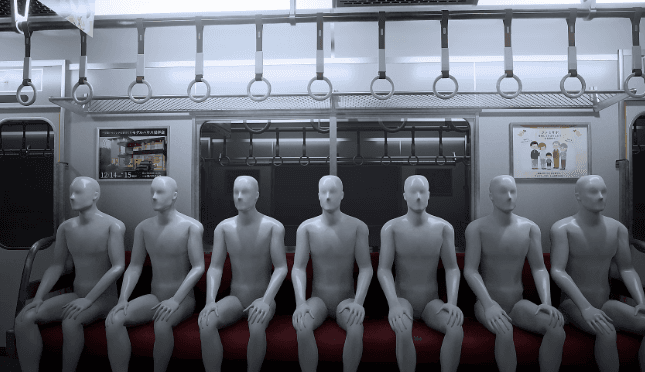
Shinkansen 0 uses the Shinkansen platform and car interior as its liminal setting, alternating between the empty station and the moving train. The anomaly detection runs across both environments. GPA scores it high on Horror and Puzzle — the combination that places it in the Exit 8 lineage of walking horror designed around observational attention.
The Platform 8 traps players on a commuter train that never arrives, applying the anomaly detection mechanic from Exit 8 to a moving environment. GPA scores it high on Horror and Puzzle.
Interior Worlds sends players through unlit rooms with only a flash camera for visibility. Each press of the shutter illuminates the space for a fraction of a second. GPA scores it high on Horror and Dark World — the mechanic makes darkness the primary material.
The Backrooms 1998 processes its found footage through VHS degradation artifacts that make the yellow corridor footage feel like a discovered recording. The 1998 timestamp commits to the analog horror aesthetic. GPA scores it high on Horror and Dark World — the found footage framing is the design, not decoration.
Infinitum loops players through suburban residential environments where nothing happens — until the repetition itself becomes the horror. The flag collection that enables escape requires attention to what hasn't changed. GPA scores it high on Dark World and Puzzle — a game where boredom is used as a controlled design element.
DREDGE sends a lone fisherman through an isolated archipelago where the fish are wrong and the nights are dangerous. The Lovecraftian horror escalates through item descriptions and environmental events rather than cutscenes. GPA scores it high on Dark World and Horror — the combination that separates it from other fishing games structurally.
KAKURENBO: Hide and Seek follows a child through an abandoned rural area using hand-illustrated 2.5D environments. Four endings. GPA scores it high on Horror and Multiple Endings.
Myhouse.wad was released as a Doom II WAD file in 2023, presenting itself as a recreation of a dead friend's house that gradually reveals impossible geometry and psychological horror. GPA scores it high on Existential Themes and Horror — the highest-rated entry in the liminal space genre for emotional weight relative to technical presentation.
Siren assigns players multiple characters across a fragmented timeline, navigating a cursed village where the undead Shibito patrol. Sightjacking — temporarily borrowing Shibito vision — is the primary information tool. GPA scores it high on Horror and Dark World — a survival horror built around information asymmetry rather than ammunition management.
Escape the Backrooms progresses through Backrooms levels with distinct environments and rulesets for each. The layer count is the largest in the genre. GPA scores it high on Horror and Puzzle — the combination that describes a game where the architecture of each level is its own survival problem.
Inside the Backrooms supports co-op play across its escape sequences, running puzzle solving and creature avoidance in parallel. The multi-floor structure gives each section distinct rules. GPA scores it high on Co-op and Horror — the combination that identifies the Backrooms game most committed to building conventional gameplay around the source material.
Hollow Cocoon sends a man back to his mother's family home in 1980s Japan, uncovering a hidden history through first-person exploration. The horror builds through environmental storytelling before any direct threat appears. GPA scores it high on Horror and Dark World — a Japanese indie horror that draws from the same roots as the Chilla's Art catalog.
SEPTEMBER 1999 runs for five and a half minutes. A VHS recording moves through a house with something wrong. Free to play. GPA scores it high on Horror and Dark World — the entire game is a tone delivery system at minimum viable length.
Phasmophobia tasks a team with identifying ghost types through evidence collection using voice recognition and sensor equipment. Calling out a ghost's name in the dark produces audible responses. GPA scores it at the top for Co-op and high on Horror — the combination that captures a game built entirely around cooperative tension.
Resident Evil Village follows Ethan Winters to a European village and a castle owned by Lady Dimitrescu. The horror atmosphere gives way to action in the second half. GPA scores it high on Horror and Action, with Story Depth above the series average — the expanded cast and lore push the narrative weight higher than Village's predecessors.
The Backrooms: Found Footage runs its maze survival on audio cues rather than visual information, reducing the yellow corridor environment to sound as the primary input. GPA scores it high on Horror — the design commits fully to sensory reduction as the horror mechanism.
LSD: Dream Emulator is available through emulation. The 1998 PlayStation title was built from ten years of dream diary entries, generating environments through a day counter system that produces different results over time. GPA scores it at the top for Existential Themes — the game predates the liminal space concept by twenty years while embodying it completely.
事故物件 leads with its Horror identity, anchored by the core feel of "The Stigmatized Property drops players into a Tokyo apartment building with a history of fatal incidents." The headline profile reads Horror 80% / Logic 75% / Existential Themes 55%, making it a strong pick for fans of Horror and Logic. Skews toward a beginner-to-intermediate audience while still leaving room for more seasoned players.
▸Characteristics & Analysis
Our editorial team scored "事故物件" by using its feel of horror, escape, and set in Japan as the primary lens, weighting Horror and Logic most heavily. Top similar titles include "8番出口", "新幹線 0号(Shinkansen 0)", "8番のりば(The Platform 8)".
The Stigmatized Property — Chilla's Art and the quiet Japanese horror wave
Introduction — indie horror's new lane and where this game sits
Modern horror games split roughly into two currents: jump-scare-heavy Western survival and co-op designs, and slow-burn Japanese horror built on wrongness in the air rather than loud shocks. The latter continues Silent Hill, Fatal Frame, and Siren.
The Stigmatized Property (Japan: 事故物件) from Chilla's Art reignited that lane at indie scale: VHS grit, a cramped apartment, a low fan hum — little spectacle, reliable dread. On GPA, Horror and Logic both score high (80% / 75%) — scary and observant at once.
You cannot discuss Chilla's Art without this title. Later hits like Night Shift, Missing Delivery, and kidnapping-themed follow-ups inherit its "everyday × short × dense" format. Text-adventure fragments join environmental dread — Siren-style unspoken horror meets stream-friendly pacing.
This piece treats the game as more than reaction-bait for clips. Through GPA neighbors and Japanese horror lineage, it reads as engineering silence — why it sticks, not how many times it jumps.
GPA tag snapshot — The Stigmatized Property
Horror ◀
80%
Logic ◀
75%
Existential Theme
55%
Dystopian World
40%
Multi-Ending
30%
Top tags shown here. Use the similarity explorer on this page for deeper comparison.
Position among Japanese horror classics
Siren trades on sightjacking and multi-perspective village horror — active "being watched" tension. This game forces passive staring. Both bury omens in quiet. Siren feeds dread through logs and radio; this game through notes, layout, and what neighbors do not say.
Closest on GPA is The Exit 8 (~86% similarity): everyday Japanese spaces with subtle wrongness. Exit 8 loops subway tiles; this game rots a rental across days. Same memory-template trick, different timeline design.
1. The Exit 8 (8番出口)
Similarity 86%
Shared: quiet anomaly hunting, high Horror and Logic. Different: underground loop rules, liminal not VHS-apartment.
Fear lives in places players already know — first solo flat, childhood home upstairs, a hallway seen once at move-in. Low-fi VHS noise and soft polygons raise horror resolution in your head. GPA's low Graphics score is a deliberate choice, not a flaw.
Audio follows Siren's playbook: minimal BGM, fan drone, footsteps, distant life — real apartment sounds become anomaly signals when silence breaks wrong.
Design — enforced slowness and exploration structure
No sprint escape valve — slow walk, tight view, corridors that force you to keep looking. Days advance; normalcy gradients into decisive madness room by room. Light controls, heavy observation — Logic 75% earned in what you notice, not reflexes.
Story space — blanks, stigma, and endings
Spoiler-light: the core is what never gets fully explained — fragments you rebuild. The title syncs with real Japan: lonely deaths, stigmatized rentals, disclosure ethics, "your own choice" rhetoric. Endings shift what you could change versus what you could not — literary replay, not checklist completion.
Chilla's Art — formatting J-horror for Steam
Success here prototyped the studio formula later shipped in Night Shift and Missing Delivery: cheap, short, dense, everyday Japanese stages. Streams help discovery — but watching is half the work. Opening doors yourself is the other half only games demand.
Who it fits
Target audience (recommended at 50+)
Beginner60
Intermediate75
Advanced50
Covers beginners through advanced players. Controls stay light; reading silence and wrongness skews intermediate.
Good fit
Slow Japanese horror over jump scares
Fans of Siren, Fatal Frame, or The Exit 8
Short indie sessions (1–2 hours)
Reading wrongness from sound and space
Poor fit
Chase combat horror
High-fidelity graphics priority
Fully expository cutscene storytelling
Conclusion — why play it yourself now
It sticks because your rental memories overlap the map — fear turns personal. Films like The Stigmatized Property: Floor Plan share the keyword; games force your hand on the door. If you only know it from streams, buy the hour on Steam and finish the artwork only control completes. Neighbors on GPA: The Exit 8 and Siren.