Baba Is You lets players push text blocks that define the game's rules, changing what objects are and what they can do. GPA scores it at the top for Puzzle.
Game Characteristics
Logic
95%
High Difficulty
65%
Existential Themes
50%
Graphics
30%
Target Audience
Recommended for: Intermediates to Advanceds (scores ≥ 50 indicate a good fit)
Beginner
40
Intermediate
60 ✓
Advanced
80 ✓
Keywords
ルール改変パズル日本ゲーム大賞受賞200ステージ以上フィンランド産論理パズル最高峰
Gameplay Profile Chart
Adjust tag ratios to instantly update similar titles in real time.
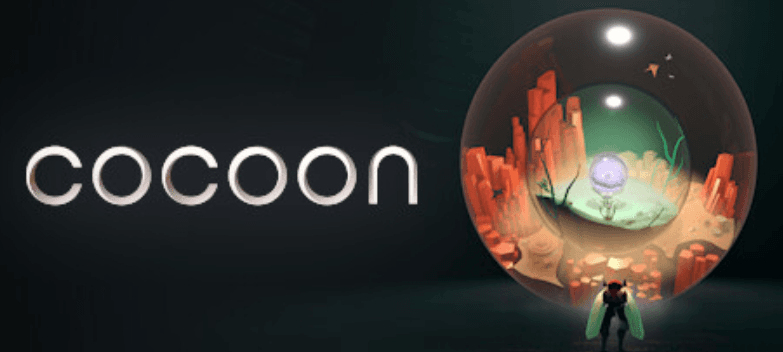
COCOON gives players nested worlds that can be carried as orbs and inserted into each other. The puzzle design scales in complexity without a single line of text. GPA scores it at the top for Puzzle — the highest in the database for the puzzle-only category — with Existential Themes above average for a wordless game.
Manifold Garden builds infinite recursive architecture from Escher's impossible geometry, letting players walk on any surface and fall endlessly in any direction. The puzzle solutions require understanding the spatial structure. GPA scores it at the top for Puzzle and high on Existential Themes — a game where the environment is the paradox.
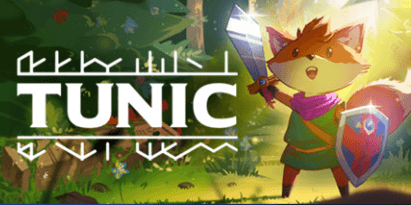
TUNIC hands players an untranslated instruction manual and asks them to decode it alongside the game's mechanics. GPA scores it high on Puzzle and Difficulty.
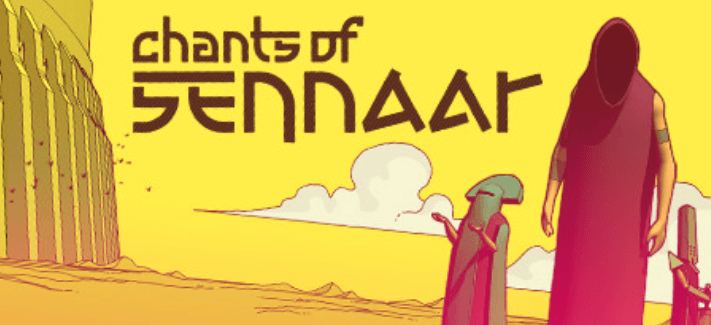
Chants of Sennaar tasks players with deciphering five constructed languages by observing context and testing hypotheses. Each language belongs to a different culture in a tower where communication has broken down. GPA scores it at the top for Puzzle and Existential Themes — the combination that correctly identifies decryption and philosophy as the twin engines of the experience.
Hollow Knight: Silksong is the highly anticipated epic sequel to the critically acclaimed metroidvania Hollow Knight. Developed by Team Cherry, the game puts players in control of Hornet, the sharp-witted princess and protector of Hallownest, who has been captured and brought to Pharloom—a vast, unfamiliar kingdom ruled by silk and song. Players must ascend through a hauntingly beautiful, completely new world, utilizing Hornet's agile, acrobat-like combat style, crafting deadly traps, and uncovering the ancient secrets of the citadel at the peak.
Prince of Persia: The Lost Crown returns the series to 2D with Sargon as protagonist, using time-based abilities alongside the series' acrobatic movement. The Metroidvania structure reveals the map through ability acquisition. GPA scores it high on Action and Puzzle — the combination that describes a game that commits to the genre with current production quality.
Suika Game drops fruit into a container and merges matching pieces to score toward a watermelon. The physics simulation generates enough variance between sessions to sustain the casual play loop. GPA scores it at the top for Puzzle — the design strips the roguelite idle mechanic to its minimum viable form.
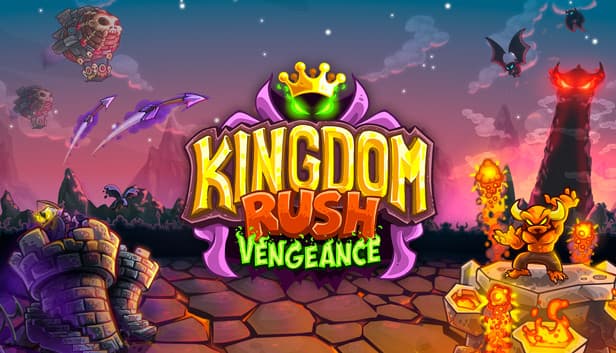
Kingdom Rush Vengeance inverts the series' premise by casting the player as the villain, defending against the hero units that populated earlier games. The tower types and hero roster match the villain faction's mechanics. GPA scores it high on Strategy and Puzzle — the role reversal that recontextualizes earlier entries as additional information.
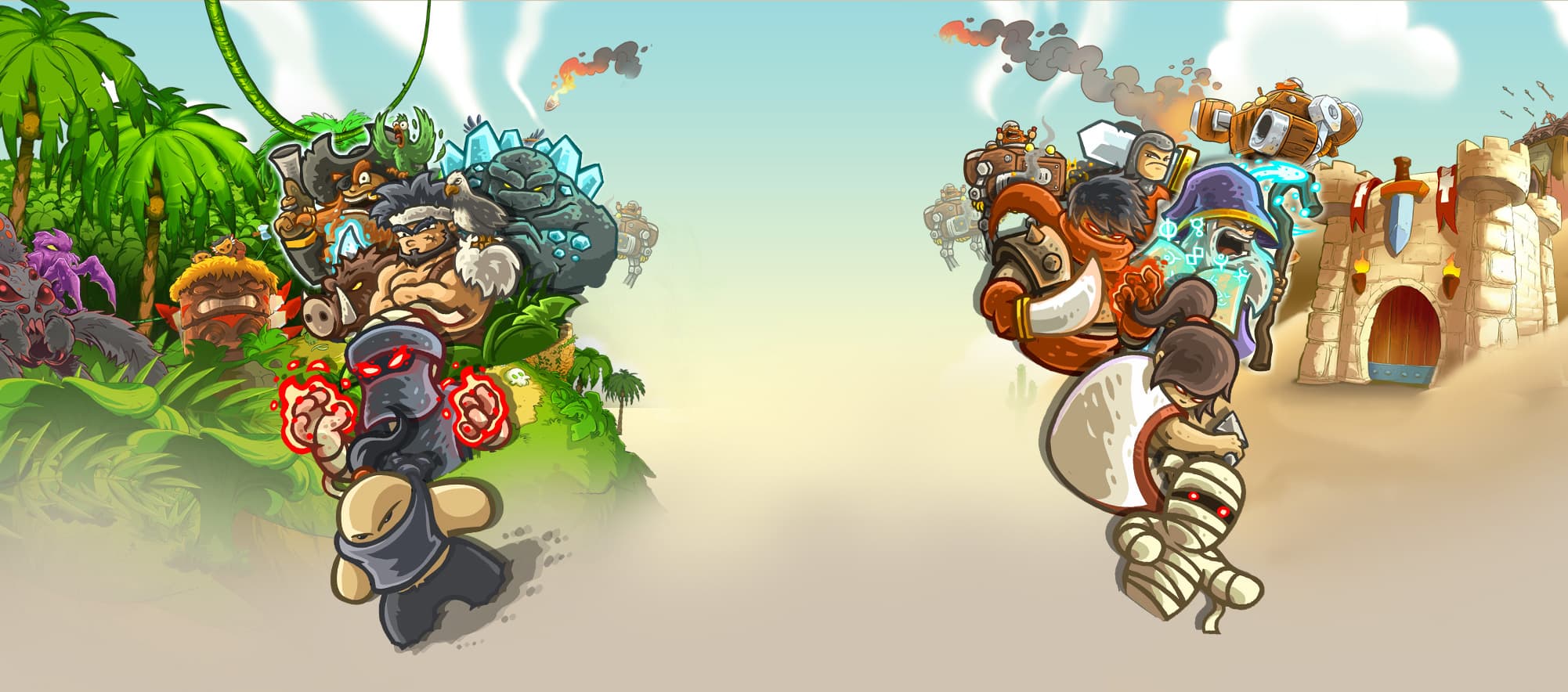
Kingdom Rush Frontiers moves the series to desert, jungle, and seafloor environments, adding new tower trees and hero units that change tactical options significantly from the first game. GPA scores it high on Strategy and Puzzle — the sequel that matched the original's design quality without reducing the challenge.
Kingdom Rush Origins runs as a prequel with an elven army, adding new unit types that change the defensive composition options. The tower tree is redesigned from the ground up rather than extended from earlier entries. GPA scores it high on Strategy and Puzzle — the third entry in the series that maintained the design consistency across all three campaigns.
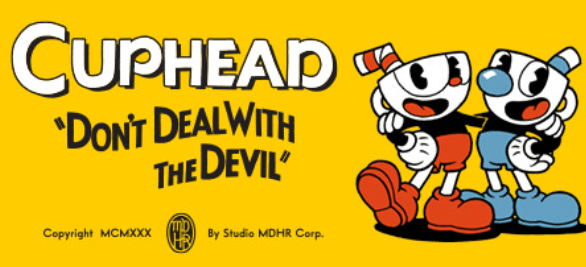
Cuphead replicates 1930s rubber hose animation at a technical level that required frame-by-frame hand drawing. Every boss is a gauntlet built around memorization and precise timing. GPA scores it maximum on Action and near-maximum on Difficulty — the lowest Beginner score in the Action category.
Elemental Dungeon combines tower defense placement with elemental attribute matching, using interactions between element types as the core puzzle layer. GPA scores it high on Strategy and Puzzle — a tower defense where spatial arrangement creates elemental chain reactions.
Kingdom Rush places towers along a fixed enemy path and scales its difficulty through tower upgrade combinations and hero ability timing. The balance between defensive placement and active intervention sets the genre benchmark. GPA scores it high on Strategy and Puzzle — the tower defense that defined the genre's upper limit for mobile.
Rogue Tower expands enemy paths rather than defending fixed ones, building the route as the game progresses. Card draws determine which towers are available each wave. GPA scores it high on Strategy and Roguelike — the tower defense subgenre's most original structural variation.
Bloons TD 6 runs its tower defense loop through a monkey-versus-balloon framework with enough hero and upgrade combinations to generate genuine strategic variation. Seasonal updates have added content continuously since 2018. GPA scores it high on Strategy and Puzzle — the combination that places it at the top of the tower defense genre.
Spelunky 2 generates cave systems procedurally with enough physics interaction to produce emergent disasters. GPA scores it at the top for Difficulty and high on Roguelike.
Baba Is You(ババ・イズ・ユー) leads with its Puzzle identity, anchored by the core feel of "Baba Is You lets players push text blocks that define the game's rules, changing what objects are and what they can do." The headline profile reads Logic 95% / High Difficulty 65% / Existential Themes 50%, making it a strong pick for fans of Logic and High Difficulty. Oriented toward experienced players looking to push their limits.
▸Characteristics & Analysis
Our editorial team scored "Baba Is You(ババ・イズ・ユー)" by using its feel of ルール改変パズル, 日本ゲーム大賞受賞, and 200ステージ以上 as the primary lens, weighting Logic and High Difficulty most heavily. Top similar titles include "Getting Over It with Bennett Foddy", "COCOON(コクーン)", "Death's Door(デスズドア)".
A Puzzle Game Where You Can Change the Rules
Game Overview
Baba Is You is a puzzle game created by Finnish indie developer Arvi Teikari. Its central idea is simple but unusual: the rules that define the level are themselves part of the puzzle.
Words such as “BABA,” “IS,” and “YOU” appear as movable blocks. By pushing them into different positions, players can create or change rules such as “BABA IS YOU” or “WALL IS STOP.”
Changing those rules changes how the level works.
For example, changing the object assigned to “YOU” can change which character the player controls. Removing “STOP” from a wall can make that wall passable. Other rule combinations can change the goal or alter the properties of objects in the level.
This means the player is not simply solving a puzzle within a fixed set of rules.
They are changing the rules and then figuring out what becomes possible.
The game contains more than 200 levels, with different stages built around experimenting with these rule combinations (Steam Store).
What the GPA Scores Tell Us
Title tendency chart (Baba Is You)
Logic ◀
95%
High Difficulty ◀
65%
Existential Themes
50%
Graphics
30%
Logic is the game's strongest category at 95%, while High Difficulty is also relatively high at 65% (GPA).
These scores reflect what makes Baba Is You challenging. The game does not demand fast reactions or complicated controls. Instead, players need to understand how the rules work, find ways to rearrange them, and predict what will happen when they do.
The important question is often not simply, “How do I reach the goal?”
It is, “Can I change the rules so that reaching the goal becomes possible?”
1. The Rules Are Part of the Puzzle
Most puzzle games give players a set of rules and ask them to find a solution within those rules.
Walls are solid. Water is impassable. Reaching the goal completes the level.
There is normally no reason to question those assumptions.
Baba Is You puts those assumptions directly on the screen as blocks.
If “WALL IS STOP” is active, walls act as obstacles. Move the “STOP” block, however, and that rule can disappear.
The important part is not moving the wall itself.
You are changing the property that makes the wall an obstacle.
That distinction is what gives the game's puzzles their particular character.
2. The Important Question Is Not What to Move, but What to Change
At first, players naturally focus on moving Baba around the level.
As the puzzles become harder, that approach becomes less useful.
Instead, players start asking questions such as:
Can I make something else “YOU”? Can I remove “STOP” from a wall? Can I change what counts as the goal? Can I create several rules at the same time?
The solution often comes from changing the conditions of the puzzle rather than finding the correct movement sequence.
Once that way of thinking clicks, familiar levels can suddenly look completely different.
3. One Rule Can Turn the Same Level Into a Different Puzzle
Changing a single rule can have consequences across the entire level.
If another object becomes “YOU,” for example, that object can become controllable. But Baba may no longer be controllable.
That creates a trade-off.
A rule can solve one problem while creating another.
This is different from a puzzle game where finding a new ability simply gives the player another tool. In Baba Is You, changing the rules can remove abilities just as easily as it creates them.
Players therefore need to keep track of which rules are currently active, which ones can be changed, and what will happen if one of them disappears.
4. Trial and Error Is Part of the Solution
Some of the harder levels are not solved immediately.
That is not necessarily a problem. Failed attempts can reveal how the rules interact.
Maybe making a wall passable allows access to the goal but leaves the player unable to control the original character.
Maybe changing the object assigned to “YOU” opens a path but makes another part of the puzzle impossible.
Each failed attempt gives the player another piece of information.
The game can also be approached one move at a time, so the challenge is not about executing a complicated sequence under pressure.
The real task is understanding what changed after a rule was modified and using that information to decide what to try next.
5. Logic 95% — Understanding Relationships Between Objects
Baba Is You has a 95% Logic score on GPA.
That does not mean the game is based on mathematical calculations.
The challenge comes from organizing the information on the screen and understanding the relationships between objects and rules.
On harder levels, simply moving toward the goal is often impossible.
Players first need to identify which rules are currently active, determine which ones can be changed, predict the consequences, and sometimes dismantle a rule they just created in order to construct another one.
The solution emerges through this process of testing and reorganizing the rules.
6. High Difficulty 65% — The Hard Part Is the Idea
The game's High Difficulty score is 65%.
But its difficulty is very different from that of an action game.
There are no demanding combos to memorize and no need for precise reflexes. The challenge is recognizing what the level is asking you to reconsider.
You may look at the available rule blocks and have no idea which one will actually change the situation.
The next step is to examine the relationships between the objects and rules, test different combinations, and look for a possibility that was not obvious at first.
Then, sometimes, one idea suddenly makes the whole puzzle understandable.
The difficulty comes from reaching that idea.
7. Existential Themes 50% — When “You” Is a Game Rule
Baba Is You has an Existential Themes score of 50%.
The game does not rely on a traditional philosophical story, but its mechanics can create questions about what it means to be the player-controlled character.
The “YOU” rule is the clearest example.
In most games, the character controlled by the player is fixed. Baba Is You allows the player to move the “YOU” rule onto another object.
The result is more than a simple gameplay trick. Baba, which was previously the player's character, can become an ordinary object while something else becomes the thing the player controls.
The game therefore turns a basic assumption of video games—what exactly counts as “you”—into something that can be changed.
That is the main reason the Existential Themes score fits naturally alongside the game's logic-focused design.
8. A Simple Visual Style That Keeps the Rules Clear
Graphics are rated at 30%.
Baba Is You uses a deliberately simple visual style. Characters and objects are easy to distinguish, and the text blocks that define the rules are clearly presented.
That simplicity is useful because the player needs to understand the relationship between objects and rules at a glance.
Words such as “BABA,” “WALL,” “FLAG,” “IS,” “YOU,” and “STOP” are not decorative elements. They are the actual components of the puzzle.
The game does not need elaborate visual effects to communicate its ideas. Keeping the presentation simple allows the player to focus on what each rule means and how changing it affects the level.
Conclusion — Change the Problem Instead of Simply Solving It
The central appeal of Baba Is You is that the player does not have to accept the puzzle's rules as fixed.
Walls can stop being walls. Baba can stop being “you.” The goal itself can be changed.
The player can rearrange these rules and then work out what the new version of the level makes possible.
That is why the game's 95% Logic and 65% High Difficulty scores make sense. The challenge is not primarily about execution. It is about finding the right way to look at the problem.
Instead of asking, “How do I reach the goal?”
Baba Is You asks you to think about a different question:
“How can I change the rules so that reaching the goal becomes possible?”
For players who enjoy logical puzzles, experimentation, and finding solutions that are not immediately obvious, that change in perspective is the core of what makes Baba Is You work.