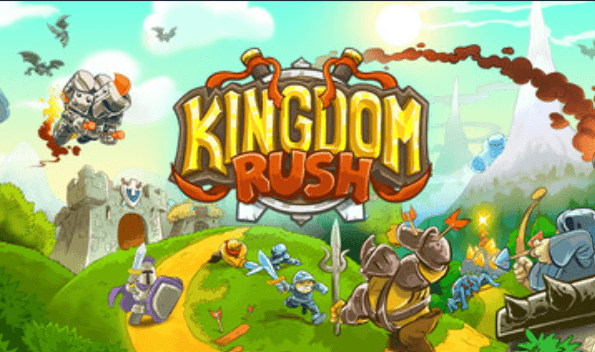
Kingdom Rush places towers along a fixed enemy path and scales its difficulty through tower upgrade combinations and hero ability timing. The balance between defensive placement and active intervention sets the genre benchmark. GPA scores it high on Strategy and Puzzle — the tower defense that defined the genre's upper limit for mobile.
Game Characteristics
Strategy
90%
Logic
75%
Graphics
40%
High Difficulty
30%
Character Building
30%
Story Depth
10%
Target Audience
Recommended for: Beginners to Advanceds (scores ≥ 50 indicate a good fit)
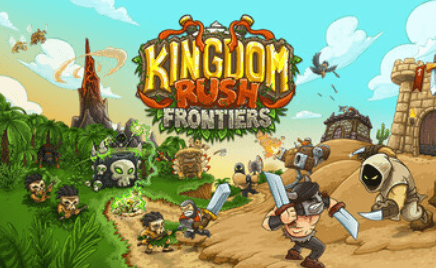
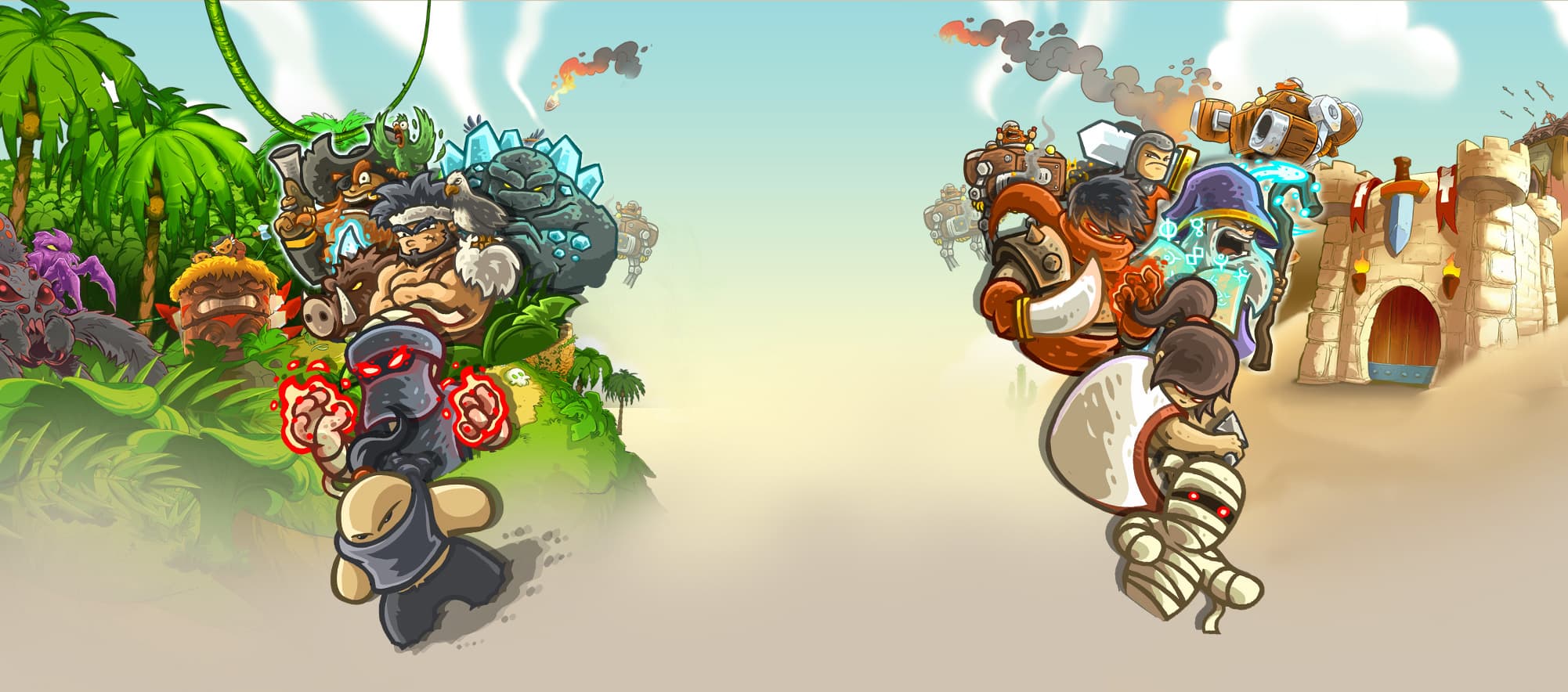
Kingdom Rush Frontiers moves the series to desert, jungle, and seafloor environments, adding new tower trees and hero units that change tactical options significantly from the first game. GPA scores it high on Strategy and Puzzle — the sequel that matched the original's design quality without reducing the challenge.
Tag Similarity
Strategy
90%
Logic
75%
Graphics
40%
High Difficulty
30%
Character Building
30%
Story Depth
10%
Chart tags: Strategy / Logic / Graphics / High Difficulty / Character Building / Story Depth
Kingdom Rush Origins runs as a prequel with an elven army, adding new unit types that change the defensive composition options. The tower tree is redesigned from the ground up rather than extended from earlier entries. GPA scores it high on Strategy and Puzzle — the third entry in the series that maintained the design consistency across all three campaigns.
Tag Similarity
Strategy
90%
Logic
75%
Graphics
40%
High Difficulty
30%
Character Building
30%
Story Depth
10%
Chart tags: Strategy / Logic / Graphics / High Difficulty / Character Building / Story Depth
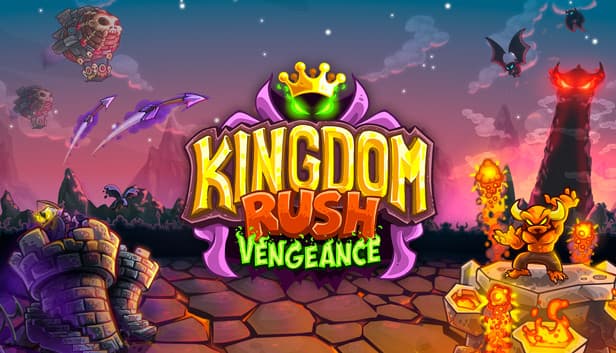
Kingdom Rush Vengeance inverts the series' premise by casting the player as the villain, defending against the hero units that populated earlier games. The tower types and hero roster match the villain faction's mechanics. GPA scores it high on Strategy and Puzzle — the role reversal that recontextualizes earlier entries as additional information.
Tag Similarity
Strategy
90%
Logic
75%
Graphics
42%
High Difficulty
30%
Character Building
30%
Story Depth
10%
Chart tags: Strategy / Logic / Graphics / High Difficulty / Character Building / Story Depth
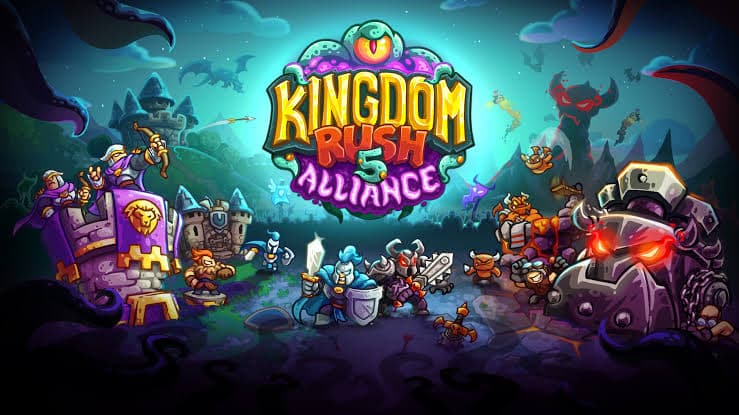
Kingdom Rush 5: Alliance TD introduces dual-faction management, asking players to coordinate human and orc unit types with different upgrade trees simultaneously. GPA scores it high on Strategy and Co-op — the series entry with the highest mechanical complexity, designed for players who have completed the earlier campaigns.
Tag Similarity
Strategy
95%
Logic
80%
Graphics
42%
High Difficulty
30%
Character Building
30%
Story Depth
10%
Chart tags: Strategy / Logic / Graphics / High Difficulty / Character Building / Story Depth
Elemental Dungeon combines tower defense placement with elemental attribute matching, using interactions between element types as the core puzzle layer. GPA scores it high on Strategy and Puzzle — a tower defense where spatial arrangement creates elemental chain reactions.
Tag Similarity
Strategy
80%
Logic
80%
Graphics
0%
High Difficulty
60%
Character Building
70%
Story Depth
0%
Chart tags: Strategy / Logic / Graphics / High Difficulty / Character Building / Story Depth
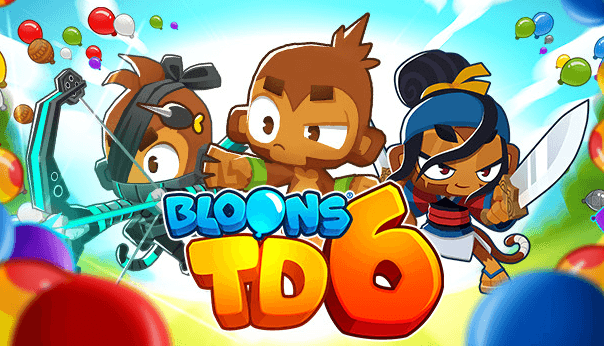
Bloons TD 6 runs its tower defense loop through a monkey-versus-balloon framework with enough hero and upgrade combinations to generate genuine strategic variation. Seasonal updates have added content continuously since 2018. GPA scores it high on Strategy and Puzzle — the combination that places it at the top of the tower defense genre.
Tag Similarity
Strategy
90%
Logic
80%
Graphics
70%
High Difficulty
75%
Character Building
85%
Story Depth
0%
Chart tags: Strategy / Logic / Graphics / High Difficulty / Character Building / Story Depth
PixelJunk Monsters 2 moves the original tower defense into 3D with four-player online co-op. Tikiman runs the map directly rather than placing towers from a menu. GPA scores it high on Strategy and Co-op.
Tag Similarity
Strategy
80%
Logic
70%
Graphics
70%
High Difficulty
55%
Character Building
0%
Story Depth
0%
Chart tags: Strategy / Logic / Graphics / High Difficulty / Character Building / Story Depth
Rogue Tower expands enemy paths rather than defending fixed ones, building the route as the game progresses. Card draws determine which towers are available each wave. GPA scores it high on Strategy and Roguelike — the tower defense subgenre's most original structural variation.
Tag Similarity
Strategy
90%
Logic
80%
Graphics
0%
High Difficulty
70%
Character Building
0%
Story Depth
0%
Chart tags: Strategy / Logic / Graphics / High Difficulty / Character Building / Story Depth
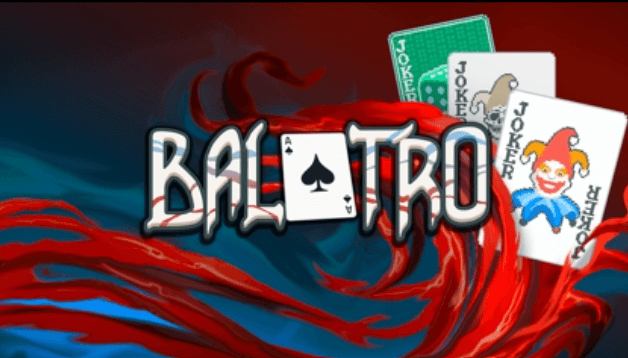
Balatro builds a poker-based roguelite around Joker combinations that generate exponentially scaling score multipliers. The 'Overlooked Ranking' scoring rewards bold positioning over passive survival. GPA scores it at the top for Puzzle and Roguelike — the combination that explains why it crossed from card game enthusiasts to players who had never touched a deck-builder.
Tag Similarity
Strategy
60%
Logic
80%
Graphics
0%
High Difficulty
50%
Character Building
65%
Story Depth
0%
Chart tags: Strategy / Logic / Graphics / High Difficulty / Character Building / Story Depth
Into the Breach sends small squads of mechs against Vek insects across grid-based maps where every enemy attack is telegraphed in advance. The puzzle is finding the move that neutralizes the most threats simultaneously. GPA scores it maximum on Strategy and Puzzle — the highest combined score for those two axes in the database.
Tag Similarity
Strategy
95%
Logic
85%
Graphics
0%
High Difficulty
75%
Character Building
0%
Story Depth
0%
Chart tags: Strategy / Logic / Graphics / High Difficulty / Character Building / Story Depth
Slay the Spire defined the roguelike deckbuilder by making card synergies the primary puzzle. Four characters each work with a distinct card pool and mechanic. GPA scores it at the top for Strategy and Turn-Based among roguelikes — a combination that separates it from action-forward entries in the genre.
Tag Similarity
Strategy
95%
Logic
60%
Graphics
0%
High Difficulty
80%
Character Building
0%
Story Depth
0%
Chart tags: Strategy / Logic / Graphics / High Difficulty / Character Building / Story Depth
COCOON gives players nested worlds that can be carried as orbs and inserted into each other. The puzzle design scales in complexity without a single line of text. GPA scores it at the top for Puzzle — the highest in the database for the puzzle-only category — with Existential Themes above average for a wordless game.
Tag Similarity
Strategy
40%
Logic
95%
Graphics
85%
High Difficulty
40%
Character Building
0%
Story Depth
60%
Chart tags: Strategy / Logic / Graphics / High Difficulty / Character Building / Story Depth
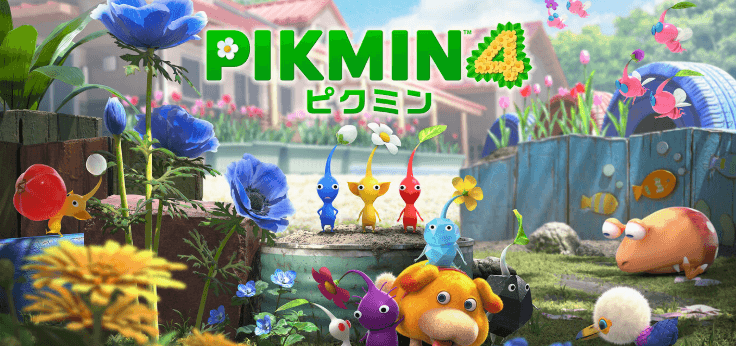
Pikmin 4 restructures the series with Oatchi as a permanent rideable companion who changes traversal options, alongside a night mode that shifts the loop toward tower defense survival. GPA scores it high on Strategy and Puzzle — the series entry most accessible to players new to the Pikmin format.
Tag Similarity
Strategy
75%
Logic
65%
Graphics
80%
High Difficulty
40%
Character Building
0%
Story Depth
50%
Chart tags: Strategy / Logic / Graphics / High Difficulty / Character Building / Story Depth
Mindustry connects tower defense survival to factory automation, requiring players to build supply chains that deliver ammunition to turrets. GPA scores it at the top for Strategy and Craft — the game where the factory and the defense are the same system.
Tag Similarity
Strategy
90%
Logic
75%
Graphics
50%
High Difficulty
75%
Character Building
0%
Story Depth
0%
Chart tags: Strategy / Logic / Graphics / High Difficulty / Character Building / Story Depth
Yu-Gi-Oh! Master Duel digitizes the OCG ruleset with over 10,000 cards and a ranked ladder. The tutorial covers fundamental mechanics for new players. GPA scores it at the top for Strategy and Turn-Based among card games — the combination that describes a game where the decision space per turn is among the highest in its category.
Tag Similarity
Strategy
85%
Logic
50%
Graphics
50%
High Difficulty
70%
Character Building
70%
Story Depth
0%
Chart tags: Strategy / Logic / Graphics / High Difficulty / Character Building / Story Depth
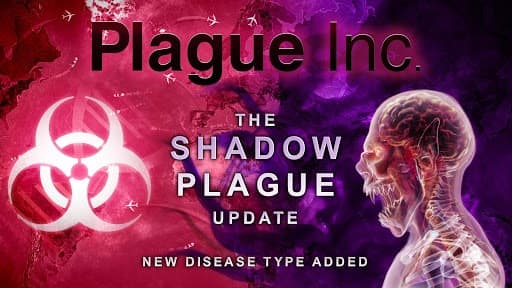
Plague Inc. gives players a pathogen to evolve and a world population to infect. The transmission, symptom, and ability tree decisions run against a Cure research counter that responds to the pathogen's visibility. GPA scores it at the top for Strategy — the highest in the simulation category — reflecting a game where every evolutionary choice creates downstream consequences.
Tag Similarity
Strategy
90%
Logic
80%
Graphics
10%
High Difficulty
40%
Character Building
20%
Story Depth
0%
Chart tags: Strategy / Logic / Graphics / High Difficulty / Character Building / Story Depth
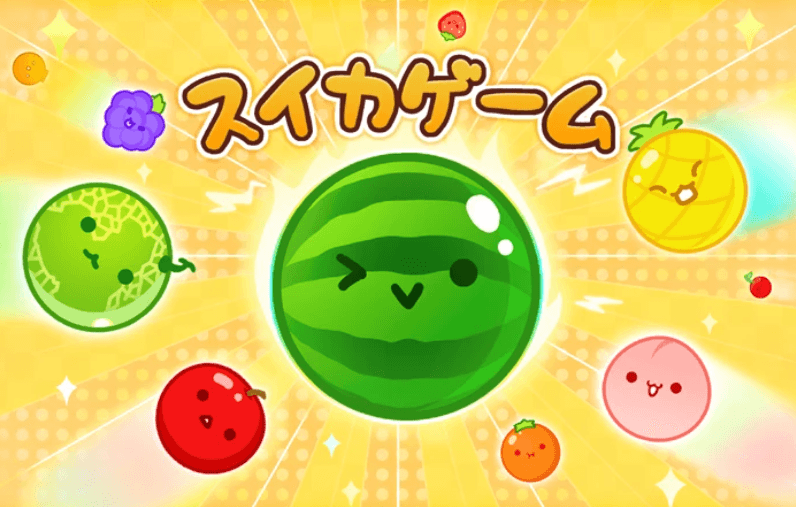
Suika Game drops fruit into a container and merges matching pieces to score toward a watermelon. The physics simulation generates enough variance between sessions to sustain the casual play loop. GPA scores it at the top for Puzzle — the design strips the roguelite idle mechanic to its minimum viable form.
Tag Similarity
Strategy
20%
Logic
70%
Graphics
10%
High Difficulty
30%
Character Building
0%
Story Depth
0%
Chart tags: Strategy / Logic / Graphics / High Difficulty / Character Building / Story Depth
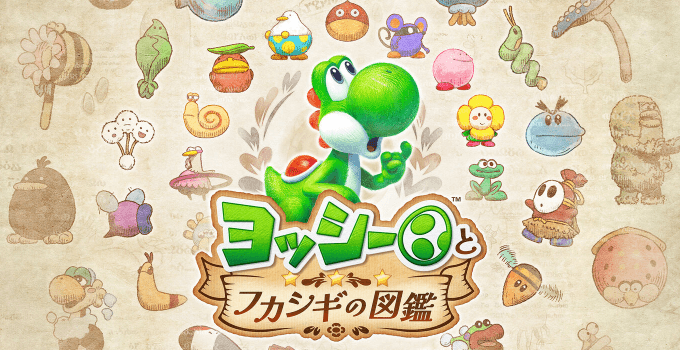
Yoshi and the Mysterious Book follows Yoshi through a pastel crayon world, filling a mysterious encyclopedia by collecting creatures and exploring each stage. The Switch 2 exclusive design emphasizes discovery over difficulty. GPA scores it at the top for Beginner and high on Collection — the combination that describes a family-friendly platformer built around curiosity rather than challenge.
Tag Similarity
Strategy
50%
Logic
60%
Graphics
60%
High Difficulty
20%
Character Building
0%
Story Depth
50%
Chart tags: Strategy / Logic / Graphics / High Difficulty / Character Building / Story Depth
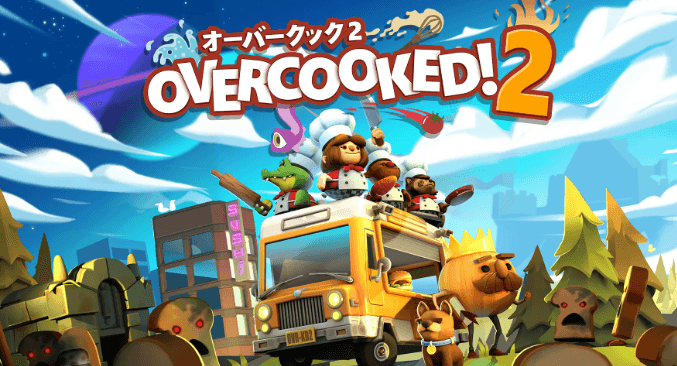
Overcooked! 2 runs its kitchen chaos across multiplayer levels that split, shift, and reconfigure the cooking space in real time. The co-op design produces communication pressure as effectively as competitive games. GPA scores it at the top for Co-op — the highest in the party game category — with Action above average reflecting the time pressure mechanics.
Tag Similarity
Strategy
65%
Logic
60%
Graphics
70%
High Difficulty
30%
Character Building
0%
Story Depth
0%
Chart tags: Strategy / Logic / Graphics / High Difficulty / Character Building / Story Depth
About "Kingdom Rush"
▸Game Composition (GPA Analysis)
キングダムラッシュ(Kingdom Rush) leads with its タワーディフェンス identity, anchored by the core feel of "Kingdom Rush places towers along a fixed enemy path and scales its difficulty through tower upgrade combinations and h…." The headline profile reads Strategy 90% / Logic 75% / Graphics 40%, making it a strong pick for fans of Strategy and Logic. Accessible enough for newcomers while offering enough depth to satisfy veterans.
▸Characteristics & Analysis
Our editorial team scored "キングダムラッシュ(Kingdom Rush)" by using its feel of タワーディフェンス原点, character building, and fantasy as the primary lens, weighting Strategy and Logic most heavily. Top similar titles include "Kingdom Rush Frontiers", "Kingdom Rush Origins", "Kingdom Rush Vengeance".
A Tower Defense Game Built Around Placement and Decision-Making
Kingdom Rush is a tower defense game developed by Uruguay-based Ironhide Game Studio. Players place defensive towers along fixed enemy routes, upgrade them, and use special abilities to survive incoming waves.
The controls are straightforward, but deciding where to place a tower and when to upgrade it is where most of the gameplay takes place. GPA gives the game a 90% Strategy score and a 75% Logic score, reflecting how much of the experience is built around defensive placement and tactical decisions.
Its High Difficulty score is only 30%. That does not mean the game has no challenge. Rather, most of that challenge comes from making the right decisions instead of performing difficult inputs. The Beginner score of 70, Intermediate score of 75, and Advanced score of 80 also suggest that the basic rules are accessible while the later stages leave room for experienced players to optimize their defenses.
The appeal of Kingdom Rush comes from working within a relatively simple ruleset and figuring out what the next wave requires.
What the GPA Scores Tell Us
Title tendency chart (Kingdom Rush)
Strategy ◀
90%
Logic ◀
75%
Graphics
40%
High Difficulty
30%
Character Building
30%
Story Depth
10%
The 30% High Difficulty score reflects a low execution barrier. The real challenge comes from placement and decision-making.
Strategy is the game's strongest category, followed by Logic. Character Building and Story Depth score much lower.
That difference is important. Kingdom Rush is not built around long-term character development or a story-heavy campaign. The main activity is preparing a defense for each stage, watching how the wave develops, and changing your approach when the current setup is not enough.
The 30% High Difficulty score also fits the game's design. The game can punish poor decisions, but it rarely asks the player to overcome a complicated control scheme.
Target player scores (50+ = recommended fit)
Beginner70
Intermediate75
Advanced80
1. Building a Defense Around Four Tower Types
The basic structure of Kingdom Rush revolves around four main tower classes: Archers, Barracks, Mages, and Artillery. Each serves a different purpose, so choosing which towers to build is part of the puzzle.
Archer Towers
Archers provide reliable ranged damage and are useful against enemies that need to be weakened quickly. Their straightforward role also makes them easy to understand when learning the basics.
Barracks
Barracks produce soldiers who can block enemies directly on the path.
Their value is not simply the damage they deal. By holding enemies in place, they give other towers more time to attack. A Barracks positioned near a strong damage source can therefore change how an entire section of the map functions.
Mage Towers
Mage towers provide another type of damage and are useful against enemies that are difficult to handle with conventional attacks.
Their role becomes more important when the enemy composition changes, forcing the player to think about which type of tower is best suited to the next wave.
Artillery
Artillery specializes in damaging groups of enemies. Placing it near a point where several enemies gather can make each attack more effective.
None of these towers is simply the “best” option. Their value depends on the enemy types, the shape of the route, and the other towers around them.
That is where the game's 90% Strategy score comes from. The important question is not just what to build, but where and when to build it.
2. Heroes Add Another Layer of Decision-Making
Kingdom Rush also allows players to control heroes on the battlefield.
Unlike stationary towers, heroes can be moved to different parts of the map. If one lane becomes dangerous, a hero can be sent there to reinforce the defense. If another group of enemies starts breaking through, the hero can be moved again.
Heroes also have their own abilities, making timing another part of the decision-making process.
They do not replace the tower system. Instead, they work alongside it. Towers establish the main defensive structure, while heroes can be used to cover weak points or respond to situations that develop during a wave.
That combination gives the player more options without turning the game into a complicated real-time strategy title.
3. Experimenting With Placements Instead of Memorizing One Solution
When a defense fails in Kingdom Rush, simply becoming stronger is not always the answer.
The player can change the composition of the defense instead. Maybe a Barracks should be placed at a chokepoint to keep enemies in range of other towers. Maybe Artillery should cover an area where several enemies gather. Or perhaps more ranged damage is needed before the next wave arrives.
A small change in placement can alter how an entire wave plays out.
This makes experimentation an important part of the game. Players can try a different combination, see where the defense breaks down, and adjust it for the next attempt.
There is not necessarily one universal solution for every situation. The interesting part is understanding why a particular setup failed and deciding what to change.
4. Character Building 30% — Upgrades Support the Strategy
GPA gives Character Building a 30% score.
Kingdom Rush does include upgrades and progression, but it is not an RPG-style game where long-term character development is the main source of power.
Players can improve towers and abilities as they progress. These upgrades give them more options, but the most important decisions still happen inside each stage: which tower to build, where to place it, and which upgrade should come first.
That is why the 30% score is relatively low. Progression is part of the experience, but it supports the tower defense rather than replacing it.
5. Story Depth 10% — The Gameplay Comes First
Story Depth is rated at 10%.
Kingdom Rush has a simple fantasy premise: the kingdom is under attack, and the player must defend it from enemies including orcs, trolls, necromancers, and other creatures. The official game description presents protecting the kingdom as the central objective (Kingdom Rush).
The story, however, is not the main reason to play.
Most of the player's attention goes toward checking enemy routes, placing towers, upgrading defenses, and deciding when to use abilities. The fantasy setting gives those battles context, but the game does not require a story-heavy structure to make its core loop work.
For players looking for a narrative-driven experience, this may feel limited. For players who simply enjoy figuring out how to stop the next wave, it is much less important.
6. Why the Original Is a Good Starting Point
The Kingdom Rush series has expanded considerably since the original, with games such as Kingdom Rush Frontiers, Kingdom Rush Origins, Kingdom Rush Vengeance, and Kingdom Rush 5: Alliance.
The original is a useful starting point because its basic tower roles are relatively easy to understand. Later games introduce additional towers, abilities, heroes, and stage-specific mechanics, so playing the first game first makes it easier to see how those systems evolved.
Game
Main Focus
Beginner Fit
Kingdom Rush
Four core tower classes and the original defense system
The later entries add more systems, but the original provides a straightforward introduction to the basic tower defense loop. Once that foundation is familiar, the differences between the sequels become easier to appreciate.
Conclusion — The Fun Is in Figuring Out the Defense
Kingdom Rush does not need complicated controls to create strategic decisions.
Its 90% Strategy score and 75% Logic score reflect the central loop: examine the enemy route, choose the right tower, place it in the right location, upgrade it when necessary, and adjust when the defense starts to break down.
At the same time, the 30% High Difficulty score makes sense because the challenge is less about execution and more about planning. New players can learn the basic rules without having to master demanding controls, while experienced players can spend more time refining their placements and finding better ways to handle difficult waves.
It is not a game built around a deep story or extensive character progression. Its appeal comes from something more straightforward: watching a defense work, seeing exactly where it fails, changing the setup, and trying again.
For players who enjoy that kind of problem-solving, Kingdom Rush remains an easy game to understand and a satisfying one to optimize.