Vampire Survivors runs on movement as the only player input, with weapons auto-firing as builds accumulate. GPA scores it at the top for Roguelike and high on Action, with a Beginner score above 80.
Game Characteristics
Roguelike
80%
Character Building
70%
Strategy
55%
High Difficulty
40%
Player profile fit
Recommended for: Beginner to Advanced players (A score of 50 or higher indicates a good fit.)
Balatro builds a poker-based roguelite around Joker combinations that generate exponentially scaling score multipliers. The 'Overlooked Ranking' scoring rewards bold positioning over passive survival. GPA scores it at the top for Puzzle and Roguelike — the combination that explains why it crossed from card game enthusiasts to players who had never touched a deck-builder.
Tag Similarity
Roguelike
60%
Character Building
65%
Strategy
60%
High Difficulty
50%
Chart tags: Roguelike / Character Building / Strategy / High Difficulty
Dungeon Defenders: Going Rogue takes the hybrid tower defense and hero action format into a roguelite structure. Each run builds a different loadout from available upgrades. GPA scores it high on Roguelike and Strategy — the tower defense genre's most mechanically dense roguelite entry.
Tag Similarity
Roguelike
85%
Character Building
80%
Strategy
85%
High Difficulty
75%
Chart tags: Roguelike / Character Building / Strategy / High Difficulty
Deep Rock Galactic: Survivor puts a dwarf miner on a solo extraction mission, with weapons firing automatically while the player focuses on movement and upgrade selection between waves. The DRG universe provides the enemy variety and environmental identity. GPA scores it high on Roguelike and Action — the auto-shooter entry that most successfully imports an existing IP's identity into the Vampire Survivors format.
Tag Similarity
Roguelike
85%
Character Building
75%
Strategy
0%
High Difficulty
60%
Chart tags: Roguelike / Character Building / Strategy / High Difficulty
Risk of Rain 2 scales enemy difficulty in real time — the longer the run, the harder it gets. Item stacking compounds exponentially, turning a cautious survivor into a screen-clearing force within a single stage. Twelve survivors with distinct playstyles cover every combat preference. GPA scores it high on Roguelike and Action — the combination that describes a game where the power curve is the content.
Tag Similarity
Roguelike
90%
Character Building
70%
Strategy
65%
High Difficulty
75%
Chart tags: Roguelike / Character Building / Strategy / High Difficulty
Slay the Spire defined the roguelike deckbuilder by making card synergies the primary puzzle. Four characters each work with a distinct card pool and mechanic. GPA scores it at the top for Strategy and Turn-Based among roguelikes — a combination that separates it from action-forward entries in the genre.
Tag Similarity
Roguelike
90%
Character Building
0%
Strategy
95%
High Difficulty
80%
Chart tags: Roguelike / Character Building / Strategy / High Difficulty
FTL assigns a crew to a spacecraft fleeing a rebel fleet across a procedurally generated galaxy, with each jump presenting combat, merchant, or event encounters that drain or replenish limited resources. Crew placement, system power allocation, and combat timing happen simultaneously in real-time-with-pause. GPA scores it at the top for Strategy and Roguelike — the Subset Games prototype that established the studio's design language before Into the Breach.
Tag Similarity
Roguelike
88%
Character Building
0%
Strategy
92%
High Difficulty
82%
Chart tags: Roguelike / Character Building / Strategy / High Difficulty
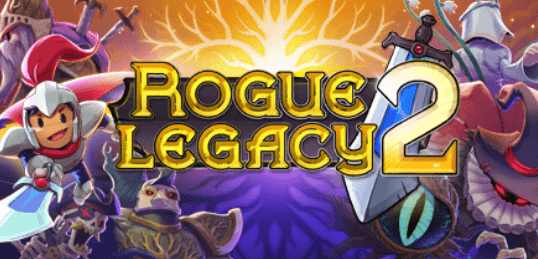
Rogue Legacy 2 sends a new heir into the castle every time the previous one dies, with each child carrying a random class, heirloom abilities, and traits that affect how the run plays. The Metroidvania map structure grows accessible as hereditary upgrades accumulate. GPA scores it high on Roguelike and Action — the combination that describes a game where permanent progression softens the permadeath loop without removing its weight.
Tag Similarity
Roguelike
88%
Character Building
72%
Strategy
0%
High Difficulty
78%
Chart tags: Roguelike / Character Building / Strategy / High Difficulty
Rogue Tower expands enemy paths rather than defending fixed ones, building the route as the game progresses. Card draws determine which towers are available each wave. GPA scores it high on Strategy and Roguelike — the tower defense subgenre's most original structural variation.
Tag Similarity
Roguelike
85%
Character Building
0%
Strategy
90%
High Difficulty
70%
Chart tags: Roguelike / Character Building / Strategy / High Difficulty
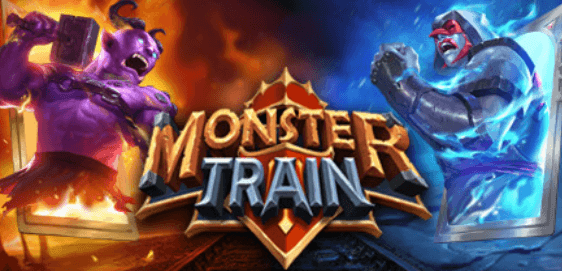
Monster Train loads a hell-bound train with monsters, then runs enemy waves up three floors toward the Pyre at the top. Deck-building decisions are inseparable from unit placement decisions across each run. The faction combinations produce more build variety than the roster count suggests. GPA scores it high on Roguelike and Strategy — the deckbuilder most often recommended to players who have finished Slay the Spire.
Tag Similarity
Roguelike
88%
Character Building
0%
Strategy
88%
High Difficulty
75%
Chart tags: Roguelike / Character Building / Strategy / High Difficulty
Elemental Dungeon combines tower defense placement with elemental attribute matching, using interactions between element types as the core puzzle layer. GPA scores it high on Strategy and Puzzle — a tower defense where spatial arrangement creates elemental chain reactions.
Tag Similarity
Roguelike
0%
Character Building
70%
Strategy
80%
High Difficulty
60%
Chart tags: Roguelike / Character Building / Strategy / High Difficulty
Power Pro Kun Pocket R is a modern reimagining of the beloved baseball-RPG spin-off series, bringing its unique flavor back to life on modern platforms. The game features the classic, deeply strategic "Success Mode," where players navigate bizarre cyber-punk narratives, high school drama, and eccentric storylines to train their custom baseball players. Alongside the traditional sports simulations, it includes chaotic multiplayer mini-games and a distinct tank-battling cooperative survival mode, capturing the unorthodox charm of the original titles.
Tag Similarity
Roguelike
30%
Character Building
90%
Strategy
60%
High Difficulty
30%
Chart tags: Roguelike / Character Building / Strategy / High Difficulty
Pawafuru Pro Baseball runs its simulation alongside the series' Sukuseso career mode, where players build a starting pitcher from amateur status through the NPB draft. The pixel-art character design has been consistent since the SNES era. GPA scores it high on Strategy and育成 — the combination that describes a sports game where the career mode is the primary content.
Tag Similarity
Roguelike
40%
Character Building
85%
Strategy
60%
High Difficulty
30%
Chart tags: Roguelike / Character Building / Strategy / High Difficulty
Pokémon Stadium 2 is playable through Nintendo Switch Online's Nintendo Classics catalog. The N64 title brings Gold and Silver's 251 Pokémon into 3D arenas and adds a minigame collection. GPA scores it high on Turn-Based and Co-op — the combination that reflects a competitive and party experience built around the Gold and Silver roster.
Tag Similarity
Roguelike
0%
Character Building
80%
Strategy
75%
High Difficulty
55%
Chart tags: Roguelike / Character Building / Strategy / High Difficulty
XCOM 2 runs a resistance organization against an alien-occupied Earth through turn-based squad tactics with permadeath. Losing a named soldier who survived a dozen missions carries permanent weight. GPA scores it at the top for Strategy and Difficulty — the combination that defines the series' identity and separates it from tactical games without stakes.
Tag Similarity
Roguelike
60%
Character Building
60%
Strategy
95%
High Difficulty
85%
Chart tags: Roguelike / Character Building / Strategy / High Difficulty
Dead Cells runs a roguelite loop through a plague-infested island, with weapon synergies that change substantially between runs. The movement speed and parry windows sit at the aggressive end of the genre. GPA scores it at the top for Roguelike and Action among 2D titles — a pairing that favors players who want mechanical depth over narrative.
Tag Similarity
Roguelike
90%
Character Building
55%
Strategy
0%
High Difficulty
80%
Chart tags: Roguelike / Character Building / Strategy / High Difficulty
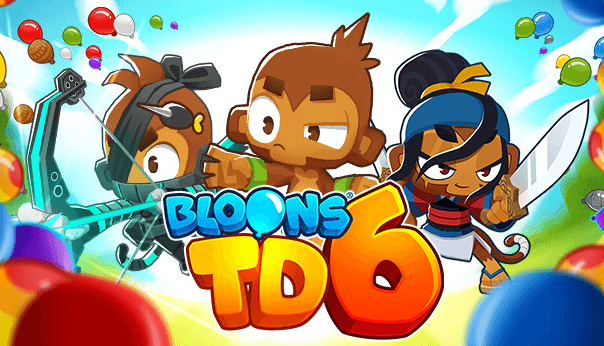
Bloons TD 6 runs its tower defense loop through a monkey-versus-balloon framework with enough hero and upgrade combinations to generate genuine strategic variation. Seasonal updates have added content continuously since 2018. GPA scores it high on Strategy and Puzzle — the combination that places it at the top of the tower defense genre.
Tag Similarity
Roguelike
0%
Character Building
85%
Strategy
90%
High Difficulty
75%
Chart tags: Roguelike / Character Building / Strategy / High Difficulty
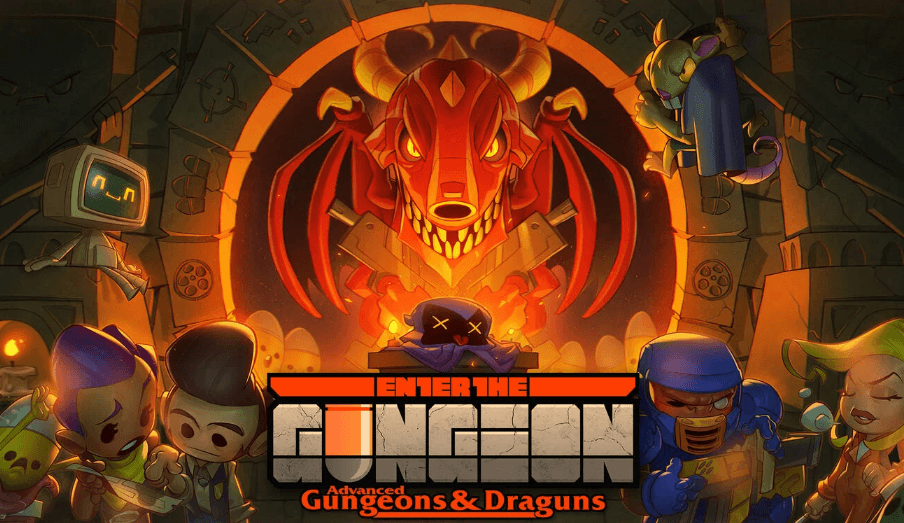
Enter the Gungeon sends players through bullet-themed dungeons with over 500 guns — ranging from the functional to the absurd — as the primary item pool. Dodge-rolling through enemy fire while managing ammo and synergies is the entire combat system. GPA scores it high on Roguelike and Difficulty — closer to a reflex-demanding shooter than the stat-management roguelites it shares shelf space with.
Tag Similarity
Roguelike
90%
Character Building
0%
Strategy
60%
High Difficulty
85%
Chart tags: Roguelike / Character Building / Strategy / High Difficulty
Path of Exile 2 expands the original's already vast build system into a new continent and act structure. The passive skill tree and gem system generate more build combinations than any comparable ARPG. GPA scores it at the top for Strategy among action games and high on Difficulty — a positioning that identifies it as the deepest mechanical entry in the genre.
Tag Similarity
Roguelike
40%
Character Building
95%
Strategy
90%
High Difficulty
75%
Chart tags: Roguelike / Character Building / Strategy / High Difficulty
Into the Breach sends small squads of mechs against Vek insects across grid-based maps where every enemy attack is telegraphed in advance. The puzzle is finding the move that neutralizes the most threats simultaneously. GPA scores it maximum on Strategy and Puzzle — the highest combined score for those two axes in the database.
Tag Similarity
Roguelike
70%
Character Building
0%
Strategy
95%
High Difficulty
75%
Chart tags: Roguelike / Character Building / Strategy / High Difficulty
About "Vampire Survivors"
▸Game Composition (GPA Analysis)
Vampire Survivors(ヴァンパイアサバイバーズ) leads with its Bullet-Hell Roguelike identity, anchored by the core feel of "Vampire Survivors runs on movement as the only player input, with weapons auto-firing as builds accumulate." The headline profile reads Roguelike 80% / Character Building 70% / Strategy 55%, making it a strong pick for fans of Roguelike and Character Building. Skews toward a beginner-to-intermediate audience while still leaving room for more seasoned players.
▸Characteristics & Analysis
Our editorial team scored "Vampire Survivors(ヴァンパイアサバイバーズ)" by using its feel of bullet-hell roguelike, 爆発的シナジー, and 低価格傑作 as the primary lens, weighting Roguelike and Character Building most heavily. Top similar titles include "Balatro(バラトロ)", "ダンジョン・ディフェンダーズ・ゴーイング・ログ(Dungeon Defenders: Going Rogue)", "Moonlighter(ムーンライター)".
A Roguelike Built Around Movement, Builds, and Risk
Game Overview
Vampire Survivors is a roguelike survival action game developed by poncle. Players control a character while waves of enemies surround them, collecting experience, improving their weapons, and trying to survive for as long as possible.
One of its defining features is that the player does not manually aim most attacks. Instead, weapons attack automatically, while the player mainly controls movement.
That changes the focus of the game. Rather than aiming at individual enemies, players have to think about where to move, which enemies to avoid, and when it is worth moving into danger to collect experience.
Defeated enemies drop experience gems, which allow the character to level up. New weapons and passive items can then be selected, gradually shaping the build for that particular run.
The early game is relatively calm, but the number of enemies increases as time passes. Eventually, the screen can become crowded with enemies, projectiles, experience gems, and other objects.
That gradual shift from a manageable opening to a much more crowded battlefield is at the heart of the Vampire Survivors experience.
What the GPA Scores Tell Us
Title tendency chart (Vampire Survivors)
Roguelike ◀
80%
Character Building ◀
70%
Strategy
55%
High Difficulty
40%
Roguelike is the game's strongest category at 80%, followed by Character Building at 70%, Strategy at 55%, and High Difficulty at 40% (GPA).
These scores make sense when looking at how each run works. Vampire Survivors is less about mastering difficult controls and more about making decisions during a run, building a strong combination of weapons and upgrades, and using what you learned to improve the next attempt.
The 70% Character Building score also reflects the game's progression systems. Players become stronger during each run, while gold earned from runs can be used for upgrades that carry over to future attempts.
Strategy is present, but the game does not overwhelm the player with complex menus or a large number of simultaneous systems. Most decisions revolve around weapon choices, positioning, movement, and when to take risks.
Target player scores (50+ = recommended fit)
Beginner75
Intermediate65
Advanced50
1. Movement Is the Main Form of Combat
The first thing many players notice about Vampire Survivors is how different its controls feel from a conventional action game.
The player's main task is moving the character. Weapons attack automatically.
There is no need to constantly aim at individual enemies. Instead, positioning becomes the main concern.
For example, when enemies begin surrounding the character, simply running toward the edge of the screen is not always the best choice. Experience gems may be sitting near the enemy group, and collecting them can be important for maintaining the character's growth.
This creates a simple but useful tension: staying safe reduces the risk of taking damage, while moving toward experience can make the character stronger but also puts them closer to danger.
That is one of the reasons the game feels different from a simple idle or auto-battle game.
2. Weapon Choices Define the Build
Leveling up gives the player a choice between different weapons, passive items, or upgrades.
Those choices gradually determine how the character will handle the current run.
Area-of-effect weapons can help against large groups of enemies, while weapons focused on single targets may be more useful against tougher enemies. Some weapon and passive-item combinations can also unlock weapon evolutions.
As a result, simply picking whichever option looks strongest at that exact moment is not always the best approach.
Players also need to consider what their current build is missing and what kind of enemies they are likely to face later in the run.
That combination of immediate choices and longer-term planning is a major part of the game's 80% Roguelike score.
3. Expanding the Arsenal or Upgrading What You Already Have?
Another important decision is whether to add a new weapon or strengthen one that is already part of the build.
Adding more weapons gives the character additional ways to attack. However, spreading upgrades across too many weapons can leave the entire build underpowered.
Focusing on fewer weapons can make them much stronger earlier, but it also means giving up other options.
The official Steam page even recommends taking two or three offensive weapons early on and focusing on leveling them one at a time (Steam Store).
There is no single build that has to be used every time. The available choices change from run to run, so players have to make decisions based on what appears in front of them.
4. Getting Stronger Does Not Make the Run Permanently Safe
The basic progression is easy to understand. Defeat enemies, collect experience, level up, and become stronger.
Eventually, enemies that were dangerous at the beginning can be defeated with much less effort.
But the game is also increasing the pressure as time passes.
Enemy numbers grow, stronger enemies appear, and safe movement becomes harder. A build that felt powerful ten minutes earlier may suddenly struggle to create enough space.
This means raw damage is not always enough.
Players also need to think about where they can move, how quickly they can clear a path, and whether their current attack range gives them enough room to escape.
5. Experience Gems Turn Progression Into a Risk
Defeating enemies is only part of the progression system. Players also need to collect the experience they drop.
The problem is that experience often appears exactly where enemies are gathering.
Staying in a safe area makes it easier to avoid damage, but it can also mean leaving valuable experience behind. Moving toward the gems improves the character's growth but may put the player directly in the path of an enemy group.
This makes experience collection an active decision rather than a passive reward.
The weapons handle most of the attacking automatically, but the player still decides when and where to expose themselves to danger.
6. Character Building 70% — Progress Continues Between Runs
Vampire Survivors combines progression within a run with upgrades that carry over between runs.
The official Steam description explains that gold collected during a run can be used for upgrades that help the next survivor (Steam Store).
That means an unsuccessful run can still contribute to future progress.
Players can unlock new characters and weapons and invest in permanent upgrades, giving later attempts a stronger starting point.
However, progression does not completely replace player decisions. The weapons chosen during a run and the way the character moves through the map still matter.
The result is a progression system that supports experimentation rather than simply making every subsequent run easier.
7. High Difficulty 40% — Easy Controls, Busier Endgame
Vampire Survivors has a High Difficulty score of 40%.
The controls themselves are simple, so the challenge does not come from mastering complicated inputs.
Instead, things become harder when the number of enemies increases. Players have to watch enemy movement, experience gems, their own attack range, and possible escape routes at the same time.
Even so, this is not the kind of game that requires hours of practice to learn difficult combat mechanics.
GPA's audience scores of 75 for beginners, 65 for intermediate players, and 50 for advanced players also suggest that the game is approachable across different levels of experience (GPA).
8. Repeated Runs Help Players Develop Their Own Builds
The appeal of Vampire Survivors is not limited to completing a single run.
After playing several times, players begin to recognize which weapons are useful early on, which combinations work well together, and when it is worth taking a risk to collect experience.
A failed run can therefore change how the next run is played.
Maybe the problem was not enough area damage. Maybe the build lacked a reliable way to create space. Or perhaps too much time was spent collecting experience from dangerous areas.
Those lessons gradually become part of the player's decision-making.
That is a key part of the game's roguelike structure: each run gives the player another chance to test a different combination and refine their approach. See also our top 20 roguelike games roundup.
Conclusion — A Build-Crafting Game That Starts With Simple Movement
Vampire Survivors can look extremely simple at first. You move your character while the weapons handle the attacks.
But underneath that simple control scheme is a steady stream of decisions: which experience to collect, which weapons to choose, which upgrades to prioritize, how to combine items, and when to move closer to danger.
Its 80% Roguelike, 70% Character Building, and 55% Strategy scores reflect that structure.
At the same time, the 40% High Difficulty score explains why the game is relatively easy to pick up. Players do not need advanced action-game skills to start playing.
The interesting part comes from gradually understanding the relationship between movement, experience, weapons, and upgrades.
Vampire Survivors starts with one simple action—moving a character around a screen—but gradually turns that movement into a series of decisions about risk, progression, and build composition.