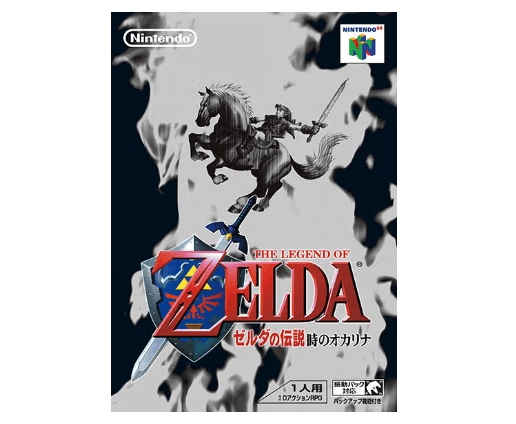
The Metacritic 99-rated N64 landmark still cited as one of the greatest games ever made — it defined 3D Zelda grammar with Z-targeting, time-travel puzzles, and a half-open Hyrule hub, and its design DNA flows directly into Breath of the Wild and Tears of the Kingdom. A Guinness-record holder for critical acclaim, with a story and score that remain touchstones for action-adventure design.
Game Characteristics
Emotional Story
80%
Story Depth
80%
Logic
80%
Existential Themes
70%
ダーク
55%
Action
50%
Open World
50%
High Difficulty
40%
Graphics
40%
Strategy
40%
Dystopian Setting
20%
Visual Novel / ADV
20%
Horror
20%
Character Building
10%
Target Audience
Recommended for: Beginners to Advanceds (scores ≥ 50 indicate a good fit)
A landmark open-world action-adventure that redefined the genre — asking players to piece together a century of lost memories as Link traverses a breathtaking Hyrule with unprecedented freedom of exploration and physics-driven problem-solving.
Tag Similarity
Emotional Story
60%
Story Depth
70%
Logic
60%
Existential Themes
20%
ダーク
20%
Action
70%
Open World
90%
High Difficulty
50%
Chart tags: Emotional Story / Story Depth / Logic / Existential Themes / ダーク / Action / Open World / High Difficulty
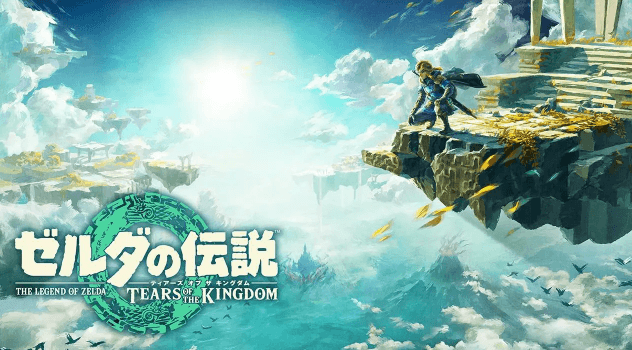
Considered the ideal entry point to the Like a Dragon saga, Yakuza 0 pits a young Kiryu and Majima against rival yakuza factions amid the glittering excess of 1988 bubble-era Japan in a story of loyalty, betrayal, and identity.
Tag Similarity
Emotional Story
85%
Story Depth
70%
Logic
20%
Existential Themes
55%
ダーク
50%
Action
40%
Open World
40%
High Difficulty
20%
Chart tags: Emotional Story / Story Depth / Logic / Existential Themes / ダーク / Action / Open World / High Difficulty
A uniquely ingenious open-world mystery where knowledge itself is your only tool — relive a 22-minute time loop ending in supernova to piece together the secrets of a solar system facing its final moments.
Tag Similarity
Emotional Story
85%
Story Depth
90%
Logic
80%
Existential Themes
90%
ダーク
50%
Action
0%
Open World
75%
High Difficulty
0%
Chart tags: Emotional Story / Story Depth / Logic / Existential Themes / ダーク / Action / Open World / High Difficulty
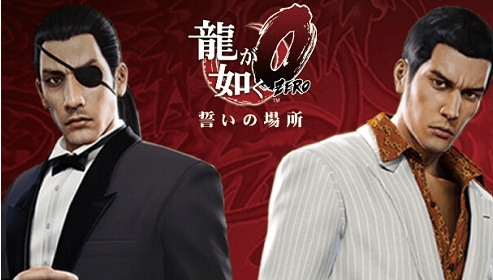
The follow-up to Breath of the Wild layers deep crafting and Ultrahand building mechanics over the same vast Hyrule — expanding the world into sky and depths while delivering an even more ambitious open-world adventure.
Tag Similarity
Emotional Story
60%
Story Depth
70%
Logic
65%
Existential Themes
20%
ダーク
20%
Action
70%
Open World
95%
High Difficulty
55%
Chart tags: Emotional Story / Story Depth / Logic / Existential Themes / ダーク / Action / Open World / High Difficulty
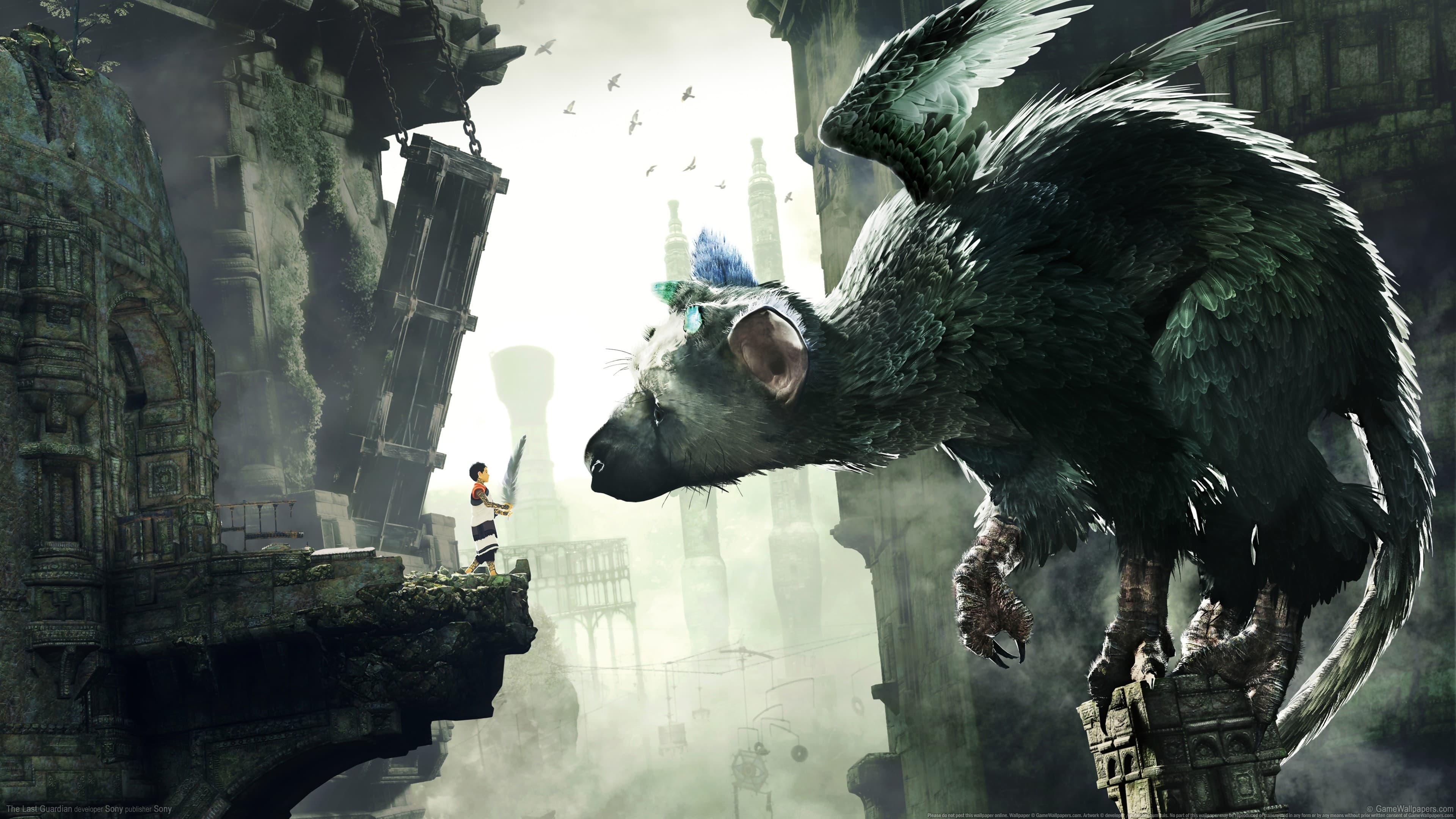
A slow, contemplative action-adventure about the extraordinary bond between a boy and a massive feathered creature named Trico, where the animal's convincingly organic behavior and emotional presence are the entire heart of the experience.
Tag Similarity
Emotional Story
95%
Story Depth
85%
Logic
70%
Existential Themes
70%
ダーク
55%
Action
0%
Open World
0%
High Difficulty
40%
Chart tags: Emotional Story / Story Depth / Logic / Existential Themes / ダーク / Action / Open World / High Difficulty
The 19-years-overdue 2D continuation of Samus' saga, pitting her against the relentless robotic E.M.M.I. hunters in a sleek, fast-paced Metroidvania that ranks among the series' finest achievements.
Tag Similarity
Emotional Story
60%
Story Depth
70%
Logic
30%
Existential Themes
55%
ダーク
40%
Action
85%
Open World
0%
High Difficulty
80%
Chart tags: Emotional Story / Story Depth / Logic / Existential Themes / ダーク / Action / Open World / High Difficulty
A puzzle adventure inspired by the Tower of Babel, where you decode the languages of five distinct civilizations through observation and deduction alone — each linguistic breakthrough delivering genuine, hard-earned intellectual euphoria.
Tag Similarity
Emotional Story
60%
Story Depth
70%
Logic
95%
Existential Themes
60%
ダーク
45%
Action
0%
Open World
0%
High Difficulty
40%
Chart tags: Emotional Story / Story Depth / Logic / Existential Themes / ダーク / Action / Open World / High Difficulty
About "The Legend of Zelda: Ocarina of Time"
▸Game Composition (GPA Analysis)
ゼルダの伝説 時のオカリナ leads with its Action-Adventure identity, anchored by the core feel of "The Metacritic 99-rated N64 landmark still cited as one of the greatest games ever made — it defined 3D Zelda grammar …." The headline profile reads Emotional Story 80% / Story Depth 80% / Logic 80%, making it a strong pick for fans of Emotional Story and Story Depth. Accessible enough for newcomers while offering enough depth to satisfy veterans.
▸Characteristics & Analysis
Our editorial team scored "ゼルダの伝説 時のオカリナ" by using its feel of 史上最高のゲーム, 謎解き, and 任天堂 as the primary lens, weighting Emotional Story and Story Depth most heavily. Top similar titles include "ホライゾン ゼロ ドーン(Horizon Zero Dawn)", "ゼルダの伝説 ブレス オブ ザ ワイルド(BotW)", "龍が如く0 誓いの場所".
The Legend of Zelda: Ocarina of Time — Deep Dive: Where 3D Game Design Was Born
Overview & Historical Impact
When The Legend of Zelda: Ocarina of Time shipped on Nintendo 64 in November 1998, it did more than set a high bar — it wrote the rules. Link's seven-year journey between childhood and adulthood, waged to stop Ganondorf from seizing Hyrule, folds time travel, instrument-driven world manipulation, and some of the largest contiguous 3D spaces of its era into a single campaign arc.
Metacritic's 99 still stands as a Guinness World Records entry for the highest-rated game ever reviewed. That score is not nostalgia talking. Ocarina was the first game to fully codify Z-targeting, intelligent camera behavior, spatial puzzles, and a hub-based half-open-world layout — systems that still anchor modern 3D action games, adventure titles, and open-world RPGs.
A Nintendo Switch 2 remake was announced during the June 9, 2026 Nintendo Direct. GPA rates the game near 80% on emotional story, story depth, and logic because progression comes from mastering the world and expanding what Link can do, not from stat bloat — a design philosophy that has aged remarkably well.
What GPA's Tag Profile Reveals
On GPA, Ocarina of Time skews toward emotional story, story depth, and logic rather than combat spectacle. Swordplay matters, but the experience is built around decoding an unfamiliar world and navigating it across time. That profile explains why similar-title rankings cluster it alongside the Horizon series, The Last Guardian, and other Zelda entries — titles where narrative density and puzzle-driven exploration carry as much weight as action.
Title tendency snapshot (Ocarina of Time)
Emotional Story
80%
Story Depth
80%
Logic
80%
Existential Theme
70%
Strategy
60%
Top large tags only; see this title page for the full tag set.
Target audience (recommended when score ≥ 50)
Beginner
60
Intermediate
78
Advanced
65
Range centered on beginner through advanced players (each metric ≥ 50 triggers a recommendation).
The Core Loop: Items That Rewrite Hyrule
Explore the world → Discover a new dungeon item
→ Solve spatial puzzles with that item → Unlock new movement and a larger world
The Hookshot in the Forest Temple, Blue Fire in the Water Temple, Lens of Truth in the Shadow Temple — none of these are mere keys. Each one physically expands the explorable footprint of Hyrule. Return to a field you cleared hours ago with a new tool, and routes that were invisible suddenly open up. That backtracking loop is the engine of the game's pacing.
Navi keeps the main quest moving without punishing detours, and Hyrule Field functions as a central hub linking Kokiri Forest, Goron City, Zora's Domain, and Gerudo Valley — a half-open-world structure that Breath of the Wild and Tears of the Kingdom would later push to its logical extreme.
Z-Targeting and the Analog Stick: Lock-On Before It Had a Name
Paired with Super Mario 64, Ocarina proved that the N64 analog stick was not just a movement input — it was a design platform. Z-targeting fixed the two problems that plagued every early 3D game: broken depth perception and a camera that could not keep up. One button locked onto enemies, NPCs, and objects; the lens followed automatically. Every lock-on system since — from Kingdom Hearts and Devil May Cry to Dark Souls — owes a debt here.
Auto-jump at ledges deserves equal credit. By removing the penalty for misjudging a gap in 3D space, Nintendo freed players to focus on exploration rather than pixel-perfect platforming — a quality-of-life decision that reads as obvious today because Ocarina made it standard.
Context-Sensitive Actions: Subtraction as Design
Open, examine, grab, talk, and jump all route through a single A button, contextually remapped to whatever Link is standing near. The HUD stays clean; information lives in the environment instead. That principle of subtraction in design— doing more with fewer on-screen prompts — remains visible in FromSoftware's output and Nintendo's own modern catalogue.
Action-RPG Foundations, a Decade Ahead of Schedule
Ocarina's deeper achievement is how completely it wired together environment, NPCs, and player growth. The seven-year gap between child and adult Link does not just change dialogue — it rewrites terrain, repopulates towns, and shifts the emotional register of familiar locations. That flag-driven world state is the same trick open-world RPGs use today to make player progress feel permanent.
Power growth, meanwhile, is tied to player skill and an expanding toolkit — Heart Containers, new gear, unlocked traversal — rather than escalating damage numbers. The through-line from here to Elden Ring and Breath of the Wild is direct and deliberate.
Secrets, Backtracking, and Replay Value
Even after the credits roll, Hyrule keeps giving. Time-of-day spawns, child Link actions that reshape adult geography — the bean-sprout platform is the textbook example — and hidden routes gated behind the Hookshot, bombs, or Megaton Hammer reward players who treat the map as a living puzzle rather than a corridor. GPA clusters Ocarina near The Last Guardian for exactly this reason: both games treat meaningful spatial interaction as a core pleasure, not a side dish.
Temporal Level Design and Music as Mechanic
Drawing the Master Sword skips seven years in a cutscene; the Temple of Time lets you shuttle between past and future within the same geometry. Light and dark door puzzles, time-locked switches, child-only crawlspaces set against adult-only enemies — this is where spatial puzzles built on temporal offset reach their apex. Ocarina songs — Sun's Song, Song of Storms, warp melodies — are not background music. They are player-triggered mechanics, turning Koji Kondo's score into an interactive system decades before "music as gameplay" became industry jargon.
Wonder Over Dread: Ocarina's Tone
Where Majora's Mask leans into dread and existential pressure, Ocarina trades on the thrill of discovering an alien fantasy world. The Lost Woods' uncanny atmosphere, the cultural distinctiveness of the Kokiri, Gorons, Zora, and Gerudo, and landmarks like Zora's Domain or Death Mountain register as places worth remembering — not just loading screens between dungeons.
Mechanical DNA in Breath of the Wild and Tears of the Kingdom
Hub-and-spoke Hyrule, gear that redefines traversal, and the Water Temple's vertical water-level logic all carry forward into Breath of the Wild and Tears of the Kingdom. GPA shows roughly 69% similarity to BotW on exploration freedom, but Ocarina scores higher on logic and emotional story — same franchise, different center of gravity.
Narrative Depth and the Post-Credits Conversation
Hyrule falls the moment the hero is born — a cruel irony baked into the plot. Sheik's true identity, the sages' sacrifices, Navi's quiet exit: the story leaves decades of interpretive room and fuels community debate to this day. Koji Kondo's regional themes do not just set mood; they function as an auditory map, anchoring memory to place long after you power off the console.
Where It Sits on GPA's Similarity Map
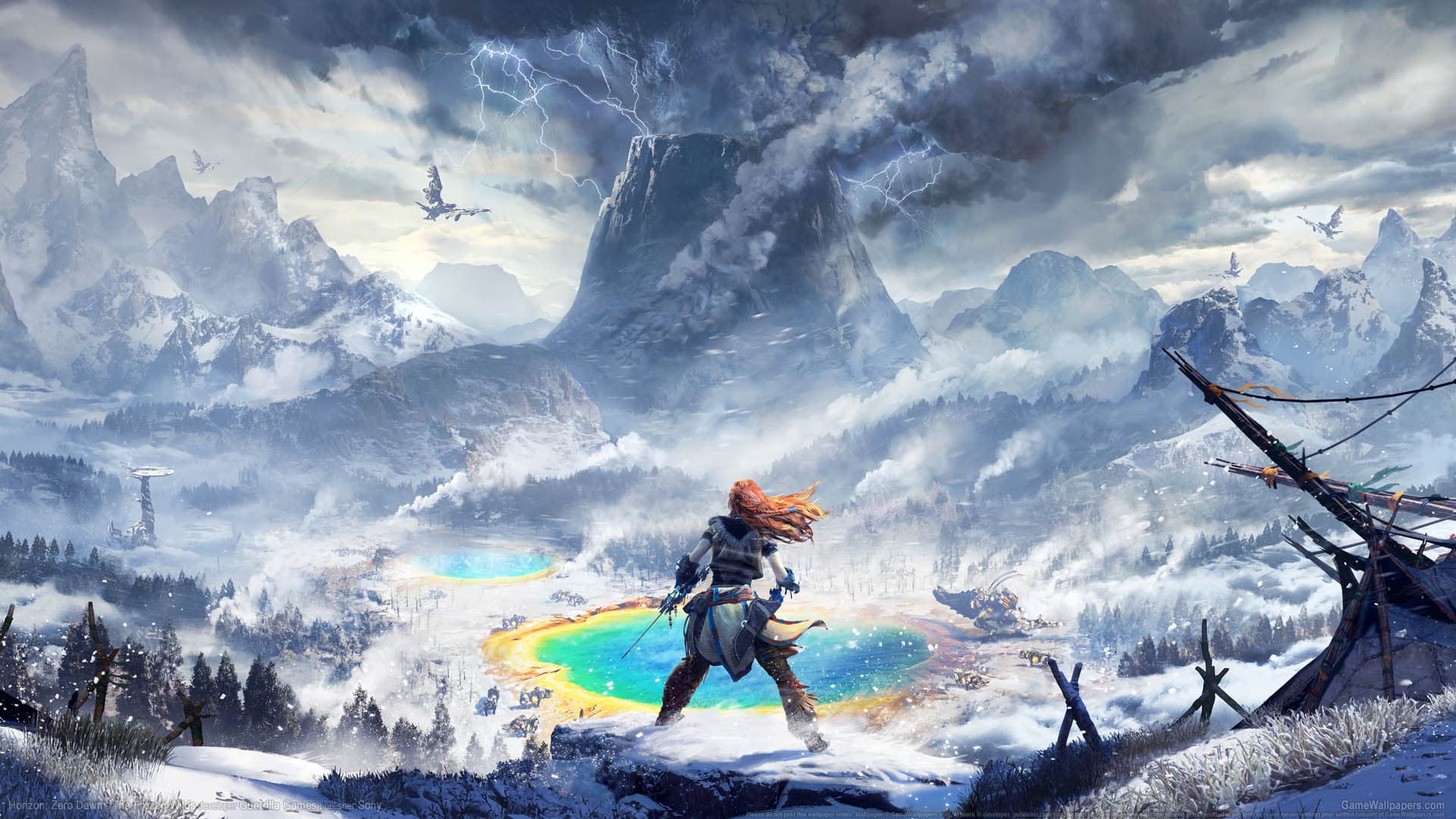
1. Horizon Zero Dawn
Similarity 75%
Overlap: strong emotional story and a civilization mystery worth unraveling. Divergence: open-world machine hunting replaces time travel and ocarina-driven world manipulation.
Similar tag graph (top 5 adjusted tags)
Emotional Story
80%
Story Depth
85%
Logic
40%
Existential Theme
65%
Strategy
65%
2. The Last Guardian
Similarity 69%
Overlap: high logic and emotional story scores; both reward deep spatial interaction. Divergence: almost no combat — the bond with Trico is the entire experience.
Similar tag graph (top 5 adjusted tags)
Emotional Story
95%
Story Depth
85%
Logic
70%
Existential Theme
70%
Strategy
0%
3. The Legend of Zelda: Breath of the Wild
Similarity 69%
Overlap: Zelda-series exploration freedom and item-driven world expansion. Divergence: full open-world scale versus Ocarina's tighter dungeon-led structure.
Similar tag graph (top 5 adjusted tags)
Emotional Story
60%
Story Depth
70%
Logic
60%
Existential Theme
20%
Strategy
50%
Who Should Play It — and Who Might Pass
✓ Good fit if you…
· Value exploration and spatial puzzles over combat spectacle
· Enjoy lore theories and post-credits community discussion
· Want to understand where modern 3D action-adventure conventions originated
· Are drawn to time manipulation and environmental puzzle design
· Prefer focused, dense exploration over sprawling open-world sandboxes
✗ May not suit if you…
· Require modern visuals as a baseline (the N64 presentation shows its age)
· Find fixed cameras and period QoL hard to tolerate
· Expect Skyrim-scale open-world freedom from the outset
· Want deep combat systems above puzzle-solving and narrative
Final Verdict
Ocarina of Time is the reference point for 3D game design. Z-targeting, context-sensitive actions, auto-jump, temporal level design, and music-as-mechanic are not historical footnotes — they are live standards. On GPA, the game occupies a rare tier where emotional story, puzzle depth, and existential themes about time and loss coexist at peak levels for a late-90s title.
Use the tag chart at the top of this page to explore adjacent titles, or compare against Breath of the Wild and The Last Guardian to see whether world-building, puzzle design, or narrative weight is driving the similarity match.