Journey sends a robed figure across a desert toward a distant mountain, with no dialogue and no explanation. Strangers encountered online can travel alongside you but cannot speak — only chirp. The two-hour runtime is structured like a piece of music, building to a conclusion that earns its emotional weight. GPA scores it at the top for Emotional Story and Existential Themes — the combination that identifies a game where the experience is the content.
Game Characteristics
Emotional Story
90%
Existential Themes
85%
Graphics
75%
Story Depth
55%
Co-op
55%
Target Audience
Recommended for: Beginners to Intermediates (scores ≥ 50 indicate a good fit)
ABZÛ puts players inside a vast ocean and asks them to swim. The marine environments draw from Sumerian mythology, with fish schools that respond to movement. The two-hour journey ends with a conclusion that recontextualizes everything before it. GPA scores it high on Emotional Story and Graphics — a spiritual successor to Journey that replaces the desert with the sea.
Tag Similarity
Emotional Story
75%
Existential Themes
70%
Graphics
85%
Story Depth
0%
Co-op
40%
Chart tags: Emotional Story / Existential Themes / Graphics / Story Depth / Co-op
Sky: Children of the Light puts players in a fallen kingdom of clouds, sending them across seven realms to return ancestral spirits to the stars. Communication with other players is limited to gestures and light — no text, no voice. Strangers help each other through darkness without exchanging a single word. From the studio behind Journey, the free-to-play model has driven 260 million downloads. GPA scores it high on Co-op and Emotional Story — the combination that identifies an online game built entirely around kindness as a mechanic.
Tag Similarity
Emotional Story
85%
Existential Themes
75%
Graphics
85%
Story Depth
55%
Co-op
85%
Chart tags: Emotional Story / Existential Themes / Graphics / Story Depth / Co-op
Spiritfarer runs a ferry for the dead, asking players to fulfill the last wishes of passengers before sending them through. The crafting and cooking systems build the relationship structure. GPA scores it highest on Emotional Story among Slow Life titles — a positioning that sets it apart from purely relaxation-focused games in the same cluster.
Tag Similarity
Emotional Story
90%
Existential Themes
75%
Graphics
80%
Story Depth
80%
Co-op
50%
Chart tags: Emotional Story / Existential Themes / Graphics / Story Depth / Co-op
Firewatch puts Henry in a Wyoming fire lookout tower in 1989, with Delilah on the radio as his only contact. The forest mystery unfolds through radio conversation and first-person exploration across three days. GPA scores it high on Emotional Story and Story Depth — a walking game where the dialogue does the dramatic work that cutscenes would handle in a larger production.
Tag Similarity
Emotional Story
80%
Existential Themes
65%
Graphics
75%
Story Depth
75%
Co-op
0%
Chart tags: Emotional Story / Existential Themes / Graphics / Story Depth / Co-op
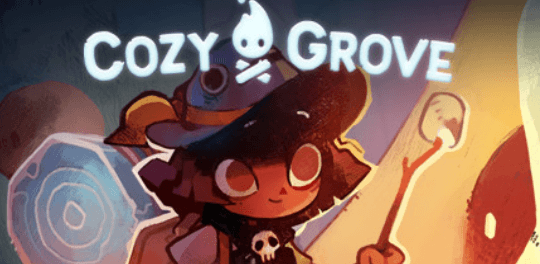
Cozy Grove places a Spirit Scout on a ghost-inhabited island with a daily task structure that limits how much the game can be played each sitting. Spirits reveal new tasks as relationships deepen, and the map slowly fills with color. GPA scores it high on Slow Life and Emotional Story — a life sim designed around the pace of one session per day rather than marathon play.
Tag Similarity
Emotional Story
65%
Existential Themes
0%
Graphics
65%
Story Depth
60%
Co-op
45%
Chart tags: Emotional Story / Existential Themes / Graphics / Story Depth / Co-op
Natsumon: 20th Century Summer Kid sends a boy to his grandparents' countryside home for the summer, filling the days with insect collecting, river swimming, and exploration. The seasonal calendar structures the experience. GPA scores it high on Slow Life and Emotional Story — a positioning that places it in the Summer Vacation simulation genre alongside Yoshi and the Mysterious Book.
Tag Similarity
Emotional Story
65%
Existential Themes
40%
Graphics
65%
Story Depth
60%
Co-op
0%
Chart tags: Emotional Story / Existential Themes / Graphics / Story Depth / Co-op
Alba: A Wildlife Adventure gives a girl a phone and a Spanish island, asking her to photograph animals and add them to a field guide while fighting a hotel development threatening a nature reserve. The mechanics are light; the environmental message is direct. GPA scores it high on Collection and Slow Life — the Ustwo Games entry most suited to younger players and adults who want a low-pressure open world.
Tag Similarity
Emotional Story
60%
Existential Themes
0%
Graphics
70%
Story Depth
55%
Co-op
0%
Chart tags: Emotional Story / Existential Themes / Graphics / Story Depth / Co-op
Lushfoil Photography Sim removes the horror element from liminal space photography, asking players to frame empty landscapes and buildings through a film camera. The discomfort comes from quiet rather than threat. GPA scores it lower on Horror and higher on Graphics than comparable titles — a positioning that identifies it as an aesthetic experience rather than a survival one.
Tag Similarity
Emotional Story
50%
Existential Themes
60%
Graphics
85%
Story Depth
0%
Co-op
0%
Chart tags: Emotional Story / Existential Themes / Graphics / Story Depth / Co-op
Spirittea runs a bathhouse for spirits in an East Asian village, combining Stardew Valley's social simulation with a ghost-identifying investigation loop. Each spirit has a specific need that unlocks through relationship-building. GPA scores it high on Slow Life and Emotional Story — a combination that places it in the cozy game cluster with additional narrative depth.
Tag Similarity
Emotional Story
60%
Existential Themes
50%
Graphics
65%
Story Depth
60%
Co-op
0%
Chart tags: Emotional Story / Existential Themes / Graphics / Story Depth / Co-op
Sable gives a young woman a glider and an open desert to cross during her Gliding — a rite-of-passage journey to find identity. GPA scores it high on Existential Themes and Open World.
Tag Similarity
Emotional Story
55%
Existential Themes
65%
Graphics
70%
Story Depth
60%
Co-op
0%
Chart tags: Emotional Story / Existential Themes / Graphics / Story Depth / Co-op
A Space for the Unbound sets its pixel art mystery in 1990s rural Indonesia, following Atma and Rara as their relationship encounters a supernatural threat. The tone holds grief and warmth simultaneously. GPA scores it high on Emotional Story and Text ADV — a combination that places it in the same cluster as Night in the Woods and similar character-driven adventures.
Tag Similarity
Emotional Story
90%
Existential Themes
75%
Graphics
75%
Story Depth
90%
Co-op
0%
Chart tags: Emotional Story / Existential Themes / Graphics / Story Depth / Co-op
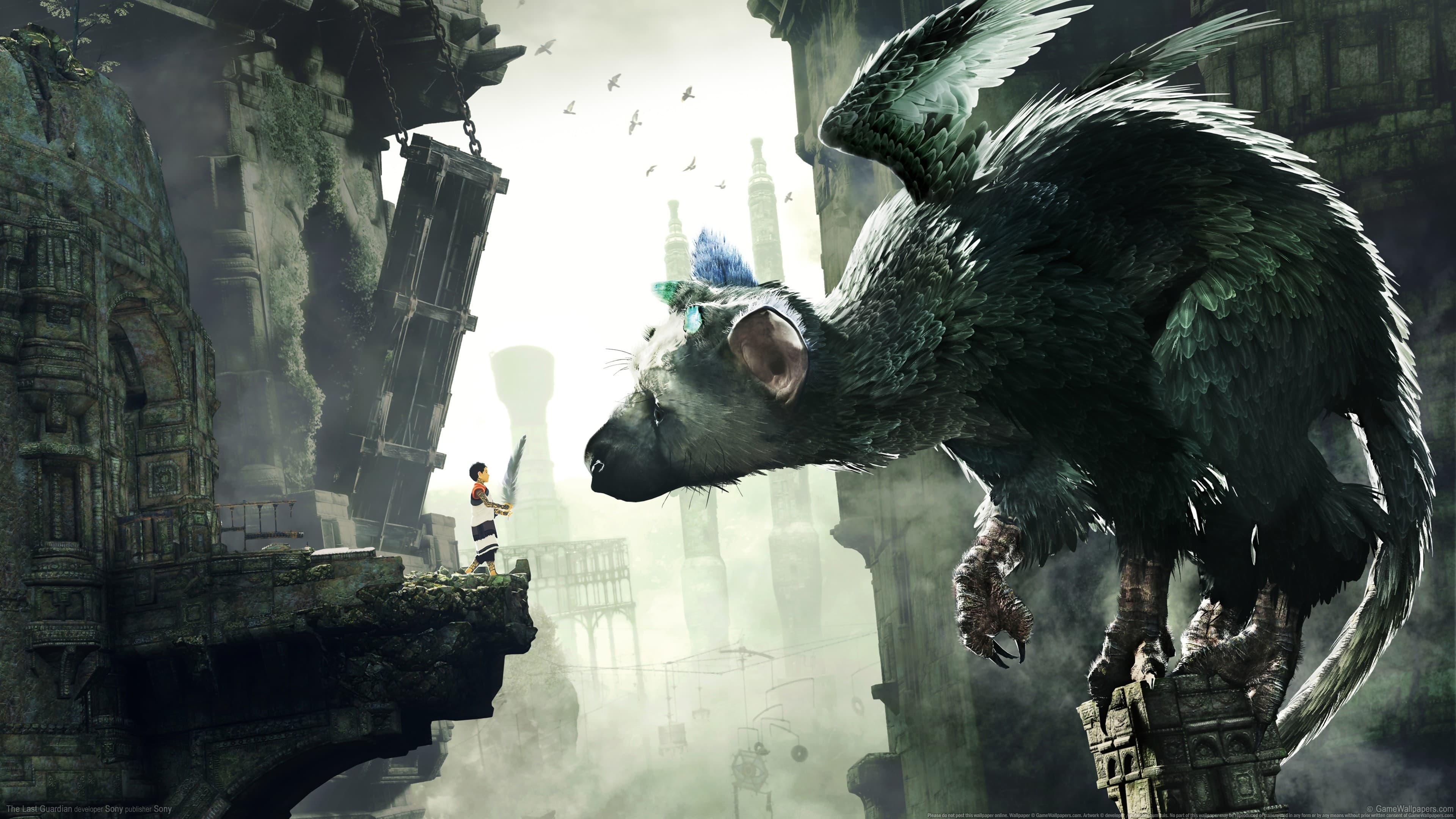
The Last Guardian follows a boy and an enormous creature named Trico through a crumbling ruin, building a relationship through care rather than command. Trico's AI creates unpredictable behavior that makes each interaction feel earned. GPA scores it at the top for Emotional Story — the highest in its genre category — with Dark World reflecting the melancholy that runs through the environmental design.
Tag Similarity
Emotional Story
95%
Existential Themes
70%
Graphics
85%
Story Depth
85%
Co-op
0%
Chart tags: Emotional Story / Existential Themes / Graphics / Story Depth / Co-op
Stray follows a cat navigating a walled city beneath a dome, with no human population remaining. The movement system maps to feline behavior. GPA scores it high on Existential Themes and Dark World, with Emotional Story above average — a combination that describes a walking game built around atmosphere and a specific viewpoint.
Tag Similarity
Emotional Story
80%
Existential Themes
65%
Graphics
90%
Story Depth
75%
Co-op
0%
Chart tags: Emotional Story / Existential Themes / Graphics / Story Depth / Co-op
Superliminal builds its puzzle design around forced perspective — objects appear to resize based on viewing angle, and the game asks players to use this property to navigate. The space gradually becomes architecturally impossible. GPA scores it high on Puzzle and Existential Themes — the combination that identifies a game where the mechanics and the subject matter are the same thing.
Tag Similarity
Emotional Story
60%
Existential Themes
80%
Graphics
70%
Story Depth
65%
Co-op
0%
Chart tags: Emotional Story / Existential Themes / Graphics / Story Depth / Co-op
Death Stranding asks players to reconnect a post-apocalyptic America by carrying cargo across difficult terrain. Other players' structures appear in your world. GPA scores it high on Existential Themes and Open World, with the lowest Action score among open-world titles — a combination that accurately identifies who this game is and isn't for.
Tag Similarity
Emotional Story
80%
Existential Themes
85%
Graphics
90%
Story Depth
85%
Co-op
0%
Chart tags: Emotional Story / Existential Themes / Graphics / Story Depth / Co-op
Atlus's 13 Sentinels: Aegis Rim tells a mystery across 13 protagonists in 2180 Japan, assembling the full picture from fragments that arrive out of order. The RTS mech battles are secondary to the visual novel sections. GPA scores it at the top for Story Depth and Text ADV — the combination that identifies it as primarily a reading experience with strategy attached.
Tag Similarity
Emotional Story
95%
Existential Themes
80%
Graphics
75%
Story Depth
95%
Co-op
0%
Chart tags: Emotional Story / Existential Themes / Graphics / Story Depth / Co-op
Death Stranding 2: On the Beach continues Sam Porter Bridges's connecting work in Mexico and Australia. GPA scores it high on Existential Themes and Open World.
Tag Similarity
Emotional Story
75%
Existential Themes
80%
Graphics
90%
Story Depth
80%
Co-op
45%
Chart tags: Emotional Story / Existential Themes / Graphics / Story Depth / Co-op
About "Journey"
▸Game Composition (GPA Analysis)
風ノ旅ビト(Journey) leads with its 探索アドベンチャー identity, anchored by the core feel of "Journey sends a robed figure across a desert toward a distant mountain, with no dialogue and no explanation." The headline profile reads Emotional Story 90% / Existential Themes 85% / Graphics 75%, making it a strong pick for fans of Emotional Story and Existential Themes. Skews toward a beginner-to-intermediate audience while still leaving room for more seasoned players.
▸Characteristics & Analysis
Our editorial team scored "風ノ旅ビト(Journey)" by using its feel of slow life, 言葉なし体験, and 2時間完結 as the primary lens, weighting Emotional Story and Existential Themes most heavily. Top similar titles include "ABZÛ(アブズ)", "Sky 星を紡ぐ子どもたち(Sky: Children of the Light)", "スピリットフェアラー".
Journey — A Game That Turns the Journey Itself Into the Story
Game Overview
Journey is an exploration adventure developed by thatgamecompany. You play as a mysterious robed traveler crossing a vast desert toward a distant mountain.
The game is remarkably simple on the surface. You walk, run, jump, glide through the air, and explore the ruins scattered across the landscape. There is little conventional dialogue, almost no written exposition, and no traditional quest log telling you what to do next. Instead, the world itself tells the story.
Ancient ruins, murals, enormous structures, music, and changes in the environment gradually suggest what happened to the civilization that once occupied this land. The game leaves much of that history unexplained, allowing players to piece together its meaning for themselves. (Thatgamecompany)
Then there is the game's most unusual feature: you may encounter another player during your journey. You don't know their name or where they come from. There is no conventional voice or text chat. You simply meet another traveler, communicate through a few simple sounds, and decide whether to continue the journey together. That restraint is at the heart of what makes Journey so memorable.
1. The Entire Goal Is to Reach the Mountain
The basic objective in Journey is almost absurdly straightforward. There is a mountain in the distance. Go there. Along the way, you'll cross deserts, ruins, underground areas, and eventually much harsher environments. But unlike a typical adventure game, you're not managing a long list of quests or constantly checking your next objective. You're simply moving forward.
That simplicity changes how you experience the world. Instead of asking, "What mission should I complete next?" you're more likely to wonder, "What happened here?" or "Why am I heading toward that mountain?" By stripping away unnecessary objectives, Journey makes movement, scenery, and discovery part of the game itself.
2. Simple Movement Makes the World Feel Like a Real Journey
The controls are easy to understand. You walk, run, jump, and use the cloth attached to your character to glide through the air. But movement is far more important than it might sound. Sliding down a sand dune feels different from walking through an ancient ruin. Gliding across a large open space gives you a sense of scale that a traditional cutscene could never quite reproduce.
The game rarely asks you to master complicated mechanics. Instead, it makes simply moving through the world enjoyable. That is why Journey feels less like clearing a series of levels and more like actually traveling through an unfamiliar place.
3. The World Tells the Story Without Explaining It
One of Journey's defining choices is its refusal to explain everything. There are no long dialogue scenes explaining the history of the world. Instead, players discover murals, ruins, strange structures, and traces of a forgotten civilization. You start filling in the gaps yourself. What happened to these people? Why did their civilization disappear? Who is the traveler? Why is the mountain so important?
The game doesn't insist on giving you a single detailed explanation. Japan's Game Designers Award recognized this approach in 2012, specifically highlighting how Journey created a mysterious world while using very little conventional explanation, text, or dialogue. (Japan Game Awards 2012) The result is a story that exists partly in the game and partly in the player's imagination.
4. Meeting a Stranger Changes the Journey
The other major part of Journey is its unusual multiplayer system. At certain points, you may encounter another player controlling their own traveler. There is no lobby where you choose a teammate. There is no matchmaking screen asking you to pick a partner. You simply encounter someone while playing.
The developers deliberately removed many of the conventions associated with online multiplayer. Instead, players communicate through movement and a limited set of sounds. You might follow someone through an unfamiliar area, show them a hidden location, wait for them when they fall behind, or simply continue walking side by side. thatgamecompany's creative director Jenova Chen compared the experience to hiking up a mountain and meeting another hiker along the way. (PlayStation.Blog)
The important part is that cooperation is never mandatory. You can stay together. You can separate. You can help each other for a few minutes and never meet again. That sense of impermanence is exactly what makes these encounters memorable.
5. A Multiplayer Game Where You Don't Need to Talk
Most cooperative games depend on communication. Journey removes almost all of it. You don't know the other player's age, nationality, personality, or gaming experience. You don't even know their username during the journey. What remains is simply the fact that another person is there.
That changes the way you perceive the other player. They stop feeling like a username on a screen and start feeling like another traveler sharing the same road. This is also why GPA gives Journey a 55% score for Cooperative Play rather than an extremely high score. Cooperation isn't the main gameplay system, and you can complete the journey alone. Instead, multiplayer acts as an optional layer that can change how you remember your playthrough.
6. Why the Emotional Story Score Is 90%
Journey has a 90% GPA score for Emotional Story, one of its highest ratings. That doesn't mean the game has a huge amount of story content. Quite the opposite. There is relatively little traditional storytelling. What creates the emotional impact is the experience of the journey itself.
You begin alone in the desert. You encounter another traveler. You move through the world together. Eventually, the journey reaches its destination. Those actions become the story. Two players can experience the same game but remember completely different moments depending on where they explored and who they happened to meet. The story of Journey isn't simply about what happens on screen. It is also about how the player feels while moving through it.
7. The Journey's Existential Themes
Another major strength is its 85% GPA score for Existential Themes. Here, "existential themes" refers to ideas surrounding human existence, purpose, life, death, and the meaning of a journey. Journey never stops to give the player a philosophical lecture. Instead, it places a mysterious traveler in an enormous world with one clear destination: a distant mountain.
Why are you going there? What will you find when you arrive? Why did the journey begin in the first place? The game lets those questions emerge naturally from the structure of the experience. The simple act of traveling toward an unknown destination can begin to feel like a metaphor for life itself. That is one reason Journey can stay in your mind long after its relatively short playtime is over.
8. Visuals and Music Replace Traditional Exposition
Journey also demonstrates how much information a game can communicate without words. The desert immediately establishes a sense of isolation. Ancient ruins suggest a forgotten civilization. Snow and darkness later change the atmosphere completely. The distant mountain is particularly important because it gives the player a constant visual goal. You don't need a quest marker telling you where to go. You can see it.
Music plays an equally important role. Because there is so little dialogue, the soundtrack carries much of the emotional weight that another game might put into narration or cutscenes. The official description of Journey emphasizes its desert exploration, ancient ruins, music, and unique online encounters as central parts of the experience. (Thatgamecompany) In other words, Journey replaces conventional exposition with visuals, sound, movement, and interaction.
9. What the GPA Scores Tell Us About Journey
GPA score profile (Journey)
Emotional Story ◀
90%
Existential Themes ◀
85%
Graphics ◀
75%
Story Depth
55%
Cooperative Play
55%
Emotional Story 90% vs. Story Depth 55% — impact comes from experience, not exposition volume.
The most interesting contrast is between Emotional Story at 90% and Story Depth at 55%. At first glance, those numbers might seem contradictory. They actually describe Journey very well. The game doesn't contain a huge amount of narrative information. There aren't dozens of characters, extensive dialogue trees, or long story arcs. Instead, it creates a strong emotional response from a relatively small amount of information.
In that sense, Journey is less interested in telling you a detailed story than in giving you an experience that feels meaningful. The 55% Cooperative Play score tells a similar story. Multiplayer isn't required to complete the game. But meeting another traveler can completely change how a particular playthrough feels.
10. Who Should Play Journey?
◎ Players Who Are Likely to Love It
Enjoy atmospheric exploration
Prefer discovery over combat
Like interpreting a story for themselves
Want a short, focused gaming experience
Enjoy games built around mood and emotion
Like unexpected interactions with other players
Enjoy games such as ABZÛ, GRIS, or Firewatch
Want something relaxing rather than mechanically demanding
△ Things to Consider
Players looking for deep progression systems, combat, extensive customization, or hundreds of hours of content may find Journey too limited. That isn't a weakness so much as a deliberate choice.
Why Journey Still Works
The most interesting thing about Journey is how much it removes. Less dialogue. Less exposition. Less mechanical complexity. Less conventional multiplayer communication. What remains is walking, exploring, listening, and occasionally meeting another person. That is enough.
The result is a game where the player isn't constantly thinking about systems and objectives. Instead, you simply experience the world. That is why the game's 90% Emotional Story and 85% Existential Themes scores make sense. Its impact doesn't come from the amount of story it contains, but from what the player feels while moving through it.
Journey doesn't ask you to read a story. It asks you to take the journey yourself. And for a game that can be completed in only a few hours, the experience can leave an unusually long afterimage.