Superliminal builds its puzzle design around forced perspective — objects appear to resize based on viewing angle, and the game asks players to use this property to navigate. The space gradually becomes architecturally impossible. GPA scores it high on Puzzle and Existential Themes — the combination that identifies a game where the mechanics and the subject matter are the same thing.
Tag Similarity
Emotional Story
60%
Story Depth
65%
Graphics
70%
Logic
90%
Existential Themes
80%
Chart tags: Emotional Story / Story Depth / Graphics / Logic / Existential Themes
Natsumon: 20th Century Summer Kid sends a boy to his grandparents' countryside home for the summer, filling the days with insect collecting, river swimming, and exploration. The seasonal calendar structures the experience. GPA scores it high on Slow Life and Emotional Story — a positioning that places it in the Summer Vacation simulation genre alongside Yoshi and the Mysterious Book.
Tag Similarity
Emotional Story
65%
Story Depth
60%
Graphics
65%
Logic
40%
Existential Themes
40%
Chart tags: Emotional Story / Story Depth / Graphics / Logic / Existential Themes
Journey sends a robed figure across a desert toward a distant mountain, with no dialogue and no explanation. Strangers encountered online can travel alongside you but cannot speak — only chirp. The two-hour runtime is structured like a piece of music, building to a conclusion that earns its emotional weight. GPA scores it at the top for Emotional Story and Existential Themes — the combination that identifies a game where the experience is the content.
Tag Similarity
Emotional Story
90%
Story Depth
55%
Graphics
75%
Logic
0%
Existential Themes
85%
Chart tags: Emotional Story / Story Depth / Graphics / Logic / Existential Themes
COCOON gives players nested worlds that can be carried as orbs and inserted into each other. The puzzle design scales in complexity without a single line of text. GPA scores it at the top for Puzzle — the highest in the database for the puzzle-only category — with Existential Themes above average for a wordless game.
Tag Similarity
Emotional Story
60%
Story Depth
60%
Graphics
85%
Logic
95%
Existential Themes
50%
Chart tags: Emotional Story / Story Depth / Graphics / Logic / Existential Themes
Stray follows a cat navigating a walled city beneath a dome, with no human population remaining. The movement system maps to feline behavior. GPA scores it high on Existential Themes and Dark World, with Emotional Story above average — a combination that describes a walking game built around atmosphere and a specific viewpoint.
Tag Similarity
Emotional Story
80%
Story Depth
75%
Graphics
90%
Logic
55%
Existential Themes
65%
Chart tags: Emotional Story / Story Depth / Graphics / Logic / Existential Themes
What Remains of Edith Finch traces a cursed family's deaths through a sequence of vignettes — each family member's final moments rendered in a completely different game mechanic. Giant Sparrow and Annapurna Interactive. Switch, PS4, Xbox, PC. Won BAFTA Game of the Year 2018. GPA scores it at the top for Emotional Story — the walking game that demonstrated what no other medium can do with death as subject matter.
Tag Similarity
Emotional Story
95%
Story Depth
85%
Graphics
72%
Logic
0%
Existential Themes
85%
Chart tags: Emotional Story / Story Depth / Graphics / Logic / Existential Themes
The Last Guardian follows a boy and an enormous creature named Trico through a crumbling ruin, building a relationship through care rather than command. Trico's AI creates unpredictable behavior that makes each interaction feel earned. GPA scores it at the top for Emotional Story — the highest in its genre category — with Dark World reflecting the melancholy that runs through the environmental design.
Tag Similarity
Emotional Story
95%
Story Depth
85%
Graphics
85%
Logic
70%
Existential Themes
70%
Chart tags: Emotional Story / Story Depth / Graphics / Logic / Existential Themes
Spirittea runs a bathhouse for spirits in an East Asian village, combining Stardew Valley's social simulation with a ghost-identifying investigation loop. Each spirit has a specific need that unlocks through relationship-building. GPA scores it high on Slow Life and Emotional Story — a combination that places it in the cozy game cluster with additional narrative depth.
Tag Similarity
Emotional Story
60%
Story Depth
60%
Graphics
65%
Logic
30%
Existential Themes
50%
Chart tags: Emotional Story / Story Depth / Graphics / Logic / Existential Themes
Chants of Sennaar tasks players with deciphering five constructed languages by observing context and testing hypotheses. Each language belongs to a different culture in a tower where communication has broken down. GPA scores it at the top for Puzzle and Existential Themes — the combination that correctly identifies decryption and philosophy as the twin engines of the experience.
Tag Similarity
Emotional Story
60%
Story Depth
70%
Graphics
60%
Logic
95%
Existential Themes
60%
Chart tags: Emotional Story / Story Depth / Graphics / Logic / Existential Themes
OneShot tells its player directly that they are the god of this world and Niko is their prophet. GPA scores it high on Existential Themes and Emotional Story.
Tag Similarity
Emotional Story
75%
Story Depth
70%
Graphics
50%
Logic
65%
Existential Themes
80%
Chart tags: Emotional Story / Story Depth / Graphics / Logic / Existential Themes
Outer Wilds gives players a solar system frozen in a 22-minute time loop and asks them to figure out what happened. No objectives are tracked. The entire mystery is assembled from observation and inference. GPA scores it at 90% for Existential Themes — second only to NieR:Automata — alongside high marks for Puzzle and Emotional Story.
Tag Similarity
Emotional Story
85%
Story Depth
90%
Graphics
70%
Logic
80%
Existential Themes
90%
Chart tags: Emotional Story / Story Depth / Graphics / Logic / Existential Themes
Dave the Diver splits its day between underwater diving for ingredients and nighttime sushi restaurant management. The two halves share an economy. GPA scores it high on Collection and Slow Life — a positioning that describes an experience built around routine, not urgency.
Tag Similarity
Emotional Story
60%
Story Depth
60%
Graphics
70%
Logic
45%
Existential Themes
35%
Chart tags: Emotional Story / Story Depth / Graphics / Logic / Existential Themes
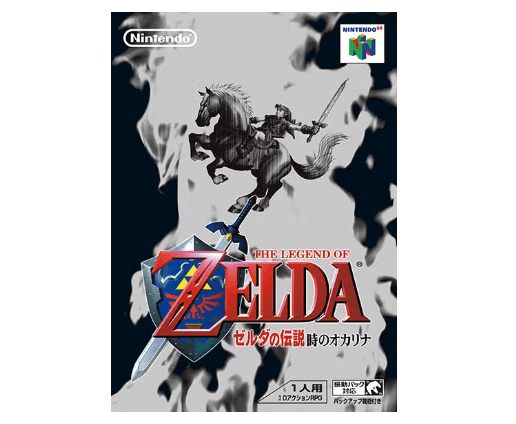
The Legend of Zelda: Ocarina of Time is playable through Nintendo Switch Online's Nintendo Classics catalog. The N64 title established 3D action-adventure design conventions that remain standard. GPA scores it high on Puzzle and Emotional Story — the combination that captures a game remembered for its dungeon design and narrative weight as much as its historical importance.
Tag Similarity
Emotional Story
80%
Story Depth
80%
Graphics
40%
Logic
80%
Existential Themes
70%
Chart tags: Emotional Story / Story Depth / Graphics / Logic / Existential Themes
Lushfoil Photography Sim removes the horror element from liminal space photography, asking players to frame empty landscapes and buildings through a film camera. The discomfort comes from quiet rather than threat. GPA scores it lower on Horror and higher on Graphics than comparable titles — a positioning that identifies it as an aesthetic experience rather than a survival one.
Tag Similarity
Emotional Story
50%
Story Depth
0%
Graphics
85%
Logic
40%
Existential Themes
60%
Chart tags: Emotional Story / Story Depth / Graphics / Logic / Existential Themes
Firewatch puts Henry in a Wyoming fire lookout tower in 1989, with Delilah on the radio as his only contact. The forest mystery unfolds through radio conversation and first-person exploration across three days. GPA scores it high on Emotional Story and Story Depth — a walking game where the dialogue does the dramatic work that cutscenes would handle in a larger production.
Tag Similarity
Emotional Story
80%
Story Depth
75%
Graphics
75%
Logic
0%
Existential Themes
65%
Chart tags: Emotional Story / Story Depth / Graphics / Logic / Existential Themes
ABZÛ puts players inside a vast ocean and asks them to swim. The marine environments draw from Sumerian mythology, with fish schools that respond to movement. The two-hour journey ends with a conclusion that recontextualizes everything before it. GPA scores it high on Emotional Story and Graphics — a spiritual successor to Journey that replaces the desert with the sea.
Tag Similarity
Emotional Story
75%
Story Depth
0%
Graphics
85%
Logic
0%
Existential Themes
70%
Chart tags: Emotional Story / Story Depth / Graphics / Logic / Existential Themes
A Space for the Unbound sets its pixel art mystery in 1990s rural Indonesia, following Atma and Rara as their relationship encounters a supernatural threat. The tone holds grief and warmth simultaneously. GPA scores it high on Emotional Story and Text ADV — a combination that places it in the same cluster as Night in the Woods and similar character-driven adventures.
Tag Similarity
Emotional Story
90%
Story Depth
90%
Graphics
75%
Logic
30%
Existential Themes
75%
Chart tags: Emotional Story / Story Depth / Graphics / Logic / Existential Themes
Spiritfarer runs a ferry for the dead, asking players to fulfill the last wishes of passengers before sending them through. The crafting and cooking systems build the relationship structure. GPA scores it highest on Emotional Story among Slow Life titles — a positioning that sets it apart from purely relaxation-focused games in the same cluster.
Tag Similarity
Emotional Story
90%
Story Depth
80%
Graphics
80%
Logic
0%
Existential Themes
75%
Chart tags: Emotional Story / Story Depth / Graphics / Logic / Existential Themes
Ctrl Alt Ego transfers player consciousness between gadgets and AI systems in an abandoned corporate facility. The possession mechanic and hacking system address the question of where the self resides. GPA scores it high on Existential Themes and Puzzle — the mechanics and the subject matter run on the same logic.
Tag Similarity
Emotional Story
65%
Story Depth
70%
Graphics
65%
Logic
85%
Existential Themes
85%
Chart tags: Emotional Story / Story Depth / Graphics / Logic / Existential Themes
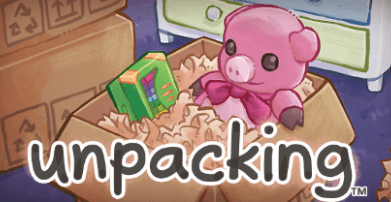
About "Unpacking"
▸Game Composition (GPA Analysis)
Unpacking(アンパッキング) leads with its リラックス系パズル identity, anchored by the core feel of "Unpacking moves household objects from boxes into rooms, revealing a life story without dialogue." The headline profile reads Emotional Story 75% / Story Depth 60% / Graphics 60%, making it a strong pick for fans of Emotional Story and Story Depth. Skews toward a beginner-to-intermediate audience while still leaving room for more seasoned players.
▸Characteristics & Analysis
Our editorial team scored "Unpacking(アンパッキング)" by using its feel of 荷物開封パズル, 会話なし, and 人生の変遷 as the primary lens, weighting Emotional Story and Story Depth most heavily. Top similar titles include "GRIS(グリス)", "Superliminal(スーパーリミナル)", "ナツモン! 20世紀の夏休み".
Unpacking — Telling a Life Story One Box at a Time
Game Overview
Unpacking is a puzzle game developed by Australian indie studio Witch Beam. The premise is almost comically simple: open moving boxes and put the belongings inside a new home. There are no battles, no dialogue-heavy cutscenes, and no conventional protagonist walking around on screen. Instead, the player's understanding of the character comes from her possessions.
A childhood bedroom. A school room. A first apartment. A home shared with someone else. Across eight moves, the contents of those rooms gradually change. Some belongings remain with the character, others disappear, and new objects enter her life. The official description calls Unpacking a game about "unpacking a life," combining block-fitting puzzles with home decoration while revealing the story of a character the player never actually sees. (Witch Beam)
GPA rates the game at 75% for Emotional Story, 60% for Story Depth, 60% for Graphics, 60% for Brain, and 55% for Existential Themes. The result is a game that looks like a simple organizing puzzle but gradually becomes something much more personal.
1. The Goal Is Simply to Unpack
The basic gameplay loop is straightforward. Open a box. Take out an item. Find a place for it. Repeat until everything has been unpacked. There are no timers, meters, or scores. The Steam description specifically highlights this relaxed, pressure-free approach. (Steam Store)
That lack of pressure changes how you play. Instead of rushing toward the next objective, you can think about where a book belongs, how to arrange a shelf, or where a favorite object might feel most at home. The simplicity is intentional. Unpacking wants you to pay attention to the small details.
2. Simple Placement Becomes a Puzzle
Unpacking isn't simply a decoration simulator. Objects have natural places where they belong. Books fit on shelves. Clothes go into drawers or closets. Dishes belong in the kitchen. But there is rarely just one obvious arrangement. You have limited space, different object sizes, and multiple ways to organize a room.
That turns tidying into a spatial puzzle. You aren't solving complex logic problems, but you are constantly making small decisions about space, order, and function. That's why GPA's 60% Brain score fits the game well. The challenge is approachable, but organizing a room still requires observation and spatial thinking.
3. Completing a Room Feels Surprisingly Personal
One of the most satisfying moments in Unpacking comes when the last box is finally empty. At the beginning, the room feels incomplete. Then the shelves fill up. The desk becomes organized. Clothes find their places. The kitchen starts looking lived-in. Eventually, the room feels like someone's actual home.
The important part is that you're not simply placing objects in the correct slots. You're gradually constructing a living space. And because you know these objects belong to the same person, the room starts to feel like an extension of their personality.
4. A Story Without Dialogue
This is where Unpacking becomes much more interesting than a simple organizing game. The protagonist never appears. There are no long conversations explaining her personality. There is almost no conventional exposition. Yet you learn a surprising amount about her life. Why? Because possessions carry memories.
The developers have explained how individual objects were designed to reveal details about the character's life, making the belongings themselves part of the storytelling. (PlayStation.Blog)
5. What Disappears Can Matter as Much as What Remains
One of the cleverest parts of Unpacking is that the story isn't told only through what you find. Sometimes, something is missing. An object that was present in an earlier room doesn't appear in the next one. The game doesn't explain why. You are left to wonder. Was it thrown away? Given to someone else? No longer useful? Or simply replaced by something new?
The game trusts the player to notice these changes. That makes the passage of time feel surprisingly natural. Real life works the same way. We don't usually mark every change in our lives with a dramatic announcement. We simply stop using certain things, acquire new ones, move somewhere else, and gradually become different people.
6. Changing Rooms Reflect Changing Lives
As the game progresses, the spaces themselves evolve. A childhood bedroom becomes a student's room. A student's room becomes a first apartment. Later homes reflect different relationships, responsibilities, and stages of adulthood. The game rarely tells you directly what happened. Instead, it shows you the environment.
Unpacking doesn't ask you to read a biography. It asks you to reconstruct one from physical evidence. The player becomes an observer of someone else's life simply by putting their belongings away.
7. Why the Emotional Story Score Reaches 75%
GPA gives Unpacking a 75% Emotional Story score. That might seem surprising for a game with almost no conventional dialogue. But the emotional impact comes from the ordinariness of the events being depicted. Moving to a new home. Starting school. Living alone. Starting a new job. Sharing a home with someone. Getting older.
None of these events needs a dramatic cutscene. They are already emotionally meaningful because they are familiar parts of life. Unpacking takes those ordinary transitions and turns them into gameplay. Instead of presenting a life as a sequence of major dramatic events, it presents it as a collection of everyday objects.
8. Placing Objects Makes You Imagine the Person Behind Them
When you decide where an object should go, you start imagining the person who owns it. Where would they keep this? Would they want it close by? Would they display it? Would they hide it away? The game does provide rules for valid placement, but the process still encourages you to think about the character's habits.
In other words, organizing the room becomes a way of understanding the person who lives there. The gameplay and storytelling are therefore doing the same thing.
9. The Existential Theme of What We Choose to Keep
GPA gives Unpacking a 55% Existential Themes score. The game isn't overtly philosophical. But one question runs quietly underneath the entire experience: What do we choose to carry with us through life? Moving means deciding what comes with you. Some things are kept. Some are discarded. Some are replaced. Others survive multiple moves and remain important years later.
Because Unpacking is literally about deciding where someone's possessions belong, the act of organizing a room naturally becomes a reflection on memory, change, and identity.
10. What the GPA Scores Tell Us About Unpacking
GPA score profile (Unpacking)
Emotional Story ◀
75%
Story Depth ◀
60%
Graphics
60%
Brain
60%
Existential Themes
55%
Emotional Story 75% vs. Story Depth 60% — meaning from small details, not exposition volume.
The most revealing combination is 75% Emotional Story versus 60% Story Depth. Unpacking doesn't contain a huge amount of conventional narrative information. There aren't lengthy scripts or complicated plot branches. Instead, the emotional impact comes from how much meaning can be extracted from relatively small details.
Rather than telling you everything, Unpacking gives you enough information to let you connect the dots yourself — a storytelling method shared with games like Journey and Stray.
11. Who Should Play Unpacking?
◎ Players Who Are Likely to Love It
Enjoy organizing and decorating spaces
Want a relaxing puzzle game
Like approachable rather than punishing puzzles
Enjoy stories told through environments and objects
Like games such as A Little to the Left
Enjoy the room-building side of games like The Sims
Prefer everyday stories over epic adventures
Want a game that can be played in short sessions
Enjoy atmosphere more than action
△ Things to Consider
Players looking for combat, character progression, branching narratives, or complex puzzle mechanics may find it too simple. That simplicity, however, is central to what the game is trying to achieve.
Why Unpacking Works
The brilliance of Unpacking lies in how ordinary its central action is. Open a box. Take something out. Put it somewhere. That's it. But repeat that process across multiple stages of someone's life, and the objects begin to form a portrait of the person who owns them.
GPA's 75% Emotional Story, 60% Story Depth, and 55% Existential Themes scores capture this unusual approach to storytelling. Unpacking doesn't tell you a life story. It lets you discover one. And that's why something as mundane as unpacking boxes can become surprisingly emotional: every object is a small piece of a life, and every new room shows how that life has changed.