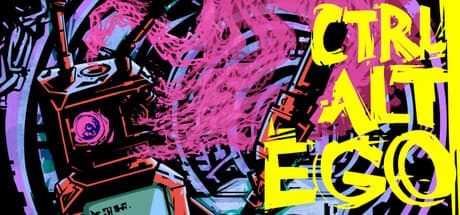
Ctrl Alt Ego transfers player consciousness between gadgets and AI systems in an abandoned corporate facility. The possession mechanic and hacking system address the question of where the self resides. GPA scores it high on Existential Themes and Puzzle — the mechanics and the subject matter run on the same logic.
Game Characteristics
Existential Themes
85%
Logic
85%
Dystopian Setting
75%
Story Depth
70%
Strategy
70%
Emotional Story
65%
Graphics
65%
Player profile fit
Recommended for: Intermediate to Advanced players (A score of 50 or higher indicates a good fit.)
Superliminal builds its puzzle design around forced perspective — objects appear to resize based on viewing angle, and the game asks players to use this property to navigate. The space gradually becomes architecturally impossible. GPA scores it high on Puzzle and Existential Themes — the combination that identifies a game where the mechanics and the subject matter are the same thing.
Tag Similarity
Existential Themes
80%
Logic
90%
Dystopian Setting
75%
Story Depth
65%
Strategy
0%
Emotional Story
60%
Graphics
70%
Chart tags: Existential Themes / Logic / Dystopian Setting / Story Depth / Strategy / Emotional Story / Graphics
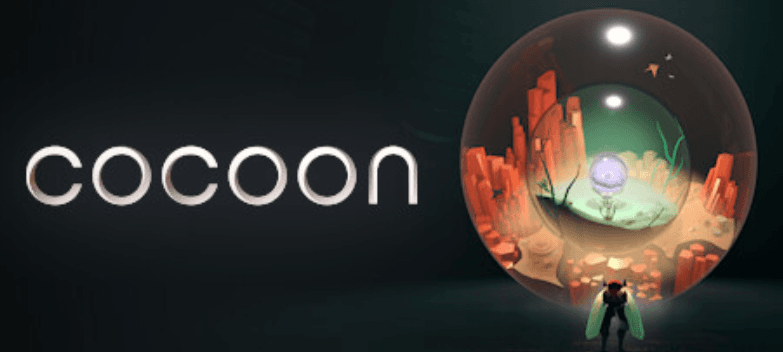
COCOON gives players nested worlds that can be carried as orbs and inserted into each other. The puzzle design scales in complexity without a single line of text. GPA scores it at the top for Puzzle — the highest in the database for the puzzle-only category — with Existential Themes above average for a wordless game.
Tag Similarity
Existential Themes
50%
Logic
95%
Dystopian Setting
0%
Story Depth
60%
Strategy
40%
Emotional Story
60%
Graphics
85%
Chart tags: Existential Themes / Logic / Dystopian Setting / Story Depth / Strategy / Emotional Story / Graphics
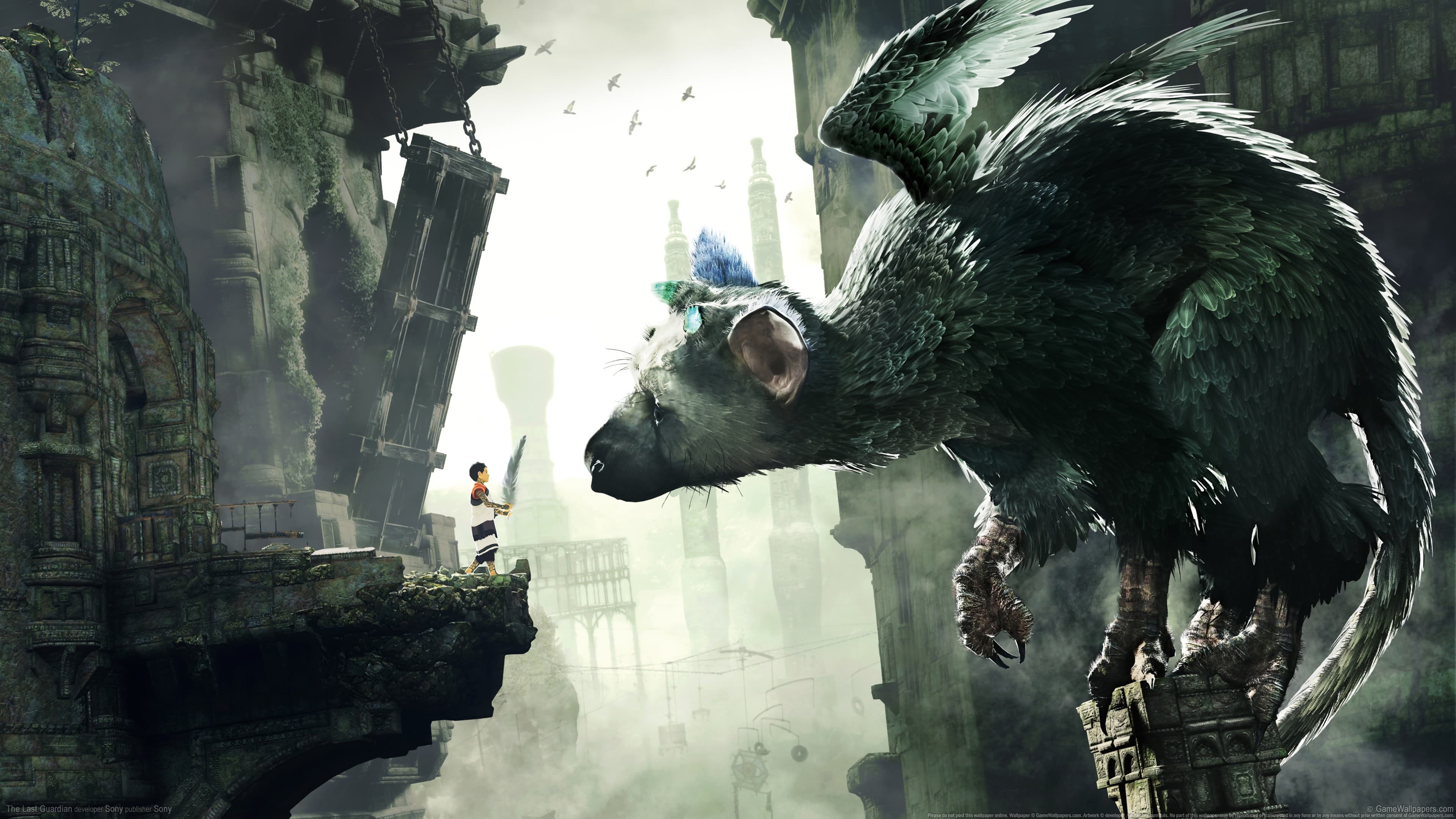
The Last Guardian follows a boy and an enormous creature named Trico through a crumbling ruin, building a relationship through care rather than command. Trico's AI creates unpredictable behavior that makes each interaction feel earned. GPA scores it at the top for Emotional Story — the highest in its genre category — with Dark World reflecting the melancholy that runs through the environmental design.
Tag Similarity
Existential Themes
70%
Logic
70%
Dystopian Setting
75%
Story Depth
85%
Strategy
0%
Emotional Story
95%
Graphics
85%
Chart tags: Existential Themes / Logic / Dystopian Setting / Story Depth / Strategy / Emotional Story / Graphics
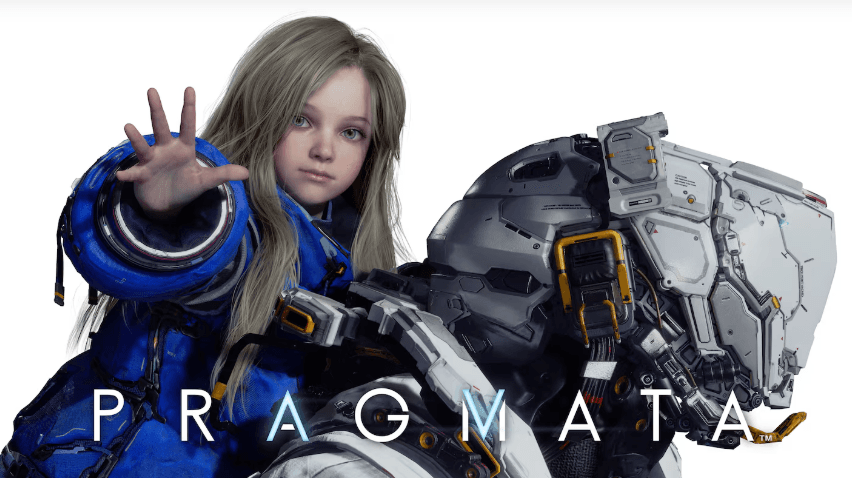
PRAGMATA sends astronaut Hugh and an android girl through a lunar crisis involving rogue AI and gravitational anomalies. The hacking and action systems layer on top of each other across escalating encounters. GPA scores it high on Action and Graphics — a Capcom title that brings the studio's action expertise into a science fiction setting.
Tag Similarity
Existential Themes
70%
Logic
75%
Dystopian Setting
75%
Story Depth
80%
Strategy
60%
Emotional Story
80%
Graphics
85%
Chart tags: Existential Themes / Logic / Dystopian Setting / Story Depth / Strategy / Emotional Story / Graphics
OneShot tells its player directly that they are the god of this world and Niko is their prophet. GPA scores it high on Existential Themes and Emotional Story.
Tag Similarity
Existential Themes
80%
Logic
65%
Dystopian Setting
65%
Story Depth
70%
Strategy
0%
Emotional Story
75%
Graphics
50%
Chart tags: Existential Themes / Logic / Dystopian Setting / Story Depth / Strategy / Emotional Story / Graphics
Manifold Garden builds infinite recursive architecture from Escher's impossible geometry, letting players walk on any surface and fall endlessly in any direction. The puzzle solutions require understanding the spatial structure. GPA scores it at the top for Puzzle and high on Existential Themes — a game where the environment is the paradox.
Tag Similarity
Existential Themes
80%
Logic
90%
Dystopian Setting
75%
Story Depth
0%
Strategy
0%
Emotional Story
0%
Graphics
90%
Chart tags: Existential Themes / Logic / Dystopian Setting / Story Depth / Strategy / Emotional Story / Graphics
Stray follows a cat navigating a walled city beneath a dome, with no human population remaining. The movement system maps to feline behavior. GPA scores it high on Existential Themes and Dark World, with Emotional Story above average — a combination that describes a walking game built around atmosphere and a specific viewpoint.
Tag Similarity
Existential Themes
65%
Logic
55%
Dystopian Setting
85%
Story Depth
75%
Strategy
0%
Emotional Story
80%
Graphics
90%
Chart tags: Existential Themes / Logic / Dystopian Setting / Story Depth / Strategy / Emotional Story / Graphics
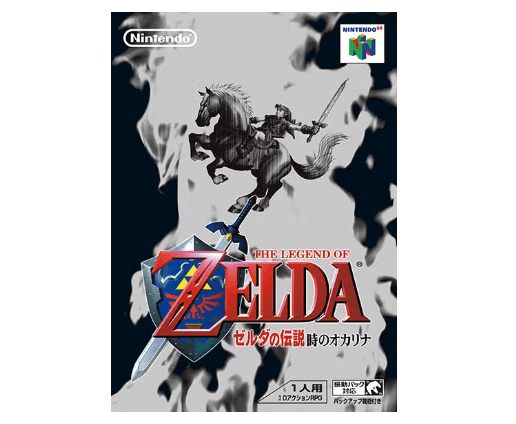
The Legend of Zelda: Ocarina of Time is playable through Nintendo Switch Online's Nintendo Classics catalog. The N64 title established 3D action-adventure design conventions that remain standard. GPA scores it high on Puzzle and Emotional Story — the combination that captures a game remembered for its dungeon design and narrative weight as much as its historical importance.
Tag Similarity
Existential Themes
70%
Logic
80%
Dystopian Setting
20%
Story Depth
80%
Strategy
40%
Emotional Story
80%
Graphics
40%
Chart tags: Existential Themes / Logic / Dystopian Setting / Story Depth / Strategy / Emotional Story / Graphics
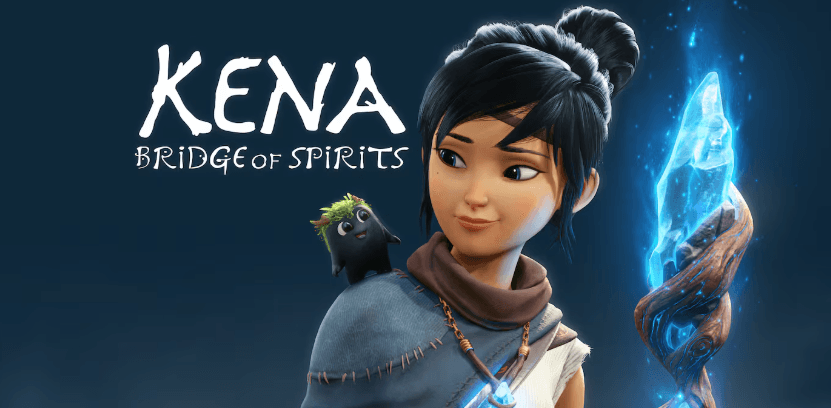
Kena: Bridge of Spirits sends a spirit guide through a village haunted by unresolved grief, clearing corruption to free the dead. The Rot companions add a resource management layer to the combat. GPA scores it high on Emotional Story and Graphics — the visual quality from a small studio remains the most discussed aspect of its reception.
Tag Similarity
Existential Themes
55%
Logic
45%
Dystopian Setting
40%
Story Depth
75%
Strategy
40%
Emotional Story
75%
Graphics
90%
Chart tags: Existential Themes / Logic / Dystopian Setting / Story Depth / Strategy / Emotional Story / Graphics
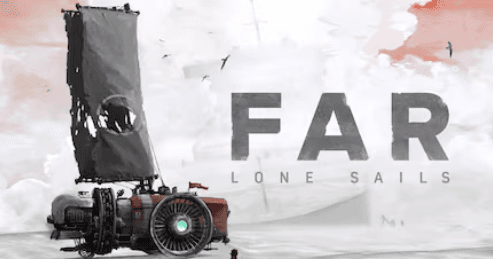
FAR: Lone Sails crosses a drained seabed in a vehicle requiring fuel, cooling, and sail management. The journey is silent. GPA scores it high on Existential Themes and Dark World.
Tag Similarity
Existential Themes
70%
Logic
55%
Dystopian Setting
80%
Story Depth
0%
Strategy
0%
Emotional Story
60%
Graphics
65%
Chart tags: Existential Themes / Logic / Dystopian Setting / Story Depth / Strategy / Emotional Story / Graphics
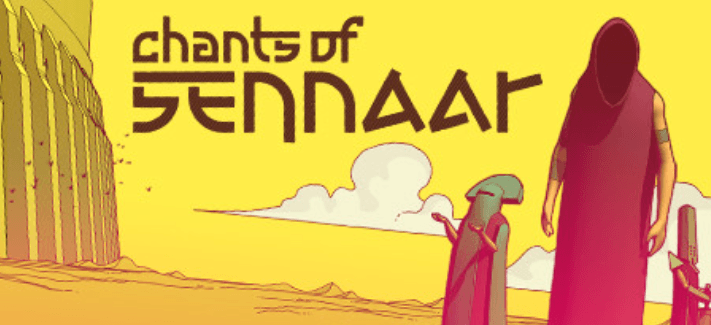
Chants of Sennaar tasks players with deciphering five constructed languages by observing context and testing hypotheses. Each language belongs to a different culture in a tower where communication has broken down. GPA scores it at the top for Puzzle and Existential Themes — the combination that correctly identifies decryption and philosophy as the twin engines of the experience.
Tag Similarity
Existential Themes
60%
Logic
95%
Dystopian Setting
50%
Story Depth
70%
Strategy
0%
Emotional Story
60%
Graphics
60%
Chart tags: Existential Themes / Logic / Dystopian Setting / Story Depth / Strategy / Emotional Story / Graphics
Lushfoil Photography Sim removes the horror element from liminal space photography, asking players to frame empty landscapes and buildings through a film camera. The discomfort comes from quiet rather than threat. GPA scores it lower on Horror and higher on Graphics than comparable titles — a positioning that identifies it as an aesthetic experience rather than a survival one.
Tag Similarity
Existential Themes
60%
Logic
40%
Dystopian Setting
65%
Story Depth
0%
Strategy
0%
Emotional Story
50%
Graphics
85%
Chart tags: Existential Themes / Logic / Dystopian Setting / Story Depth / Strategy / Emotional Story / Graphics
Alan Wake 2 sends writer Alan Wake through the Dark Place and FBI agent Saga Anderson through a murder investigation in Bright Falls simultaneously. The two timelines comment on each other. GPA scores it high on Horror and Dark World, with Story Depth above average — a narrative horror that uses the medium's interactivity as the storytelling mechanism.
Tag Similarity
Existential Themes
85%
Logic
50%
Dystopian Setting
85%
Story Depth
90%
Strategy
40%
Emotional Story
80%
Graphics
90%
Chart tags: Existential Themes / Logic / Dystopian Setting / Story Depth / Strategy / Emotional Story / Graphics
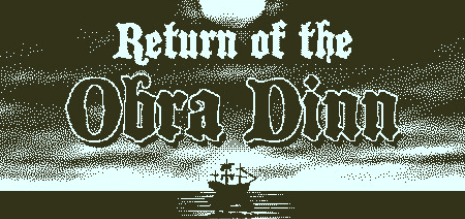
Return of the Obra Dinn reconstructs the fates of 60 shipwreck victims through a stop-death pocket watch. GPA scores it at the top for Puzzle among mystery games.
Tag Similarity
Existential Themes
65%
Logic
90%
Dystopian Setting
65%
Story Depth
80%
Strategy
0%
Emotional Story
0%
Graphics
55%
Chart tags: Existential Themes / Logic / Dystopian Setting / Story Depth / Strategy / Emotional Story / Graphics
TUNIC hands players an untranslated instruction manual and asks them to decode it alongside the game's mechanics. GPA scores it high on Puzzle and Difficulty.
Tag Similarity
Existential Themes
60%
Logic
75%
Dystopian Setting
40%
Story Depth
70%
Strategy
40%
Emotional Story
50%
Graphics
70%
Chart tags: Existential Themes / Logic / Dystopian Setting / Story Depth / Strategy / Emotional Story / Graphics
Myhouse.wad was released as a Doom II WAD file in 2023, presenting itself as a recreation of a dead friend's house that gradually reveals impossible geometry and psychological horror. GPA scores it high on Existential Themes and Horror — the highest-rated entry in the liminal space genre for emotional weight relative to technical presentation.
Tag Similarity
Existential Themes
90%
Logic
70%
Dystopian Setting
85%
Story Depth
80%
Strategy
0%
Emotional Story
85%
Graphics
50%
Chart tags: Existential Themes / Logic / Dystopian Setting / Story Depth / Strategy / Emotional Story / Graphics
Control sends Jesse Faden into the Federal Bureau of Control's headquarters, a brutalist building that reorganizes itself. The environmental storytelling runs through case files and audio logs. GPA scores it high on Existential Themes and Dark World, with Action above average — a positioning that describes a game where the world-building is the primary draw alongside the telekinetic combat.
Tag Similarity
Existential Themes
70%
Logic
35%
Dystopian Setting
80%
Story Depth
70%
Strategy
45%
Emotional Story
65%
Graphics
85%
Chart tags: Existential Themes / Logic / Dystopian Setting / Story Depth / Strategy / Emotional Story / Graphics
Arknights runs its tower defense and tactical combat through a post-apocalyptic world where infected populations are segregated by law. The operator roster and faction writing carry more depth than most mobile strategy games. GPA scores it high on Strategy and Dark World — the combination that identifies a game where the setting's politics are as developed as the mechanics.
Tag Similarity
Existential Themes
75%
Logic
60%
Dystopian Setting
80%
Story Depth
85%
Strategy
90%
Emotional Story
70%
Graphics
70%
Chart tags: Existential Themes / Logic / Dystopian Setting / Story Depth / Strategy / Emotional Story / Graphics
About "Ctrl Alt Ego"
▸Game Composition (GPA Analysis)
Ctrl Alt Ego(コントロール・オルト・エゴ) leads with its Puzzle Adventure identity, anchored by the core feel of "Ctrl Alt Ego transfers player consciousness between gadgets and AI systems in an abandoned corporate facility." The headline profile reads Existential Themes 85% / Logic 85% / Dystopian Setting 75%, making it a strong pick for fans of Existential Themes and Logic. Oriented toward experienced players looking to push their limits.
▸Characteristics & Analysis
Our editorial team scored "Ctrl Alt Ego(コントロール・オルト・エゴ)" by using its feel of 意識転送, hacking, and sci-fi existential as the primary lens, weighting Existential Themes and Logic most heavily. Top similar titles include "Superliminal(スーパーリミナル)", "COCOON(コクーン)", "人喰いの大鷲トリコ".
Ctrl Alt Ego — A Sci-Fi Puzzle Game Where Your Body Is Part of the Puzzle
Overview
Ctrl Alt Ego is a sci-fi puzzle adventure from MindThunk with a very unusual premise: you don't directly control a traditional protagonist.
Instead, you play as a disembodied consciousness that can transfer between robots, drones, and other devices while exploring a strange futuristic facility.
One machine might let you move through an area. Another might give you access to a weapon. A different device might allow you to manipulate the environment or bypass a security system.
In other words, what you choose to control is itself part of the puzzle.
The world is nonlinear and interconnected, and the game encourages players to approach obstacles in different ways. You can fight, sneak past enemies, manipulate machines, or find creative solutions that the game never explicitly tells you to use. (Steam Store)
Gameplay Analysis
85% Brain — The Real Question Is “What Can I Use?”
The core of Ctrl Alt Ego is problem-solving.
In a traditional puzzle game, you usually identify the mechanism in front of you and work out the intended solution.
Here, there may not be a single intended solution.
You can attack an enemy.
You can avoid it.
You can take control of another robot.
You can manipulate nearby machines.
You can combine different systems to create your own solution.
You can even use an enemy's own equipment against them.
That is why GPA gives the game an 85% Brain score.
The challenge is not simply about solving difficult puzzles. It is about understanding what the game's systems can do and figuring out how those systems can interact.
70% Strategy — Fighting Is Only One Option
Enemies do not always need to be destroyed.
The official description specifically emphasizes shooting, sneaking, and creative approaches, allowing players to take a pacifist or more aggressive route depending on the situation. (Steam Store)
That changes how you think about encounters.
Instead of asking, “How do I kill this enemy?” you might ask:
“Can I bypass it?”
“Can I control another machine?”
“Can I manipulate the environment?”
“Can I turn the enemy's own equipment against it?”
This makes resource management and situational awareness important parts of the experience.
GPA's 70% Strategy score reflects that emphasis on choosing how to approach each problem rather than simply overpowering it.
85% Existential Themes — What Does “You” Actually Mean?
The game's most distinctive idea is also its central philosophical theme.
In most games, the player controls one physical character.
In Ctrl Alt Ego, consciousness and physical form are separate.
When the robot you're controlling is destroyed, your existence does not necessarily end. You can transfer into another machine and continue.
That mechanic creates an interesting relationship between the player and the body they are controlling.
The official description literally frames the player as “yourself, minus your body,” with consciousness transferred between robots and devices. (Steam Store)
The idea is therefore more than a piece of science-fiction lore.
The relationship between consciousness and the body is expressed through the controls themselves.
That is the main reason GPA gives the game an 85% Existential Themes score.
75% Decadent Worldview — A Future That Feels Already Abandoned
Visually, Ctrl Alt Ego is not trying to compete with modern AAA sci-fi games.
Its world instead draws inspiration from low-budget British science-fiction television from the 1970s and 1980s. (Steam Store)
The result is a future filled with empty facilities, machines, strange equipment, and spaces that feel as though their original human purpose has disappeared.
There is a persistent sense that the technology has continued functioning long after the people who built it are gone.
GPA's 75% Decadent Worldview score reflects that atmosphere.
70% Story Depth — Discovering the World Rather Than Being Told About It
The game has a story centered on the future of human consciousness, but it does not constantly put the narrative in front of the player.
Instead, much of the experience comes from exploring the environment and gradually understanding what kind of world you are in.
The official description calls it a darkly comic story about the future of human consciousness. (Steam Store)
That makes the game particularly appealing to players who enjoy science fiction that leaves room for interpretation.
You are not simply following a character from one cutscene to the next.
You are exploring a strange world and piecing together what happened.
65% Graphics — Style Over Visual Spectacle
GPA gives Ctrl Alt Ego a 65% Graphics score.
That is not surprising given the game's priorities.
This is not a visually spectacular AAA production designed to impress through photorealism.
Instead, its understated and slightly dated visual style supports the strange atmosphere of the world.
The graphics are there to make the setting feel unusual and coherent rather than to showcase technical spectacle.
45% Beginner — The Game Takes Some Getting Used To
GPA rates the game at 45 for beginners, 68 for intermediate players, and 72 for advanced players.
The gap reflects an important part of the experience: the game expects you to understand that there may not be one correct answer.
Target audience (50+ recommended)
Beginner
45
Intermediate
68
Advanced
72
Expect to experiment — solutions emerge from combining systems, not finding one intended answer.
If you're used to puzzle games that clearly communicate what mechanism you are supposed to use, Ctrl Alt Ego can initially feel confusing.
But once you start experimenting with its systems, that uncertainty becomes part of the appeal.
The Steam description specifically recommends the game to players who enjoy thinking for themselves and solving puzzles without a predetermined solution. (Steam Store)
Who Is Ctrl Alt Ego For?
Enjoy solving puzzles through experimentation
Like games such as Portal, Prey, or Deus Ex
Want multiple ways to approach an obstacle
Enjoy combining stealth, combat, and environmental manipulation
Like science fiction focused on consciousness and identity
Prefer unusual indie games over conventional blockbuster design
Want to discover their own solutions rather than follow a prescribed path
It may be less appealing if you prefer straightforward puzzles with clearly defined answers or action games built primarily around constant combat.
Final Verdict
Title tendency chart (Ctrl Alt Ego)
Logic ◀
85%
Existential Themes ◀
85%
Dystopian Setting ◀
75%
Story Depth ◀
70%
Strategy ◀
70%
Graphics
65%
* Based on GPA sub-tag scores. Developed by MindThunk. Released 2022.
The defining idea behind Ctrl Alt Ego is simple but powerful:
The thing you control is part of the puzzle.
You transfer your consciousness between machines, exploit their different abilities, manipulate the environment, and find your own way through interconnected spaces.
GPA gives the game 85% for Existential Themes, 85% for Brain, 75% for Decadent Worldview, 70% for Story Depth, and 70% for Strategy.
The two 85% scores are particularly revealing.
The game's philosophical ideas are not simply something you read about in the story. They are connected directly to how you play.
You are constantly separating “yourself” from the body you happen to occupy.
That combination of experimental puzzle-solving and science-fiction ideas is what makes Ctrl Alt Ego stand out.
If you enjoy games that ask you to stop looking for the intended solution and start asking what the systems allow you to do, Ctrl Alt Ego is well worth a look.