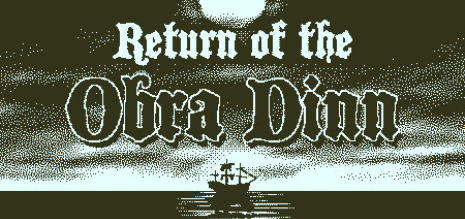
Return of the Obra Dinn reconstructs the fates of 60 shipwreck victims through a stop-death pocket watch. GPA scores it at the top for Puzzle among mystery games.
Game Characteristics
Logic
90%
Story Depth
80%
Existential Themes
65%
Dystopian Setting
65%
Visual Novel / ADV
60%
Graphics
55%
Dark
55%
Multiple Endings
40%
Target Audience
Recommended for: Intermediates to Advanceds (scores ≥ 50 indicate a good fit)
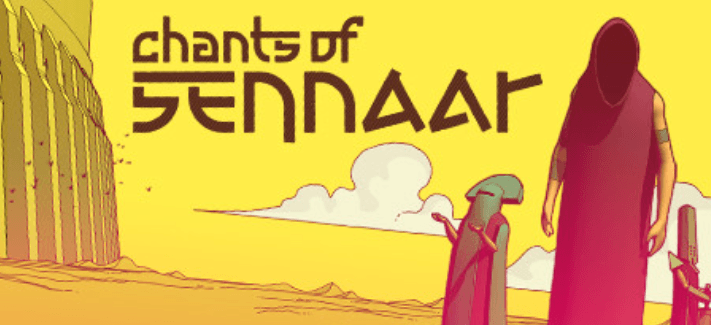
Chants of Sennaar tasks players with deciphering five constructed languages by observing context and testing hypotheses. Each language belongs to a different culture in a tower where communication has broken down. GPA scores it at the top for Puzzle and Existential Themes — the combination that correctly identifies decryption and philosophy as the twin engines of the experience.
Papers, Please processes document verification at a fictional Soviet border checkpoint with escalating moral pressure. GPA scores it at the top for Existential Themes and Dark World.
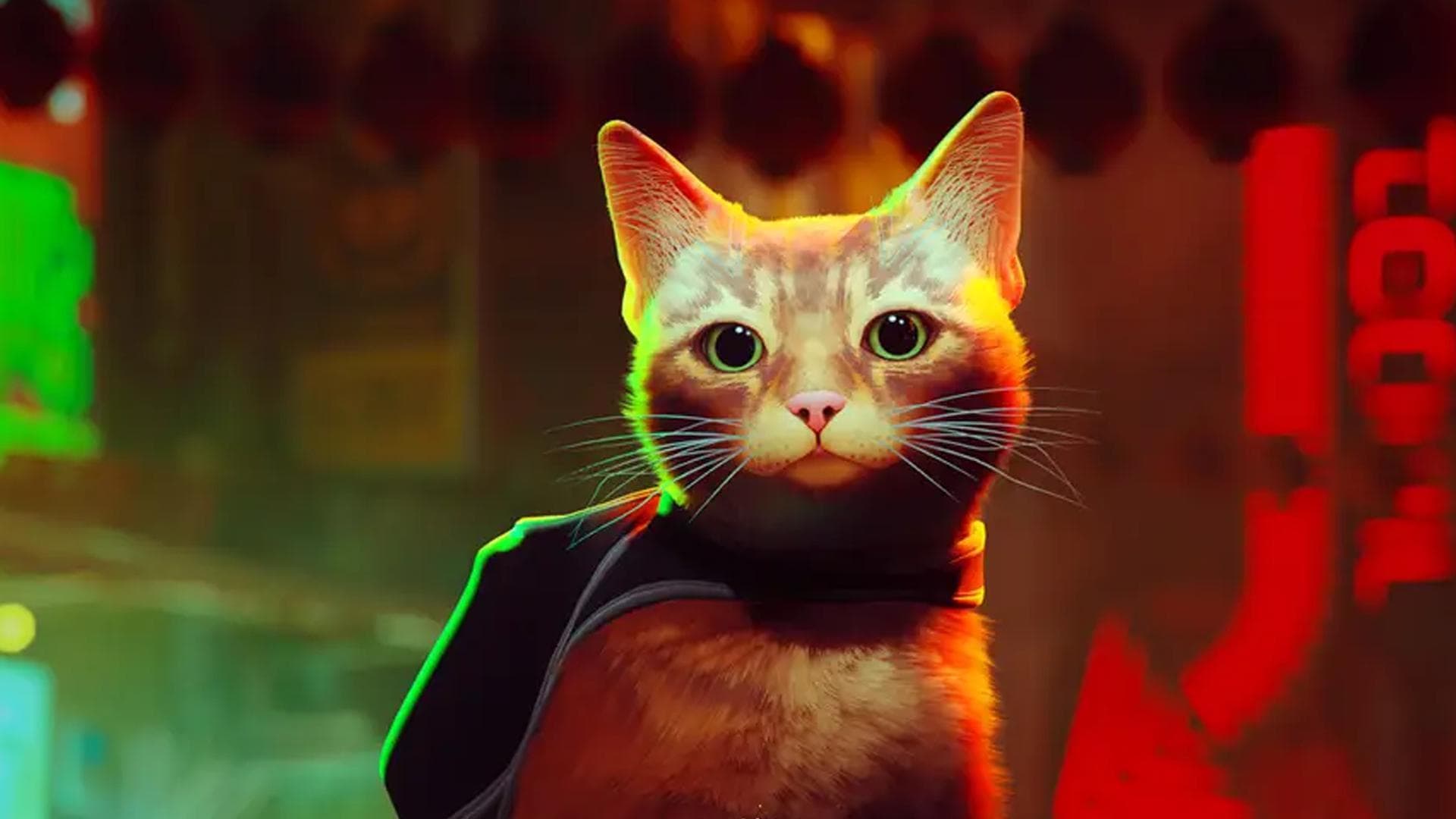
Stray follows a cat navigating a walled city beneath a dome, with no human population remaining. The movement system maps to feline behavior. GPA scores it high on Existential Themes and Dark World, with Emotional Story above average — a combination that describes a walking game built around atmosphere and a specific viewpoint.
OneShot tells its player directly that they are the god of this world and Niko is their prophet. GPA scores it high on Existential Themes and Emotional Story.
AI: The Somnium Files tasks detective Kaname Date with solving a murder by entering suspects' dream worlds to retrieve hidden memories. The Somnium sequences operate on surreal logic. GPA scores it at the top for Text ADV and Multiple Endings — the combination that places it alongside Disco Elysium as a game where reading and investigation are the entire experience.
The Stanley Parable traps an office worker in a loop while a narrator describes his choices in real time, then subverts every decision the player makes. The game's subject is the relationship between player and game. GPA scores it at the top for Existential Themes and Multiple Endings — the combination that describes a game where the act of playing is the content.
Myhouse.wad was released as a Doom II WAD file in 2023, presenting itself as a recreation of a dead friend's house that gradually reveals impossible geometry and psychological horror. GPA scores it high on Existential Themes and Horror — the highest-rated entry in the liminal space genre for emotional weight relative to technical presentation.
TUNIC hands players an untranslated instruction manual and asks them to decode it alongside the game's mechanics. GPA scores it high on Puzzle and Difficulty.
Superliminal builds its puzzle design around forced perspective — objects appear to resize based on viewing angle, and the game asks players to use this property to navigate. The space gradually becomes architecturally impossible. GPA scores it high on Puzzle and Existential Themes — the combination that identifies a game where the mechanics and the subject matter are the same thing.
A Space for the Unbound sets its pixel art mystery in 1990s rural Indonesia, following Atma and Rara as their relationship encounters a supernatural threat. The tone holds grief and warmth simultaneously. GPA scores it high on Emotional Story and Text ADV — a combination that places it in the same cluster as Night in the Woods and similar character-driven adventures.
Outer Wilds gives players a solar system frozen in a 22-minute time loop and asks them to figure out what happened. No objectives are tracked. The entire mystery is assembled from observation and inference. GPA scores it at 90% for Existential Themes — second only to NieR:Automata — alongside high marks for Puzzle and Emotional Story.
Alan Wake 2 sends writer Alan Wake through the Dark Place and FBI agent Saga Anderson through a murder investigation in Bright Falls simultaneously. The two timelines comment on each other. GPA scores it high on Horror and Dark World, with Story Depth above average — a narrative horror that uses the medium's interactivity as the storytelling mechanism.
Ctrl Alt Ego transfers player consciousness between gadgets and AI systems in an abandoned corporate facility. The possession mechanic and hacking system address the question of where the self resides. GPA scores it high on Existential Themes and Puzzle — the mechanics and the subject matter run on the same logic.
Metaphor: ReFantazio builds a fantasy political campaign around the Archetype system, which evolves job classes through use. The social management layer runs alongside the turn-based dungeon crawl. GPA scores it at the top for Turn-Based and Story Depth, sitting close to Persona 5 Royal in the similarity rankings while operating in a completely different setting.
Hollow Knight: Silksong is the highly anticipated epic sequel to the critically acclaimed metroidvania Hollow Knight. Developed by Team Cherry, the game puts players in control of Hornet, the sharp-witted princess and protector of Hallownest, who has been captured and brought to Pharloom—a vast, unfamiliar kingdom ruled by silk and song. Players must ascend through a hauntingly beautiful, completely new world, utilizing Hornet's agile, acrobat-like combat style, crafting deadly traps, and uncovering the ancient secrets of the citadel at the peak.
Manifold Garden builds infinite recursive architecture from Escher's impossible geometry, letting players walk on any surface and fall endlessly in any direction. The puzzle solutions require understanding the spatial structure. GPA scores it at the top for Puzzle and high on Existential Themes — a game where the environment is the paradox.
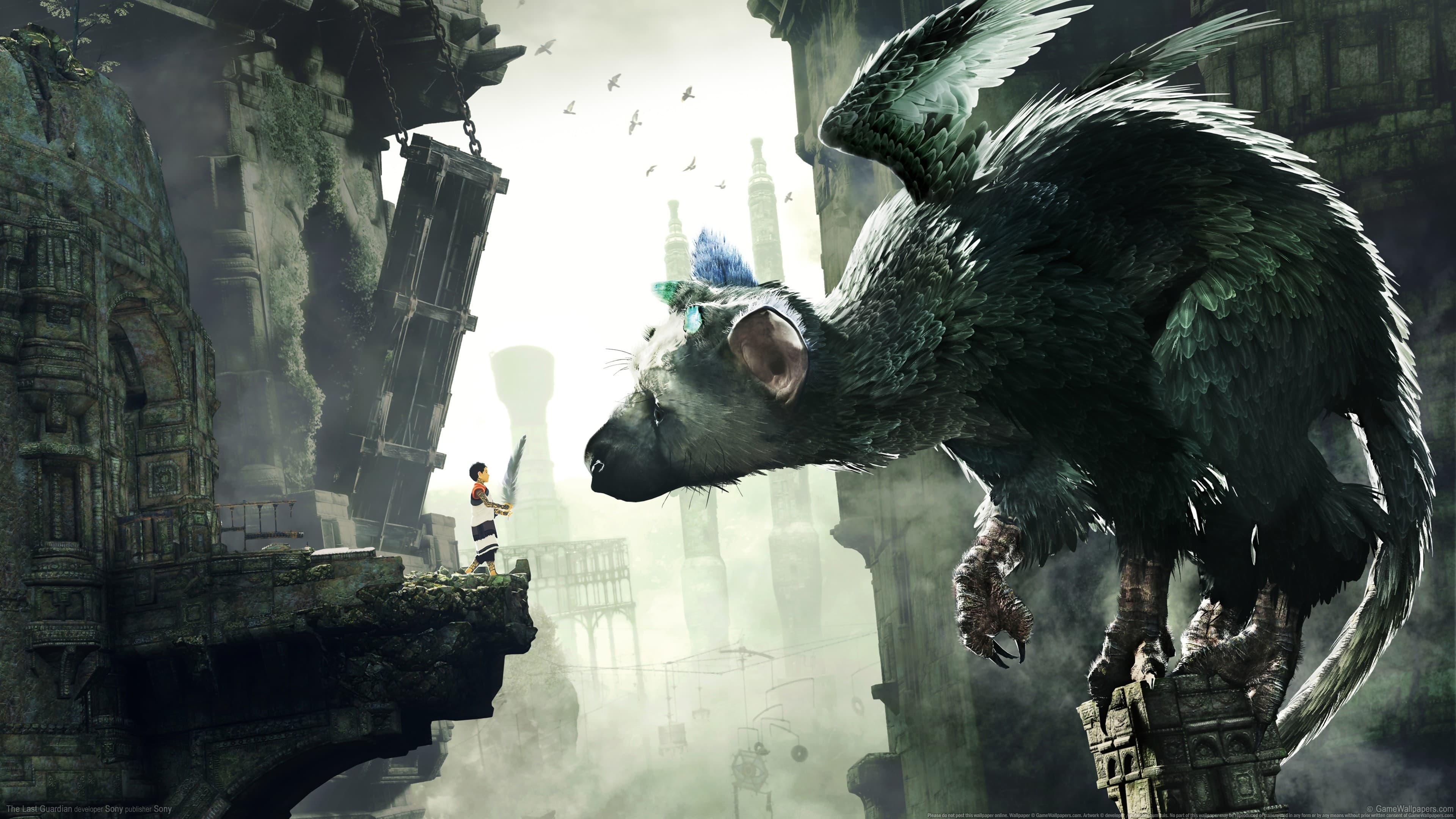
The Last Guardian follows a boy and an enormous creature named Trico through a crumbling ruin, building a relationship through care rather than command. Trico's AI creates unpredictable behavior that makes each interaction feel earned. GPA scores it at the top for Emotional Story — the highest in its genre category — with Dark World reflecting the melancholy that runs through the environmental design.
Silent Hill 2 Remake rebuilds the 2001 psychological horror classic with full 3D traversal and over-the-shoulder combat while preserving the fog-dense town of Silent Hill and James Sunderland's fragmented guilt. GPA scores it high on Horror and Dark World — the combination that defines survival horror at its most psychologically deliberate.
Lost Judgment expands the detective framework into a high school setting where Yagami investigates bullying and serial murder simultaneously. The club activity system adds social depth between cases. GPA scores it above Lost Judgment (2018) on Story Depth — the investigation structure and social commentary carry more weight in the sequel.
Return of the Obra Dinn(オブラ・ディン号の帰還) leads with its Deduction Mystery Adventure identity, anchored by the core feel of "Return of the Obra Dinn reconstructs the fates of 60 shipwreck victims through a stop-death pocket watch." The headline profile reads Logic 90% / Story Depth 80% / Existential Themes 65%, making it a strong pick for fans of Logic and Story Depth. Oriented toward experienced players looking to push their limits.
▸Characteristics & Analysis
Our editorial team scored "Return of the Obra Dinn(オブラ・ディン号の帰還)" by using its feel of puzzle elements, deduction puzzle, and indie as the primary lens, weighting Logic and Story Depth most heavily. Top similar titles include "Her Story(ハー・ストーリー)", "チャンツ・オブ・セナール", "Papers, Please(要、パスポート)".
Review — Return of the Obra Dinn: deduction by observation alone
What kind of game is it — a ghost ship returns to port in 1803
In 1803, the merchant vessel Obra Dinn drifts back to port with no crew aboard. You play an insurance investigator, walking the ship in first person to reconstruct what happened. The goal is not just the ship's fate — you must deduce each sailor's name, identity, and manner of death until the lost voyage makes sense.
Lucas Pope (3909) released this indie mystery in 2018. No combat, no leveling — watching, thinking, and proving answers is the entire game. A pocket watch replays past moments; thirty incidents wait to be solved one by one.
Gameplay analysis — the game withholds answers; you assemble them
Names are rarely handed to you. Outfit, rank, relationships, accent, and context must stack until a face becomes someone. You organize clues, form hypotheses, and test them — the design assumes you build the answer, not receive it.
All thirty cases do not unlock in order. Investigating one person can reframe a scene you saw hours earlier. When scattered fragments finally line up, the payoff feels unlike a typical puzzle box — more like closing a real case folder.
The 1-bit monochrome look is functional, not nostalgic. Positions, uniforms, and deck layout read clearly because the art serves deduction. Minimal tutorial text means logic and patience matter; reviews often note difficulty climbing toward the end.
Our 50 essential indie games list places it in type ⑤ philosophical/contemplative — a flagship for “solve the world through logic.”
Return of the Obra Dinn through GPA scores
Title tendency chart (Return of the Obra Dinn)
Logic ◀
90%
Story Richness ◀
80%
Existential Themes
65%
Decadent World
65%
Text Adventure
60%
Dark Tone
55%
Graphics
55%
* Based on GPA sub-tag scores. Tags: puzzle-solving / deduction / indie / mystery / IGF Grand Prize.
Logic 90% and Story Richness 80% front-load deduction and narrative. Existential Themes and Decadent World at 65% carry the weight of tracing each death. Text Adventure 60% marks dialogue and clue reading; Dark Tone 55% the moment-of-death framing; Graphics 55% the deliberate 1-bit readability.
Reviewer's take
What sticks is feeling like an investigator, not a player clearing objectives. Most mysteries feed the next hint as the plot advances; here you keep asking who this person is and who that conversation was about.
Notes, cross-references, and revisiting old scenes are the loop. The best moments are quiet — when unrelated facts snap together and you realize who you were looking at all along. No jump scares required; your own reasoning supplies the surprise.
Metacritic Metascore 89, user score 8.7; GameSpot 9/10 — deserved, but not universal. Best if you enjoy gathering evidence and testing theories more than action or guided story beats. If observation-driven indies like Chants of Sennaar or TUNIC clicked, this is the next logical neighbor.
You are not being quizzed — you are the detective. Return of the Obra Dinn embeds that sensation in its systems more purely than almost any mystery game since.
Before you play — common questions
Q. What platforms?
PC (Steam), Nintendo Switch, PlayStation 4, Xbox One, and more. Released in 2018 — check platform badges at the top of this page too.
Q. How long to finish?
Most players report roughly 8–12 hours to identify everyone's fate — longer if you chase a full perfect log. Note-taking friendly and easy to pause between sessions.
Q. Scores and who is it for?
Metacritic Metascore 89, user score 8.7; GameSpot 9/10. For players who want deduction and story fused and are happy to think without hand-holding — less so if you need action or explicit next-step hints.