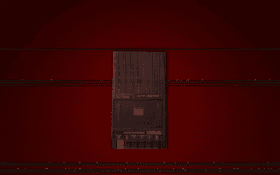
ANATOMY walks through an empty house while cassette tapes deliver a theory about the architecture of habitation. The theory becomes true over multiple playthroughs. GPA scores it high on Existential Themes and Horror — a short-form horror where the central idea is the game mechanic.
Game Characteristics
Existential Themes
85%
Dystopian Setting
80%
Horror
70%
Dark
65%
Emotional Story
55%
Graphics
35%
Player profile fit
Recommended for: Intermediate players (A score of 50 or higher indicates a good fit.)
Beginner
45
Intermediate
62 ✓
Advanced
45
Keywords
個人開発者作品低ポリゴングラフィックジャンプスケアなし30分で完結家=精神の比喩
Gameplay Profile Chart
Adjust tag ratios to instantly update similar titles in real time.
Existential Themes
85%
Dystopian Setting
80%
Horror
70%
Dark
65%
Emotional Story
55%
Graphics
35%
Top 8 Tags — Radar Chart
CurrentOriginal
Games Similar to Anatomy (474)
GPA match scores are calculated from gameplay profile tags. They are not editorial “feels like this game” ratings.
Blair Witch follows Ellis, a former police officer, into the Black Hills Forest with his dog Bullet in an official sequel to the 1999 film. Bullet functions as both companion and tool. Bloober Team's licensed horror. GPA scores it high on Horror and Dark World — the licensed horror game where the canine companion mechanic genuinely changes the emotional texture of the fear experience.
Tag Similarity
Existential Themes
60%
Dystopian Setting
80%
Horror
80%
Dark
78%
Emotional Story
65%
Graphics
68%
Chart tags: Existential Themes / Dystopian Setting / Horror / Dark / Emotional Story / Graphics
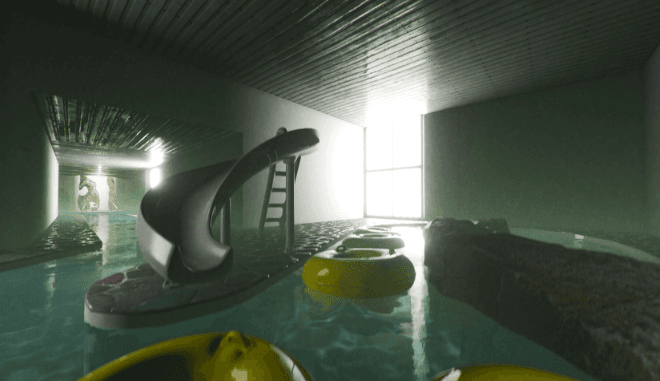
Anemoiapolis recreates malls, pools, and transitional spaces with the visual fidelity to make the emptiness feel accurate rather than digital. The term 'anemoiapolis' describes the game's central emotion: nostalgia for places you have never been. GPA scores it high on Dark World — the combination that places it at the purest end of the liminal space genre.
Tag Similarity
Existential Themes
75%
Dystopian Setting
85%
Horror
65%
Dark
65%
Emotional Story
55%
Graphics
80%
Chart tags: Existential Themes / Dystopian Setting / Horror / Dark / Emotional Story / Graphics
LSD: Dream Emulator is available through emulation. The 1998 PlayStation title was built from ten years of dream diary entries, generating environments through a day counter system that produces different results over time. GPA scores it at the top for Existential Themes — the game predates the liminal space concept by twenty years while embodying it completely.
Tag Similarity
Existential Themes
90%
Dystopian Setting
80%
Horror
65%
Dark
60%
Emotional Story
0%
Graphics
40%
Chart tags: Existential Themes / Dystopian Setting / Horror / Dark / Emotional Story / Graphics
The Backrooms: Lost Media uses the visual language of discovered media — degraded footage, missing frames — to present its Backrooms content as documentation. GPA scores it high on Horror and Dark World — the found footage analog horror aesthetic runs through the presentation more deliberately than most Backrooms titles.
Tag Similarity
Existential Themes
65%
Dystopian Setting
85%
Horror
85%
Dark
85%
Emotional Story
0%
Graphics
55%
Chart tags: Existential Themes / Dystopian Setting / Horror / Dark / Emotional Story / Graphics
The Backrooms: Found Footage runs its maze survival on audio cues rather than visual information, reducing the yellow corridor environment to sound as the primary input. GPA scores it high on Horror — the design commits fully to sensory reduction as the horror mechanism.
Tag Similarity
Existential Themes
60%
Dystopian Setting
85%
Horror
90%
Dark
85%
Emotional Story
0%
Graphics
50%
Chart tags: Existential Themes / Dystopian Setting / Horror / Dark / Emotional Story / Graphics
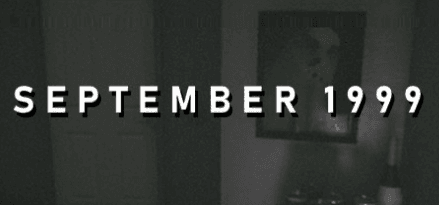
SEPTEMBER 1999 runs for five and a half minutes. A VHS recording moves through a house with something wrong. Free to play. GPA scores it high on Horror and Dark World — the entire game is a tone delivery system at minimum viable length.
Tag Similarity
Existential Themes
55%
Dystopian Setting
70%
Horror
75%
Dark
70%
Emotional Story
0%
Graphics
40%
Chart tags: Existential Themes / Dystopian Setting / Horror / Dark / Emotional Story / Graphics
The Night Way Home sends Rina home from school through a route that shifts into something else. Chilla's Art's survival elements appear here earlier in the catalog. GPA scores it high on Horror and Dark World — the liminal commute setting that has become the studio's most recurring horror context.
Tag Similarity
Existential Themes
55%
Dystopian Setting
75%
Horror
80%
Dark
70%
Emotional Story
50%
Graphics
45%
Chart tags: Existential Themes / Dystopian Setting / Horror / Dark / Emotional Story / Graphics
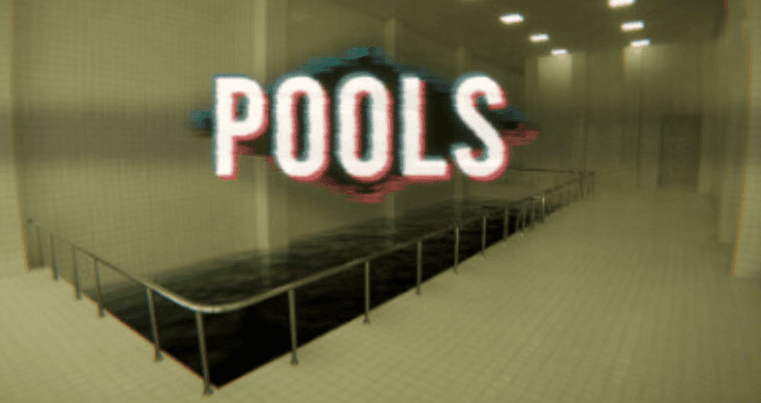
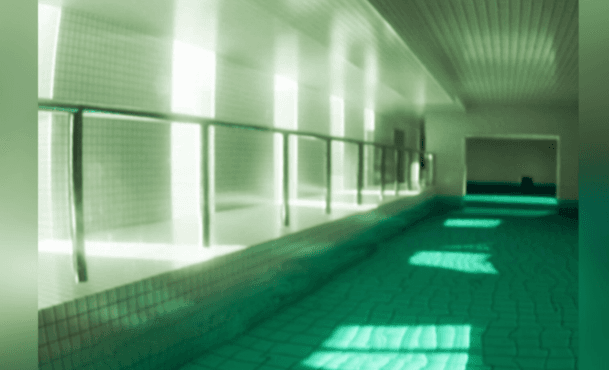
POOLS renders endless indoor swimming facilities through vintage video camera grain, using footsteps and water echoes as the entire audio design. There are no threats and no objectives. GPA scores it high on Dark World and Existential Themes — the experience is defined entirely by absence and atmosphere.
Tag Similarity
Existential Themes
70%
Dystopian Setting
90%
Horror
75%
Dark
70%
Emotional Story
0%
Graphics
75%
Chart tags: Existential Themes / Dystopian Setting / Horror / Dark / Emotional Story / Graphics
Generalized Anxiety Disorder renders mental health states as physical environments, making the architecture of each space correspond to an internal condition. The game's title is its central design statement. GPA scores it high on Existential Themes and Dark World — the combination that identifies a game built around psychological experience rather than gameplay systems.
Tag Similarity
Existential Themes
85%
Dystopian Setting
80%
Horror
80%
Dark
85%
Emotional Story
0%
Graphics
50%
Chart tags: Existential Themes / Dystopian Setting / Horror / Dark / Emotional Story / Graphics
The Convenience Store sends a night shift worker through a closing routine in a store where the customers stopped coming. Chilla's Art's VHS filter and abrupt transitions carry the horror. GPA scores it high on Horror and Dark World — the combination that defines a liminal horror built around institutional spaces.
Tag Similarity
Existential Themes
60%
Dystopian Setting
80%
Horror
85%
Dark
80%
Emotional Story
0%
Graphics
55%
Chart tags: Existential Themes / Dystopian Setting / Horror / Dark / Emotional Story / Graphics
Mouthwashing confines five crew members to a disabled cargo ship and follows the disintegration through non-linear chapter structure. No combat, no resolution. GPA scores it high on Existential Themes and Dark World — the 2024 critical recognition came for a game built entirely from absence.
Tag Similarity
Existential Themes
85%
Dystopian Setting
85%
Horror
70%
Dark
90%
Emotional Story
80%
Graphics
45%
Chart tags: Existential Themes / Dystopian Setting / Horror / Dark / Emotional Story / Graphics
The Complex: Found Footage renders Backrooms Level 0 through VHS processing that makes the yellow fluorescent corridors feel genuinely documented. The found footage framing is structural, not decorative. GPA scores it high on Horror and Graphics — the visual commitment to the format is the primary reason to play.
Tag Similarity
Existential Themes
65%
Dystopian Setting
85%
Horror
85%
Dark
80%
Emotional Story
0%
Graphics
90%
Chart tags: Existential Themes / Dystopian Setting / Horror / Dark / Emotional Story / Graphics
Layers of Fear traps a mad painter in a mansion where every room rearranges itself to reflect his deteriorating mind. Environmental storytelling through portrait fragments and scattered writings builds the backstory. Bloober Team's breakout title. GPA scores it high on Horror and Existential Themes — the first-person psychological horror built entirely around architecture as a mental state.
Tag Similarity
Existential Themes
70%
Dystopian Setting
80%
Horror
80%
Dark
80%
Emotional Story
0%
Graphics
65%
Chart tags: Existential Themes / Dystopian Setting / Horror / Dark / Emotional Story / Graphics
Dreamcore builds its exploration spaces in UE5, rendering Y2K color palettes and institutional furniture in photorealistic detail. The nostalgia referenced is for spaces that never quite existed. GPA scores it high on Dark World and Graphics — a positioning that describes an aesthetic experience built around the uncanny rather than threat.
Tag Similarity
Existential Themes
65%
Dystopian Setting
85%
Horror
60%
Dark
60%
Emotional Story
0%
Graphics
85%
Chart tags: Existential Themes / Dystopian Setting / Horror / Dark / Emotional Story / Graphics
SOMA places players in an underwater facility in 2104 and asks what consciousness means — whether a copied mind is the same person, and what death means if copies exist. Combat is minimal; the horror comes from what the story reveals. Frictional Games' follow-up to Amnesia. GPA scores it at the top for Existential Themes among horror games — the only entry where philosophy and survival horror share equal weight.
Tag Similarity
Existential Themes
95%
Dystopian Setting
85%
Horror
75%
Dark
80%
Emotional Story
85%
Graphics
70%
Chart tags: Existential Themes / Dystopian Setting / Horror / Dark / Emotional Story / Graphics
Serene Asylum wakes players on a surgical table in an asylum with a history that surfaces through documents. The infinite loop structure traps the space in repetition. GPA scores it high on Horror and Puzzle — a free-to-play horror that applies the loop mechanic to institutional architecture.
Tag Similarity
Existential Themes
65%
Dystopian Setting
75%
Horror
70%
Dark
70%
Emotional Story
45%
Graphics
45%
Chart tags: Existential Themes / Dystopian Setting / Horror / Dark / Emotional Story / Graphics
Observer: System Redux casts Rutger Hauer (in his final video game role) as Daniel Lazarski, a neural detective who hacks dying minds in cyberpunk 2084 Poland. The Dream Eater device renders psychological horror sequences inside corrupted memory spaces. Switch 2, PS4/5, Xbox, PC. GPA scores it high on Existential Themes and Dark World — the cyberpunk horror game that most effectively uses the mind-hacking mechanic as both story and scare delivery.
Tag Similarity
Existential Themes
80%
Dystopian Setting
88%
Horror
75%
Dark
80%
Emotional Story
68%
Graphics
75%
Chart tags: Existential Themes / Dystopian Setting / Horror / Dark / Emotional Story / Graphics
The Backrooms 1998 processes its found footage through VHS degradation artifacts that make the yellow corridor footage feel like a discovered recording. The 1998 timestamp commits to the analog horror aesthetic. GPA scores it high on Horror and Dark World — the found footage framing is the design, not decoration.
Tag Similarity
Existential Themes
65%
Dystopian Setting
85%
Horror
90%
Dark
85%
Emotional Story
0%
Graphics
60%
Chart tags: Existential Themes / Dystopian Setting / Horror / Dark / Emotional Story / Graphics
Confabulation photographs changes in a home where the player's memory of the layout is unreliable. The camera serves as both tool and metaphor for the game's central theme. GPA scores it high on Horror and Puzzle — the memory-photograph mechanic sits between Exit 8's anomaly logic and Observation Duty's surveillance framing.
Tag Similarity
Existential Themes
60%
Dystopian Setting
65%
Horror
65%
Dark
55%
Emotional Story
45%
Graphics
40%
Chart tags: Existential Themes / Dystopian Setting / Horror / Dark / Emotional Story / Graphics
Martha is Dead sets its psychological horror in WWII Italy, following Giulia who assumes the identity of her drowned twin sister. The setting intersects wartime atrocity with personal dissociation. LKA's 2022 release was partially censored on PlayStation for graphic content. GPA scores it high on Dark World and Existential Themes — the horror game that most directly engages with historical trauma as a narrative device.
Tag Similarity
Existential Themes
80%
Dystopian Setting
85%
Horror
78%
Dark
90%
Emotional Story
78%
Graphics
72%
Chart tags: Existential Themes / Dystopian Setting / Horror / Dark / Emotional Story / Graphics
About "Anatomy"
▸Game Composition (GPA Analysis)
ANATOMY(アナトミー) leads with its 実験的心理ホラー identity, anchored by the core feel of "ANATOMY walks through an empty house while cassette tapes deliver a theory about the architecture of habitation." The headline profile reads Existential Themes 85% / Dystopian Setting 80% / Horror 70%, making it a strong pick for fans of Existential Themes and Dystopian Setting. Tuned toward the mid-range player who wants a bit more than hand-holding.
▸Characteristics & Analysis
Our editorial team scored "ANATOMY(アナトミー)" by using its feel of 個人開発者作品, 低ポリゴングラフィック, and ジャンプスケアなし as the primary lens, weighting Existential Themes and Dystopian Setting most heavily. Top similar titles include "ブレア・ウィッチ(Blair Witch)", "Anemoiapolis: Chapter 1(アネモイアポリス)", "LSD: Dream Emulator(エルエスディー:ドリームエミュレーター)".
ANATOMY — When Home Becomes the Source of Fear
Overview
ANATOMY is a short experimental horror game created by indie developer Kitty Horrorshow and released in 2016.
The game takes place inside an empty suburban house. There are no weapons, no traditional combat, and no elaborate puzzle system. Instead, the player explores the house, searches for cassette tapes, and listens to recordings that examine the strange similarities between domestic architecture and the human body.
The official estimated playtime is around 30–45 minutes, but ANATOMY is designed to be experienced more than once. Multiple endings and changes across repeated playthroughs make the game considerably more than a one-and-done walking simulator. It is available for Windows, macOS, and Linux. (itch.io)
Visually, ANATOMY uses deliberately crude low-poly graphics, darkness, screen noise, and a distorted presentation that recalls older PC games and VHS footage.
But the low-fidelity visuals are not what makes ANATOMY disturbing.
The real source of fear is much more familiar: the feeling that a place you thought was safe can no longer be trusted.
Gameplay Analysis
Turning Exploration Into Horror
The basic gameplay loop is extremely simple.
Walk through the house. Explore the rooms. Find cassette tapes. Listen to them.
In most horror games, exploration exists to support another system, such as item collection, puzzle solving, or resource management. In ANATOMY, however, the act of repeatedly walking through the same house becomes the source of the horror itself.
Rooms that initially seem ordinary gradually take on a different meaning as the tapes reveal more information.
More importantly, the game begins to interfere with the player's expectations of how a game is supposed to behave.
Visual distortion, changes in the audio, crashes, and restarts all become part of the experience. What would normally be interpreted as a technical problem can instead feel like an intentional part of the game. (Wikipedia)
That leaves the player with a much more uncomfortable question than "Where is the monster?"
Instead: Can I trust what I'm seeing?
A House as a Human Body
The central idea of ANATOMY is the connection between a house and the human body.
The cassette recordings draw parallels between different parts of domestic architecture and human anatomy.
A house has entrances and internal spaces. It contains things that move through it, just as the human body contains systems that sustain life.
By connecting the two, ANATOMY transforms the house from a familiar shelter into something strangely biological.
Rather than simply presenting a haunted house, ANATOMY asks why a house feels safe in the first place — and what happens when that sense of safety collapses.
Academic analysis of the game has similarly focused on its relationship between the haunted house and the body, as well as its use of distortion, crashes, glitches, and discomfort as part of the player's experience. (Game Studies)
Fear Through Uncertainty
ANATOMY does not rely on the conventional horror formula of throwing a monster at the player.
Instead, it creates fear through uncertainty.
You don't know exactly what might change.
You don't know whether the space ahead is still the same space you remember.
And when the game itself appears to break down, you cannot always be certain whether what you are experiencing is a bug or part of the horror.
The player isn't simply afraid of something hiding inside the house. The player becomes unsure whether the house itself can still be understood.
ANATOMY Through GPA
Title tendency chart (ANATOMY)
Existential Themes ◀
85%
Dystopian Setting ◀
80%
Horror ◀
70%
Graphics
35%
* Based on GPA sub-tag scores. Lo-fi presentation and the house-as-body metaphor define this experimental horror.
The game's highest GPA score is Existential Themes at 85%. ANATOMY achieves this through its central metaphor of the house and the body — when the place that is supposed to protect you begins to resemble something bodily and unfamiliar, safety and vulnerability start to collapse into the same thing.
The 80% Dystopian Setting score comes from dark rooms, crude geometry, screen noise, and a presentation that makes an ordinary domestic environment feel increasingly unstable. Game Informer has similarly highlighted the game's deliberately lo-fi presentation and growing screen distortion. (Game Informer)
Horror at 70% reflects a different approach from combat-centered survival horror — space, sound, visual distortion, and even the behavior of the game itself create the unease.
Who Should Play ANATOMY?
Especially recommended if you:
Want a concentrated horror experience you can finish in one sitting
Prefer psychological tension to constant jump scares
Enjoy lo-fi or experimental horror
Like liminal spaces and familiar environments turned unsettling
Enjoy interpreting a game's story rather than having everything explained
Are interested in games that use their own systems as part of the horror
Value atmosphere and ideas more than graphical fidelity
May not be the best fit if you:
Are looking for combat, character progression, elaborate puzzles, or a long campaign — the roughly 30–45 minute runtime may feel limiting.
Final Thoughts
ANATOMY is not simply a horror game set in a creepy house.
It takes the relationship between home and body, then combines it with cassette recordings, visual distortion, glitches, restarts, and repeated exploration to make the player question the experience itself.
Its GPA Graphics score is only 35%. That is not necessarily a weakness — in ANATOMY, the crude visuals are part of the language of the game.
That is why a game lasting roughly 30–45 minutes can leave such a persistent impression. After playing ANATOMY, the unsettling thought isn't necessarily about monsters or haunted buildings. It is much closer to home.
"Every house is haunted."
In ANATOMY, that line isn't just a horror tagline. It is the idea the entire game is built around.