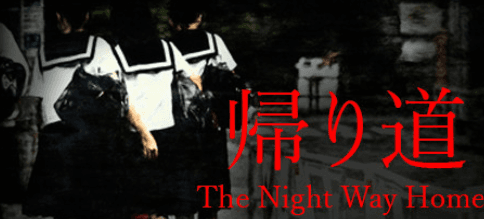
The Night Way Home sends Rina home from school through a route that shifts into something else. Chilla's Art's survival elements appear here earlier in the catalog. GPA scores it high on Horror and Dark World — the liminal commute setting that has become the studio's most recurring horror context.
Game Characteristics
Horror
80%
Dystopian Setting
75%
Dark
70%
Existential Themes
55%
Action
50%
Emotional Story
50%
Graphics
45%
Player profile fit
Recommended for: Intermediate to Advanced players (A score of 50 or higher indicates a good fit.)
Beginner
40
Intermediate
62 ✓
Advanced
60 ✓
Keywords
Chilla's Art下校路の異界VHSフィルターサバイバル要素日本ホラー
Gameplay Profile Chart
Adjust tag ratios to instantly update similar titles in real time.
Horror
80%
Dystopian Setting
75%
Dark
70%
Existential Themes
55%
Action
50%
Emotional Story
50%
Graphics
45%
Top 8 Tags — Radar Chart
CurrentOriginal
Games Similar to The Night Way Home (474)
GPA match scores are calculated from gameplay profile tags. They are not editorial “feels like this game” ratings.
The Convenience Store sends a night shift worker through a closing routine in a store where the customers stopped coming. Chilla's Art's VHS filter and abrupt transitions carry the horror. GPA scores it high on Horror and Dark World — the combination that defines a liminal horror built around institutional spaces.
Tag Similarity
Horror
85%
Dystopian Setting
80%
Dark
80%
Existential Themes
60%
Action
0%
Emotional Story
0%
Graphics
55%
Chart tags: Horror / Dystopian Setting / Dark / Existential Themes / Action / Emotional Story / Graphics
Lost in Vivo chases a dog into a drainage system that extends far beyond what the surface implies. The Silent Hill influence runs through the enemy design and audio. GPA scores it high on Horror and Dark World — freeware horror that applies Konami-era survival horror logic to a constricted underground environment.
Tag Similarity
Horror
80%
Dystopian Setting
85%
Dark
75%
Existential Themes
60%
Action
55%
Emotional Story
55%
Graphics
40%
Chart tags: Horror / Dystopian Setting / Dark / Existential Themes / Action / Emotional Story / Graphics
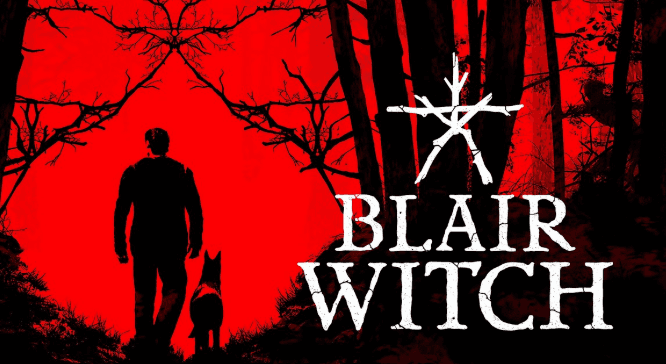
Blair Witch follows Ellis, a former police officer, into the Black Hills Forest with his dog Bullet in an official sequel to the 1999 film. Bullet functions as both companion and tool. Bloober Team's licensed horror. GPA scores it high on Horror and Dark World — the licensed horror game where the canine companion mechanic genuinely changes the emotional texture of the fear experience.
Tag Similarity
Horror
80%
Dystopian Setting
80%
Dark
78%
Existential Themes
60%
Action
0%
Emotional Story
65%
Graphics
68%
Chart tags: Horror / Dystopian Setting / Dark / Existential Themes / Action / Emotional Story / Graphics
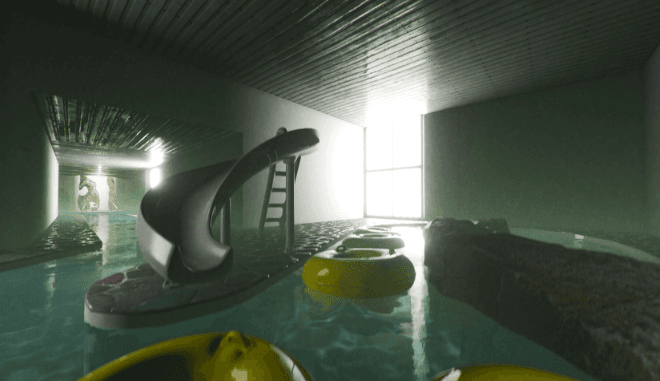
Anemoiapolis recreates malls, pools, and transitional spaces with the visual fidelity to make the emptiness feel accurate rather than digital. The term 'anemoiapolis' describes the game's central emotion: nostalgia for places you have never been. GPA scores it high on Dark World — the combination that places it at the purest end of the liminal space genre.
Tag Similarity
Horror
65%
Dystopian Setting
85%
Dark
65%
Existential Themes
75%
Action
0%
Emotional Story
55%
Graphics
80%
Chart tags: Horror / Dystopian Setting / Dark / Existential Themes / Action / Emotional Story / Graphics
The Backrooms: Found Footage runs its maze survival on audio cues rather than visual information, reducing the yellow corridor environment to sound as the primary input. GPA scores it high on Horror — the design commits fully to sensory reduction as the horror mechanism.
Tag Similarity
Horror
90%
Dystopian Setting
85%
Dark
85%
Existential Themes
60%
Action
0%
Emotional Story
0%
Graphics
50%
Chart tags: Horror / Dystopian Setting / Dark / Existential Themes / Action / Emotional Story / Graphics
ANATOMY walks through an empty house while cassette tapes deliver a theory about the architecture of habitation. The theory becomes true over multiple playthroughs. GPA scores it high on Existential Themes and Horror — a short-form horror where the central idea is the game mechanic.
Tag Similarity
Horror
70%
Dystopian Setting
80%
Dark
65%
Existential Themes
85%
Action
0%
Emotional Story
55%
Graphics
35%
Chart tags: Horror / Dystopian Setting / Dark / Existential Themes / Action / Emotional Story / Graphics
The Backrooms: Lost Media uses the visual language of discovered media — degraded footage, missing frames — to present its Backrooms content as documentation. GPA scores it high on Horror and Dark World — the found footage analog horror aesthetic runs through the presentation more deliberately than most Backrooms titles.
Tag Similarity
Horror
85%
Dystopian Setting
85%
Dark
85%
Existential Themes
65%
Action
0%
Emotional Story
0%
Graphics
55%
Chart tags: Horror / Dystopian Setting / Dark / Existential Themes / Action / Emotional Story / Graphics
Generalized Anxiety Disorder renders mental health states as physical environments, making the architecture of each space correspond to an internal condition. The game's title is its central design statement. GPA scores it high on Existential Themes and Dark World — the combination that identifies a game built around psychological experience rather than gameplay systems.
Tag Similarity
Horror
80%
Dystopian Setting
80%
Dark
85%
Existential Themes
85%
Action
0%
Emotional Story
0%
Graphics
50%
Chart tags: Horror / Dystopian Setting / Dark / Existential Themes / Action / Emotional Story / Graphics
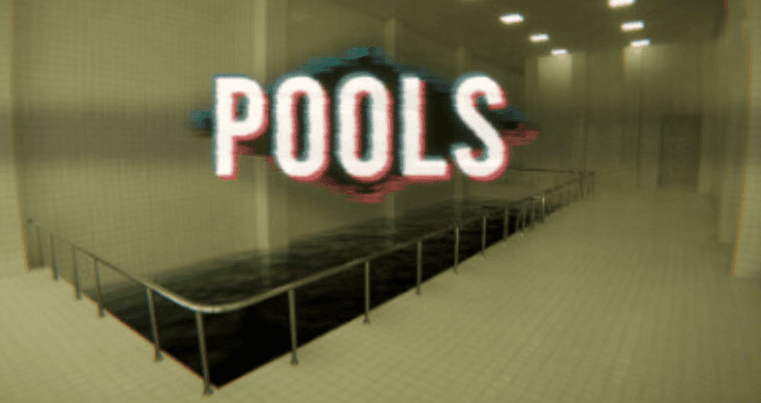
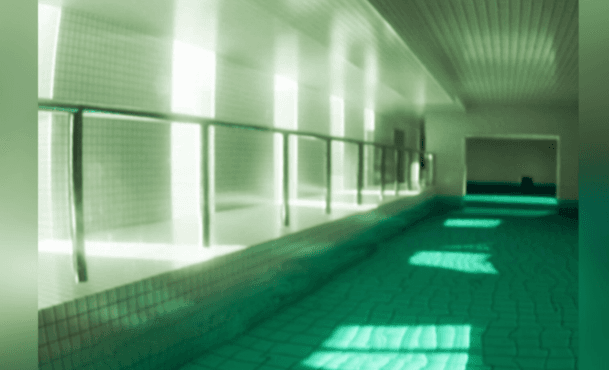
POOLS renders endless indoor swimming facilities through vintage video camera grain, using footsteps and water echoes as the entire audio design. There are no threats and no objectives. GPA scores it high on Dark World and Existential Themes — the experience is defined entirely by absence and atmosphere.
Tag Similarity
Horror
75%
Dystopian Setting
90%
Dark
70%
Existential Themes
70%
Action
0%
Emotional Story
0%
Graphics
75%
Chart tags: Horror / Dystopian Setting / Dark / Existential Themes / Action / Emotional Story / Graphics
The Complex: Found Footage renders Backrooms Level 0 through VHS processing that makes the yellow fluorescent corridors feel genuinely documented. The found footage framing is structural, not decorative. GPA scores it high on Horror and Graphics — the visual commitment to the format is the primary reason to play.
Tag Similarity
Horror
85%
Dystopian Setting
85%
Dark
80%
Existential Themes
65%
Action
0%
Emotional Story
0%
Graphics
90%
Chart tags: Horror / Dystopian Setting / Dark / Existential Themes / Action / Emotional Story / Graphics
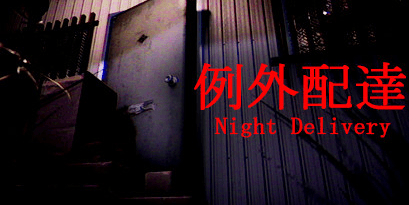
Night Delivery puts a delivery worker through a single apartment building on a late-night shift, with packages that don't add up and residents who don't feel right. Chilla's Art's VHS filter and real-geography setting do the heavy lifting. GPA scores it high on Horror and Dark World — a short-form Japanese horror that proves the delivery job is one of horror's most productive settings.
Tag Similarity
Horror
80%
Dystopian Setting
75%
Dark
70%
Existential Themes
0%
Action
0%
Emotional Story
0%
Graphics
45%
Chart tags: Horror / Dystopian Setting / Dark / Existential Themes / Action / Emotional Story / Graphics
The Backrooms 1998 processes its found footage through VHS degradation artifacts that make the yellow corridor footage feel like a discovered recording. The 1998 timestamp commits to the analog horror aesthetic. GPA scores it high on Horror and Dark World — the found footage framing is the design, not decoration.
Tag Similarity
Horror
90%
Dystopian Setting
85%
Dark
85%
Existential Themes
65%
Action
0%
Emotional Story
0%
Graphics
60%
Chart tags: Horror / Dystopian Setting / Dark / Existential Themes / Action / Emotional Story / Graphics
LSD: Dream Emulator is available through emulation. The 1998 PlayStation title was built from ten years of dream diary entries, generating environments through a day counter system that produces different results over time. GPA scores it at the top for Existential Themes — the game predates the liminal space concept by twenty years while embodying it completely.
Tag Similarity
Horror
65%
Dystopian Setting
80%
Dark
60%
Existential Themes
90%
Action
0%
Emotional Story
0%
Graphics
40%
Chart tags: Horror / Dystopian Setting / Dark / Existential Themes / Action / Emotional Story / Graphics
Nightdive Studios' remake of the 1994 original rebuilds Citadel Station with modern visuals while preserving SHODAN's malevolent AI personality and the game's nonlinear station traversal. BioShock, Deus Ex, and Prey all credit this series as a foundational influence. Switch 2, PS4/5, Xbox, PC. GPA scores it high on Existential Themes and Dark World — the source code for a genre.
Tag Similarity
Horror
65%
Dystopian Setting
82%
Dark
72%
Existential Themes
78%
Action
72%
Emotional Story
0%
Graphics
70%
Chart tags: Horror / Dystopian Setting / Dark / Existential Themes / Action / Emotional Story / Graphics
Interior Worlds sends players through unlit rooms with only a flash camera for visibility. Each press of the shutter illuminates the space for a fraction of a second. GPA scores it high on Horror and Dark World — the mechanic makes darkness the primary material.
Tag Similarity
Horror
85%
Dystopian Setting
80%
Dark
85%
Existential Themes
65%
Action
0%
Emotional Story
0%
Graphics
70%
Chart tags: Horror / Dystopian Setting / Dark / Existential Themes / Action / Emotional Story / Graphics
Amnesia introduced the sanity meter — look at monsters and the player's vision deteriorates and strange sounds intrude. There are no weapons. The castle setting and helplessness design drove the early YouTube Let's Play phenomenon. Frictional Games' 2010 release established the template for first-person horror games for the following decade. GPA scores it high on Horror — the game that rewrote horror design conventions.
Tag Similarity
Horror
92%
Dystopian Setting
85%
Dark
85%
Existential Themes
70%
Action
0%
Emotional Story
0%
Graphics
55%
Chart tags: Horror / Dystopian Setting / Dark / Existential Themes / Action / Emotional Story / Graphics
Shinji Mikami's return to survival horror sends detective Sebastian Castellanos through a nightmarish asylum that shifts and distorts around him. Ammunition is scarce; Ruvik is relentless. The game self-consciously reconstructs the RE4 structure through a psychological horror lens. GPA scores it high on Horror and Dark World — a statement from the creator of Resident Evil about what survival horror still means.
Tag Similarity
Horror
85%
Dystopian Setting
88%
Dark
85%
Existential Themes
60%
Action
65%
Emotional Story
0%
Graphics
70%
Chart tags: Horror / Dystopian Setting / Dark / Existential Themes / Action / Emotional Story / Graphics
EA Motive rebuilt the 2008 original from scratch in Frostbite, adding seamless transitions between all sections of the Ishimura without loading screens. Isaac Clarke gains a voice. The dismemberment system and vacuum sections survive intact. GPA scores it high on Horror and Dark World — the sci-fi survival horror remake that raised the production floor for the genre.
Tag Similarity
Horror
90%
Dystopian Setting
85%
Dark
85%
Existential Themes
60%
Action
70%
Emotional Story
0%
Graphics
88%
Chart tags: Horror / Dystopian Setting / Dark / Existential Themes / Action / Emotional Story / Graphics
SEPTEMBER 1999 runs for five and a half minutes. A VHS recording moves through a house with something wrong. Free to play. GPA scores it high on Horror and Dark World — the entire game is a tone delivery system at minimum viable length.
Tag Similarity
Horror
75%
Dystopian Setting
70%
Dark
70%
Existential Themes
55%
Action
0%
Emotional Story
0%
Graphics
40%
Chart tags: Horror / Dystopian Setting / Dark / Existential Themes / Action / Emotional Story / Graphics
Martha is Dead sets its psychological horror in WWII Italy, following Giulia who assumes the identity of her drowned twin sister. The setting intersects wartime atrocity with personal dissociation. LKA's 2022 release was partially censored on PlayStation for graphic content. GPA scores it high on Dark World and Existential Themes — the horror game that most directly engages with historical trauma as a narrative device.
Tag Similarity
Horror
78%
Dystopian Setting
85%
Dark
90%
Existential Themes
80%
Action
0%
Emotional Story
78%
Graphics
72%
Chart tags: Horror / Dystopian Setting / Dark / Existential Themes / Action / Emotional Story / Graphics
About "The Night Way Home"
▸Game Composition (GPA Analysis)
[Chilla's Art] The Night Way Home(帰り道) leads with its 和風サバイバルホラー identity, anchored by the core feel of "The Night Way Home sends Rina home from school through a route that shifts into something else." The headline profile reads Horror 80% / Dystopian Setting 75% / Dark 70%, making it a strong pick for fans of Horror and Dystopian Setting. Oriented toward experienced players looking to push their limits.
▸Characteristics & Analysis
Our editorial team scored "[Chilla's Art] The Night Way Home(帰り道)" by using its feel of Chilla's Art, 下校路の異界, and VHSフィルター as the primary lens, weighting Horror and Dystopian Setting most heavily. Top similar titles include "夜勤事件(The Convenience Store)", "Lost in Vivo(ロスト・イン・ヴィーヴォ)", "ブレア・ウィッチ(Blair Witch)".
The Night Way Home — When an Ordinary Walk Home Turns Into a Survival Horror
Game Overview
The Night Way Home is a Japanese survival horror game developed by Chilla's Art and released in 2021. You play as Rina, a junior high school student who gets lost in an eerie alternate world while walking home after school. She has been thinking about another girl who recently went missing, only to find herself trapped in a strange world and hunted by an enemy. Her goal is simple: find a way home. (Steam Store)
Like many Chilla's Art games, it starts with an ordinary Japanese setting and gradually turns that familiar environment into something unsettling. But The Night Way Home adds a stronger survival element, forcing the player to deal with enemies rather than simply observe a disturbing environment.
1. Turning an Ordinary School Route Into a Horror Setting
One of the game's most effective ideas is that it does not begin in an obviously terrifying location. Rina is simply walking home from school. That matters because the setting is immediately familiar. A school route, neighborhood streets, and the idea of heading home are all ordinary parts of everyday life. Then something starts to feel wrong.
As the familiar environment gives way to an eerie alternate world, the game creates fear through contrast. Instead of relying entirely on strange locations, it takes something recognizable and gradually removes the sense of safety associated with it. That helps explain the game's 80% Horror and 75% Decadent Worldview scores. The fear comes from the feeling that a place you should understand has suddenly become impossible to trust.
2. A Horror Game That Makes You Run
The biggest difference between The Night Way Home and a pure walking simulator is that the player is actively being hunted. Steam describes the game as a survival horror title rather than a walking simulator. The player has to search for home while being pursued, and the developers warn that the game can be particularly challenging for players who struggle to stay calm and persistent under pressure. (Steam Store)
That changes the way the horror works. When something frightening appears, you cannot simply stop and look at it. You have to keep moving. Should you continue forward? Can you get away? Where is the enemy? Are you going the right way? The 50% Action score reflects this balance. The game is not built around combat, but movement, escape, and moment-to-moment decisions give the horror a more active edge.
3. VHS Visuals That Make the World Feel Unstable
The game's VHS-inspired presentation is another important part of its atmosphere. The visual effects recreate analog-video artifacts such as screen trails, signal bleeding, VHS noise, interlacing, and CRT-style jitter. Players can also disable the VHS effects if they prefer a cleaner image. (Steam Store)
The GPA Graphics score is 45%, which is relatively low compared with visually polished modern games. But that does not mean the presentation is ineffective. In fact, the roughness is part of the point. A distant shape can be difficult to identify. A visual artifact can make you question whether you actually saw something. The lack of clarity becomes part of the horror. Rather than using visual fidelity to impress the player, The Night Way Home uses imperfect imagery to make the environment feel unreliable.
4. "Getting Home" Becomes a Survival Objective
The game's central objective is almost comically ordinary: Get home. Under normal circumstances, that would not be much of a goal. But once Rina enters the strange world, getting home becomes a matter of survival. The player has to keep moving, watch the surroundings, deal with enemies, and figure out how to make progress without getting caught.
The game also uses payphones as save points, giving the player another reason to pay attention to their surroundings and think about when it is safe to save. (Steam Store) This makes the idea of "going home" more than just a story objective. It becomes the motivation behind almost every action the player takes.
5. A 55% Existential Theme Built Around the Idea of Home
The 55% Existential Themes score reflects a subtler part of the game. The Night Way Home is not a philosophical horror story, but its central idea has an obvious emotional weight: what happens when the place you normally associate with safety is suddenly unreachable? Rina is already thinking about a missing girl when she begins her journey home. Soon afterward, she becomes trapped in a strange world herself. The disappearance and her own inability to return home become closely connected to the game's premise. (Steam Store)
Home therefore becomes more than a destination. It represents normal life, safety, and the world Rina is trying to return to. That makes the simple act of going home feel much more important once the rules of the world have changed.
6. A 2–4 Hour Horror Experience
Steam estimates a typical playthrough at around two to four hours. (Steam Store) That relatively short runtime suits the game's approach. Rather than building a huge world with dozens of systems, The Night Way Home focuses on delivering one concentrated horror experience. It is better suited to players looking for a short, focused horror game than someone looking for a massive survival-horror campaign.
The GPA user scores also reflect that accessibility gap: 40% for beginners, 62% for intermediate players, and 60% for advanced players. The game is more naturally suited to players who already have some familiarity with survival horror and being pursued by enemies.
The easiest way to describe The Night Way Home is as a combination of Japanese everyday-life horror and survival-focused pursuit mechanics. Its strongest GPA scores are Horror at 80%, Decadent Worldview at 75%, and Dark at 70%. These scores reflect the game's transformation of an ordinary school route into an unsettling alternate world.
The 45% Graphics score is also worth noting. This is not a game that depends on cutting-edge visuals. Its VHS effects, rough imagery, and familiar Japanese environments are used to create uncertainty rather than visual spectacle. Most importantly, the player is not simply watching the horror unfold. You have to get home. You have to keep moving while something is chasing you, figure out where to go, and stay calm enough to make decisions under pressure.
That combination of a familiar Japanese setting, VHS-style presentation, and survival-focused pursuit gives The Night Way Home its identity. The road home should be the safest part of the day. Here, it becomes the thing you have to survive.