Children of Morta sends a family through procedurally generated dungeons with story advancing through a shared camp. GPA scores it high on Roguelike and Co-op.
Tag Similarity
Character Building
70%
Roguelike
80%
Action
75%
Graphics
65%
Dark
0%
サンドボックス
0%
Dystopian Setting
55%
Crafting
0%
Chart tags: Character Building / Roguelike / Action / Graphics / Dark / サンドボックス / Dystopian Setting / Crafting
Grounded shrinks players to insect size in a suburban backyard, turning familiar objects into environmental scale landmarks. The survival loop includes base building against ant raids and spider attacks. GPA scores it high on Craft and Co-op, with Horror above average — the spider encounters are genuinely threatening regardless of prior arachnophobia.
Tag Similarity
Character Building
50%
Roguelike
0%
Action
60%
Graphics
70%
Dark
30%
サンドボックス
60%
Dystopian Setting
40%
Crafting
80%
Chart tags: Character Building / Roguelike / Action / Graphics / Dark / サンドボックス / Dystopian Setting / Crafting
Coral Island centers reef restoration alongside the farm management and relationship systems of the life simulation genre. The diving mechanic ties ecological health to farm income. GPA scores it high on Slow Life and Co-op — the combination that places it close to Stardew Valley in the similarity rankings with an environmental focus that adds thematic distinctiveness.
Tag Similarity
Character Building
70%
Roguelike
0%
Action
30%
Graphics
75%
Dark
0%
サンドボックス
50%
Dystopian Setting
0%
Crafting
50%
Chart tags: Character Building / Roguelike / Action / Graphics / Dark / サンドボックス / Dystopian Setting / Crafting
Core Keeper digs through procedurally generated underground biomes toward boss encounters, with farming, fishing, and equipment crafting filling time between fights. Eight-player co-op runs the full experience. GPA scores it high on Craft and Co-op — close to Terraria in the similarity rankings with a stronger emphasis on cooperative play.
Tag Similarity
Character Building
85%
Roguelike
0%
Action
65%
Graphics
65%
Dark
0%
サンドボックス
80%
Dystopian Setting
0%
Crafting
90%
Chart tags: Character Building / Roguelike / Action / Graphics / Dark / サンドボックス / Dystopian Setting / Crafting
Diablo IV returns to a darker visual register than Diablo III, adding open-world zones and a Paragon board for endgame build development. The five classes play substantially differently. GPA scores it high on Co-op and Action, with Dark World above average — the combination that describes the cooperative loot loop more precisely than genre alone.
Tag Similarity
Character Building
90%
Roguelike
50%
Action
85%
Graphics
85%
Dark
70%
サンドボックス
0%
Dystopian Setting
65%
Crafting
0%
Chart tags: Character Building / Roguelike / Action / Graphics / Dark / サンドボックス / Dystopian Setting / Crafting
Warframe has evolved continuously since 2013, adding open-world zones, a full narrative, and hundreds of Warframe loadout combinations. The free-to-play model is the least intrusive in its category. GPA scores it high on Action and Co-op — a positioning that describes an endgame-focused shooter where the community knowledge base is as deep as the game itself.
Tag Similarity
Character Building
90%
Roguelike
40%
Action
85%
Graphics
80%
Dark
50%
サンドボックス
0%
Dystopian Setting
50%
Crafting
0%
Chart tags: Character Building / Roguelike / Action / Graphics / Dark / サンドボックス / Dystopian Setting / Crafting
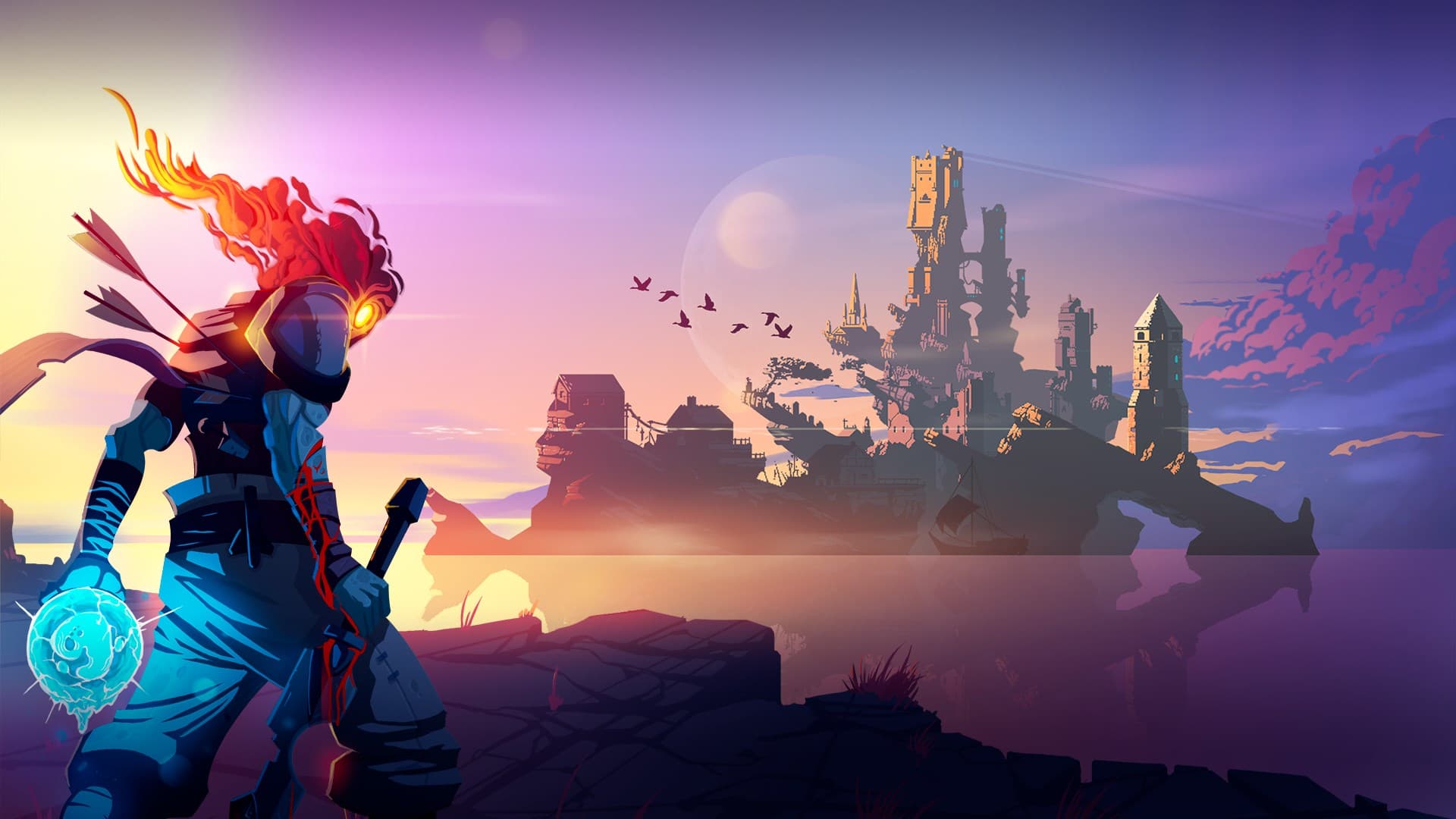
Dead Cells runs a roguelite loop through a plague-infested island, with weapon synergies that change substantially between runs. The movement speed and parry windows sit at the aggressive end of the genre. GPA scores it at the top for Roguelike and Action among 2D titles — a pairing that favors players who want mechanical depth over narrative.
Tag Similarity
Character Building
55%
Roguelike
90%
Action
90%
Graphics
65%
Dark
0%
サンドボックス
0%
Dystopian Setting
60%
Crafting
0%
Chart tags: Character Building / Roguelike / Action / Graphics / Dark / サンドボックス / Dystopian Setting / Crafting
Dinkum drops players into an Australian outback island with four biomes — cold, desert, bushland, and tropical — and a town to build from a single tent. Farming, mining, fishing, and museum donation structure the progression. One developer built it over eight years. GPA scores it high on Craft and Sandbox — the life sim that most accurately renders Australian environmental design in the genre.
Tag Similarity
Character Building
75%
Roguelike
0%
Action
0%
Graphics
60%
Dark
0%
サンドボックス
75%
Dystopian Setting
0%
Crafting
80%
Chart tags: Character Building / Roguelike / Action / Graphics / Dark / サンドボックス / Dystopian Setting / Crafting
Story of Seasons: Let's Go! Grand Bazaar rebuilds the 2008 DS original in full 3D, centering weekly bazaar events as the primary economy alongside standard farm management. Players grow crops, raise animals, and fill the market stall to attract more visitors. Switch and Switch 2 versions launched August 2025; PS5 and Xbox followed in May 2026. GPA scores it high on育成 and Slow Life — the bazaar system distinguishes it from other farm sims in the series.
Tag Similarity
Character Building
85%
Roguelike
0%
Action
0%
Graphics
70%
Dark
0%
サンドボックス
55%
Dystopian Setting
0%
Crafting
60%
Chart tags: Character Building / Roguelike / Action / Graphics / Dark / サンドボックス / Dystopian Setting / Crafting
Code Vein wraps Dark Souls-style stamina combat in anime aesthetics and a vampire mythology, with an AI companion system that scales difficulty based on whether players use it. Bandai Namco Studios. PS4, Xbox One, PC. GPA scores it high on Action and Dark World — the Soulslike entry point for players drawn to JRPG aesthetics who find FromSoftware's minimalism unwelcoming.
Tag Similarity
Character Building
65%
Roguelike
0%
Action
75%
Graphics
68%
Dark
65%
サンドボックス
0%
Dystopian Setting
75%
Crafting
0%
Chart tags: Character Building / Roguelike / Action / Graphics / Dark / サンドボックス / Dystopian Setting / Crafting
Remnant: From the Ashes transplants Dark Souls' bonfire-and-stamina structure into a third-person shooter, with procedurally generated dungeons and boss encounters that differ between playthroughs. Three-player co-op. Gunfire Games, Perfect World Entertainment. Switch, PS4, Xbox One, PC. GPA scores it high on Action and Co-op — the Soulslike that most effectively opened the genre to shooter-first players.
Tag Similarity
Character Building
60%
Roguelike
0%
Action
80%
Graphics
65%
Dark
65%
サンドボックス
0%
Dystopian Setting
70%
Crafting
0%
Chart tags: Character Building / Roguelike / Action / Graphics / Dark / サンドボックス / Dystopian Setting / Crafting
Deep Rock Galactic: Survivor puts a dwarf miner on a solo extraction mission, with weapons firing automatically while the player focuses on movement and upgrade selection between waves. The DRG universe provides the enemy variety and environmental identity. GPA scores it high on Roguelike and Action — the auto-shooter entry that most successfully imports an existing IP's identity into the Vampire Survivors format.
Tag Similarity
Character Building
75%
Roguelike
85%
Action
70%
Graphics
65%
Dark
0%
サンドボックス
0%
Dystopian Setting
0%
Crafting
0%
Chart tags: Character Building / Roguelike / Action / Graphics / Dark / サンドボックス / Dystopian Setting / Crafting
My Time at Sandrock continues the My Time at Portia formula in a desert post-apocalyptic setting 300 years after technology collapsed. Players restore machinery, build relationships, and develop the workshop in a town that responds to their economic output. Multiplayer supports co-op. GPA scores it high on Craft and育成 — the My Time entry with the strongest RPG integration and the largest content volume at launch.
Tag Similarity
Character Building
85%
Roguelike
0%
Action
0%
Graphics
65%
Dark
0%
サンドボックス
65%
Dystopian Setting
0%
Crafting
80%
Chart tags: Character Building / Roguelike / Action / Graphics / Dark / サンドボックス / Dystopian Setting / Crafting
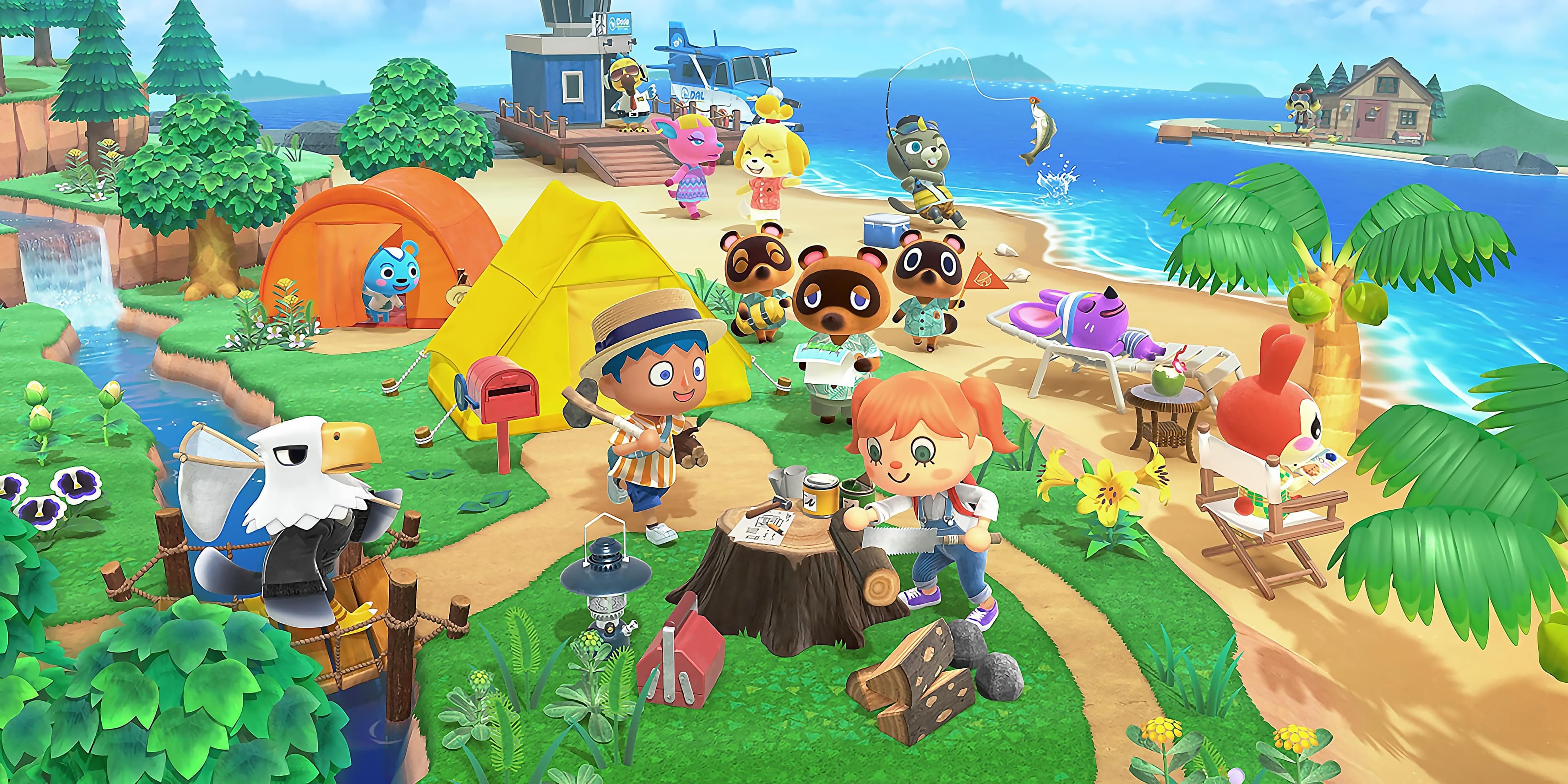
Animal Crossing: New Horizons moves the series to a deserted island and adds terraforming tools that let players reshape the terrain. The real-time calendar ties the game to the actual date. GPA scores it high on Slow Life and Co-op, with Collection above average — a positioning that places it near Stardew Valley in the similarity rankings while running lower on combat.
Tag Similarity
Character Building
70%
Roguelike
0%
Action
0%
Graphics
60%
Dark
0%
サンドボックス
80%
Dystopian Setting
0%
Crafting
75%
Chart tags: Character Building / Roguelike / Action / Graphics / Dark / サンドボックス / Dystopian Setting / Crafting
The Division 2 builds its endgame around post-collapse Washington D.C., with gear-based progression and co-op raids that require coordinated builds. The seasonal content structure has sustained updates since 2019. GPA scores it high on Co-op and Action — the combination that describes a looter-shooter where the tactical layer is more developed than most genre competitors.
Tag Similarity
Character Building
85%
Roguelike
0%
Action
85%
Graphics
85%
Dark
70%
サンドボックス
0%
Dystopian Setting
80%
Crafting
0%
Chart tags: Character Building / Roguelike / Action / Graphics / Dark / サンドボックス / Dystopian Setting / Crafting
Hyrule Warriors: Age of Calamity blends the rich lore and breathtaking world of The Legend of Zelda: Breath of the Wild with the fast-paced, hack-and-slash action of Omega Force’s Musou series. Serving as a dramatic prequel set 100 years before the events of Breath of the Wild, the game allows players to control Link, Zelda, the four Champions, and other allies in large-scale battles against the armies of Calamity Ganon. It offers a tactical, narrative-driven experience that details the tragic struggle to save the kingdom of Hyrule.
Tag Similarity
Character Building
40%
Roguelike
0%
Action
75%
Graphics
60%
Dark
30%
サンドボックス
0%
Dystopian Setting
0%
Crafting
0%
Chart tags: Character Building / Roguelike / Action / Graphics / Dark / サンドボックス / Dystopian Setting / Crafting
The second entry in the Story of Seasons series on N64 refined the farming, livestock, and marriage systems that the original established. Added to Nintendo Classics in December 2023. GPA scores it high on Slow Life and Collection — the farm sim entry that defined the series' core loop for successors to follow.
Tag Similarity
Character Building
80%
Roguelike
0%
Action
0%
Graphics
45%
Dark
0%
サンドボックス
50%
Dystopian Setting
0%
Crafting
50%
Chart tags: Character Building / Roguelike / Action / Graphics / Dark / サンドボックス / Dystopian Setting / Crafting
The Binding of Isaac: Repentance adds over 130 items, new characters, and two new endings to the already massive Afterbirth+ base, bringing the total item count above 700. Each run assembles a build from random pickups whose interactions produce emergent results no designer planned. GPA scores it at the top for Roguelike and Difficulty — the combination that identifies the deepest item-synergy sandbox in the genre.
Tag Similarity
Character Building
60%
Roguelike
95%
Action
75%
Graphics
55%
Dark
75%
サンドボックス
0%
Dystopian Setting
80%
Crafting
0%
Chart tags: Character Building / Roguelike / Action / Graphics / Dark / サンドボックス / Dystopian Setting / Crafting
About "Cult of the Lamb"
▸Game Composition (GPA Analysis)
Cult of the Lamb(カルトオブザラム) leads with its アクション×経営シム identity, anchored by the core feel of "Cult of the Lamb runs a cult management sim above a roguelite dungeon crawler." The headline profile reads Character Building 75% / Roguelike 70% / Action 70%, making it a strong pick for fans of Character Building and Roguelike. Accessible enough for newcomers while offering enough depth to satisfy veterans.
▸Characteristics & Analysis
Our editorial team scored "Cult of the Lamb(カルトオブザラム)" by using its feel of カルト要素, management sim, and roguelike as the primary lens, weighting Character Building and Roguelike most heavily. Top similar titles include "Children of Morta(チルドレン・オブ・モルタ)", "Moonlighter(ムーンライター)", "Grounded(グラウンデッド)".
Cult of the Lamb — A Roguelike Where You Build Your Own Cult
Overview
Cult of the Lamb is an action game about building and managing a cult, developed by Massive Monster.
The contrast is immediately striking.
Everything looks cute and colorful. You play as an adorable lamb, surrounded by friendly-looking animals.
But what you are actually doing is running a cult.
You recruit followers, build facilities, perform rituals, deliver sermons, and expand your community. At the same time, you leave your settlement to fight enemies, gather resources, and recruit new followers through roguelike-style crusades. (Devolver Digital)
This creates the game's central gameplay loop:
Explore → collect resources and followers → develop your cult → explore again.
Rather than choosing between an action game and a management sim, Cult of the Lamb constantly switches between the two.
Gameplay Analysis
75% Progression — Your Cult Is the Long-Term Reward
One of the most important parts of Cult of the Lamb is developing your followers and settlement.
Followers are not simply a number representing the size of your cult. They have their own traits and can be assigned different roles within the community.
You can build new facilities, improve the settlement, perform rituals, and unlock new abilities as your cult grows.
This means the resources you collect during a crusade have a purpose beyond the current run.
They contribute to the long-term development of your entire settlement.
That progression loop is a major reason GPA gives the game a 75% Progression score.
70% Roguelike — Every Crusade Plays Out Differently
When you leave the settlement, the game shifts into its roguelike action side.
You travel through randomly generated areas, fight enemies, collect resources, discover weapons and abilities, and decide how far you want to push your current run. (Devolver Digital)
The important part is what happens afterward.
You return to your cult with what you managed to collect and use those resources to make the settlement stronger.
That creates a satisfying relationship between the two halves of the game.
The roguelike runs are not isolated challenges. They directly contribute to the growth of your cult.
70% Action — Simple Combat With a Strong Gameplay Rhythm
During crusades, you control the Lamb directly and fight enemies using attacks, dodges, weapons, and abilities.
The combat is fast and accessible, but mastering extremely complex combat mechanics is not the game's main purpose.
Instead, combat provides a quick and satisfying way to gather the resources needed to develop your cult.
That gives the game a strong rhythm:
Fight for a while, return home, manage your followers, build something new, then head out again.
GPA's 70% Action score reflects that balance.
65% Sandbox — Building a Cult Your Way
Your settlement gradually becomes a personalized space.
You can construct different facilities, assign jobs to followers, improve their living conditions, and decide how you want the community to develop.
The goal is not simply to create the most efficient settlement possible.
There is also a sense of ownership in watching the cult grow into something that reflects how you play.
That freedom contributes to GPA's 65% Sandbox score.
70% Dark — Cute Characters, Very Dark Ideas
The contrast between appearance and subject matter is one of the defining characteristics of Cult of the Lamb.
The characters are cute.
The world is colorful.
The Lamb looks harmless.
But the game's subject matter involves cults, rituals, sacrifice, and violence.
Steam itself highlights the combination of cute characters, cult themes, dark humor, and roguelike action among the game's defining characteristics. (Steam Store)
The game does not treat its darkness as pure horror, though.
Instead, much of the humor comes from watching adorable animals participate in increasingly questionable activities.
That contrast gives Cult of the Lamb a personality that is difficult to mistake for another game.
70% Graphics — The Art Style Is Part of the Concept
The visual appeal comes less from realism and more from character design, animation, and color.
Almost everything is deliberately cute and approachable, which makes the darker themes stand out even more.
The visual style also prevents the cult-management side of the game from becoming overly grim.
The cuteness is not merely decoration.
It is part of the game's identity.
55% Crafting — Resources Connect Exploration and Management
Exploration provides resources that can be used to build and improve your settlement.
New structures can make your cult easier to manage, improve follower life, and unlock additional possibilities.
Crafting is therefore less of a standalone system and more of a bridge between the game's two major gameplay loops.
That is why GPA places it at a moderate 55%.
50% Cooperative Play — Now Playable With Two Players
Cult of the Lamb now supports local two-player cooperative play through the Unholy Alliance update.
One player controls the Lamb while the second takes control of the Goat. Together, players can explore dungeons, fight enemies, and develop their cult. The update also adds additional tarot cards, relics, buildings, follower traits, and other content. (Devolver Digital)
However, the game's core identity remains the combination of roguelike exploration and cult management.
That is why GPA gives Cooperative Play a 50% score rather than treating it as the game's primary focus.
60% Beginner — Unusual, But Relatively Accessible
GPA rates the game at 60 for beginners, 72 for intermediate players, and 60 for advanced players.
Target audience (50+ recommended)
Beginner
60
Intermediate
72
Advanced
60
The explore-and-return loop is easy to grasp; management layers grow as you progress.
There are quite a few systems to learn, but the basic gameplay loop is easy to understand:
Explore.
Collect resources.
Return home.
Develop your cult.
Go exploring again.
As the game progresses, more buildings, follower systems, rituals, abilities, and management options are introduced.
So while it is more complex than a straightforward action game, the progression is easy to follow.
Who Is Cult of the Lamb For?
Enjoy roguelike action
Like base-building and management games
Want meaningful progression between runs
Enjoy cute characters with dark themes
Like switching between short action sessions and settlement management
Enjoy building and customizing their own community
Want to play cooperatively with a friend
It is particularly appealing if you like the idea of combining the action of a game such as Hades with the community and settlement management found in games like Stardew Valley.
Final Verdict
Title tendency chart (Cult of the Lamb)
Progression ◀
75%
Roguelike ◀
70%
Action ◀
70%
Graphics ◀
70%
Dark ◀
70%
Sandbox
65%
Dystopian Setting
60%
Crafting
55%
Co-op
50%
* Based on GPA sub-tag scores. Developed by Massive Monster. Released 2022.
Cult of the Lamb is neither purely a roguelike nor purely a management sim.
Its biggest strength is the way dungeon exploration and cult management continuously feed into each other.
GPA gives the game 75% for Progression, 70% for Roguelike, 70% for Action, 70% for Graphics, 70% for Dark, 65% for Sandbox, 60% for Decadent Worldview, and 55% for Crafting.
The key is the relationship between the two gameplay loops.
You explore to collect resources and followers.
You use those resources to improve your cult.
A stronger cult makes future exploration more rewarding.
Then you go out again.
That loop is wrapped in one of the game's most memorable contrasts: adorable animals performing surprisingly dark rituals.
Once you look beyond the cute art style, Cult of the Lamb becomes an unusually well-balanced hybrid of roguelike action and community management.
If you want a game that lets you fight monsters, build a settlement, manage a strange little community, and somehow make all of those activities feel connected, Cult of the Lamb is an easy recommendation.