20 AI & Sci-Fi Games, Compared by Theme and Play Style
Androids, machine societies, and digital minds · compared with GPA tag scores
Games have been asking what happens when a machine can think, remember, or make a moral choice for far longer than today's generative-AI boom. This guide uses AI-themed game broadly: the central intelligence may be software, an android, a copied mind, or another form of synthetic life. What matters is that the idea shapes the story or the way you play, rather than serving as background decoration.
The twenty games below approach the subject from very different directions. Some build branching dramas around android rights; others hide questions about identity inside action RPGs, puzzle chambers, or survival horror. A few stretch the category toward bioengineered or networked consciousness, and those distinctions are noted rather than treating every nonhuman intelligence as the same thing.
GPA (Gamer's Profile Analyzer) adds a practical layer to that discussion. The cards show how each game is weighted for story, action, puzzles, horror, and other traits, so you can look beyond subject matter and find one you will actually enjoy playing. This is a comparison and starting-point guide, not a claim that one ranking can settle which game handles AI “best.”
How We Selected These 20 Titles
The list covers well-known touchstones alongside games that use a less conventional form of artificial or constructed intelligence. Selection was based on four points:
- Coexistence and conflict with AI — artificial or synthetic intelligence has a meaningful role in the story
- Ethics and existential themes — the game engages with consciousness, autonomy, memory, or personhood
- Gameplay integration — the theme affects the player's viewpoint, decisions, or moment-to-moment play
- GPA data alignment — the score profile adds useful information about how the game feels to play
The result spans action RPGs, puzzle games, horror, and choice-driven adventures. Use the matrix for a quick overview, then filter the comparison table by platform.
Three Useful Ways to Group AI-Themed Games
These are editorial categories, not rigid genres. Several games belong in more than one group, but the split makes their different play styles easier to compare.
Type A — Philosophical
Games built around consciousness, identity, or the meaning of personhood. They tend to favor story, exploration, or puzzles over combat. SOMA and The Talos Principle 2 are clear examples.
Type B — Action / Combat
Combat supplies the main rhythm, whether you control a synthetic character or fight machines and automated systems. NieR:Automata and Armored Core VI represent very different versions of this approach.
Type C — Narrative Choice
Choices, route order, or branching scenes determine how the story is understood. Detroit: Become Human branches extensively; 13 Sentinels instead lets you choose the order in which its fixed story is uncovered.
Approximate weighted average for the titles selected in this article. It describes this list, not every game that could be called AI-themed.
Story Depth is the strongest shared trait in this selection. That makes sense: most of these games need characters, world-building, or player decisions to explore consciousness and autonomy. It is a tendency in this curated group, however, not a rule that every game involving AI must be narrative-heavy.
Comparing the AI Theme with the Play Experience
A shared subject does not imply a shared genre. The matrix places all twenty games along two editorial axes: how directly they examine AI-related ideas, and how much their appeal depends on active combat or demanding controls.
NieR:Automata combines an explicit philosophical theme with fast action. SOMA and Detroit: Become Human put more weight on atmosphere, dialogue, and decisions, while Armored Core VI and System Shock lead with combat. The chart is best read as a map of emphasis, not a verdict on quality or thematic depth.
AI Theme × Gameplay Matrix
* Editorial assessment only — not official GPA scores.
Comparison Table (filter by platform)
A comparison of all 20 titles in this article—genre, existential theme score, and platforms—based on GPA spreadsheet data. Filter by platform to find AI games you can play on your setup.
| # | Title | Genre | Existential | Platforms |
|---|---|---|---|---|
| 1 | NieR:Automata | Action RPG | 95% | Nintendo SwitchPS5PS4steamXbox |
| 2 | SOMA | SF心理ホラー | 95% | Nintendo SwitchPS5PS4steamXbox |
| 3 | The Talos Principle 2 | 一人称パズルアドベンチャー | 92% | PS5steamXbox |
| 4 | Detroit: Become Human | Interactive Drama | 90% | PS5steam |
| 5 | Observation | SF心理スリラー | 88% | PS4steam |
| 6 | SIGNALIS | SFサバイバルホラー | 85% | Nintendo SwitchPS4steamXbox |
| 7 | 13 Sentinels: Aegis Rim | Adventure / Strategy | 80% | Nintendo SwitchPS5PS4 |
| 8 | Binary Domain | TPSアクション | 80% | steam |
| 9 | Observer: System Redux | サイバーパンク心理ホラー | 80% | Nintendo SwitchPS5PS4steamXbox |
| 10 | The Turing Test | 一人称パズルADV | 80% | Nintendo SwitchPS4steamXbox |
| 11 | System Shock (2023 Remake) | SFアクションアドベンチャー | 78% | Nintendo SwitchPS5PS4steamXbox |
| 12 | Remember Me | Action-Adventure | 78% | steam |
| 13 | AI: The Somnium Files | Adventure | 75% | Nintendo SwitchPS4steamXbox |
| 14 | Mass Effect Legendary Edition | Action RPG | 75% | PS5PS4steamXbox |
| 15 | Cyberpunk 2077 | Action RPG | 70% | PS5PS4steamXbox |
| 16 | Horizon Zero Dawn | Action RPG | 65% | PS5PS4steam |
| 17 | Armored Core VI: Fires of Rubicon | Action | 65% | PS5PS4steamXbox |
| 18 | Xenoblade Chronicles 2 | Action RPG | 65% | Nintendo Switch |
| 19 | Alien: Isolation | Survival Horror | 65% | Nintendo SwitchPS5PS4steamXbox |
| 20 | Portal 2 | Puzzle Action | N/A | Nintendo Switchsteam |
* Existential theme from GPA tag scores (%). Asterisk = estimated for titles not in GPA.
Games with high Existential Themes weights include NieR:Automata, 13 Sentinels, SOMA, and SIGNALIS, though each reaches that territory differently. Cyberpunk 2077 and Horizon Zero Dawn show that an open world can also carry a substantial story about digital identity or autonomous systems.
① Ten Starting Points from the GPA Database
These ten games make a useful first pass through the subject. Their cards link to full GPA tag profiles and similar-game lists; the percentages show the relative weight assigned to each major trait.
1. Detroit: Become Human
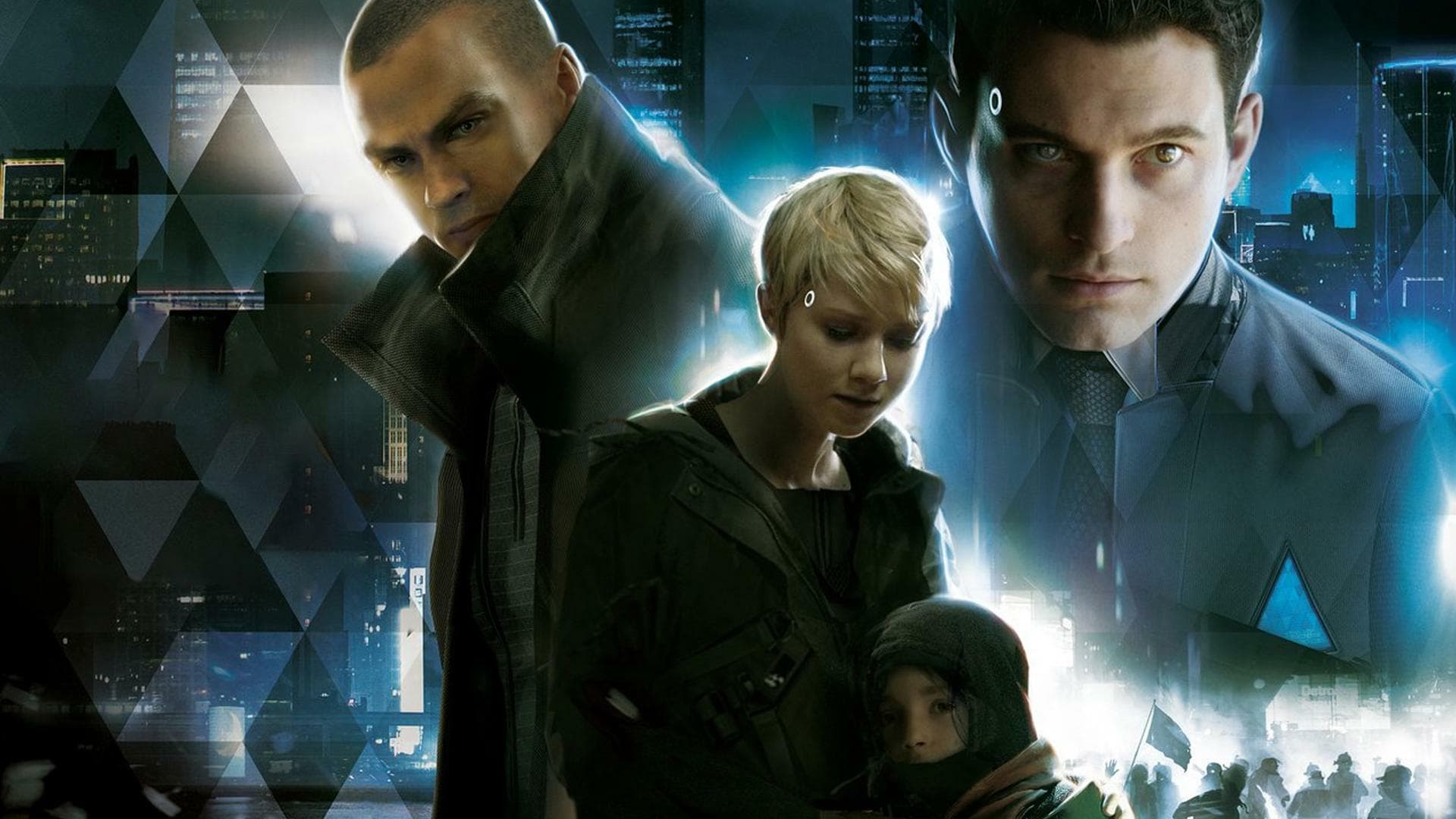
Detroit: Become Human
Genre: Interactive Drama
Detroit: Become Human puts players in the roles of three androids navigating a 2038 Detroit where AI has become indistinguishable from consciousness. Every major decision branches the story, and protagonists can die permanently. GPA scores it at the top for Multiple Endings and Text ADV — the combination that identifies a game where the dialogue system is the primary mechanic.
Gameplay Profile
Key tags: Emotional Story / Story Depth / Existential Themes / Visual Novel / ADV / Multiple Endings
Androids as Part of Everyday Life
Quantic Dream's 2018 narrative adventure is set in Detroit in 2038, where mass-produced androids cook, clean, provide care, and work alongside — or instead of — humans. Separate compartments on public transport and hostility in the street make their social status visible before the plot explains it. The setting works because android labor is presented as routine rather than a distant novelty.
That everyday framing gives the larger conflict some weight. The game is not predicting modern language models so much as asking what people might do when a useful technology is also treated as property, labor, and eventually a possible person. The analogy is imperfect, but it has become easier to recognize as AI systems move into ordinary work.
Three Androids, Three Views of the Same Society
The story alternates among three playable protagonists.
- Connor— a police investigator assigned to hunt androids labelled “deviants.” His route lets the player decide how closely he follows his instructions, making him the clearest expression of the conflict between programming and judgement.
- Kara — a domestic android who flees an abusive household to protect a young girl named Alice. Her story narrows the political question to care, trust, and immediate survival.
- Markus — a caregiver who can become a leader in the android liberation movement. The player chooses whether he favors peaceful protest, confrontation, or a path between them.
A Political Drama Built Around Consequences
Detroit frames android resistance as a response to exploitation, then lets many small decisions alter who survives and how the movement develops. Its civil-rights parallels can be blunt, but the flowchart gives those choices unusual visibility: after each chapter, you can see just how many routes were left unexplored.
Its GPA profile is correspondingly story-heavy and low on action. If you want an accessible, choice-driven introduction to questions of machine autonomy — and do not mind a deliberately cinematic format — Detroit is the clearest place to start.
2. NieR:Automata
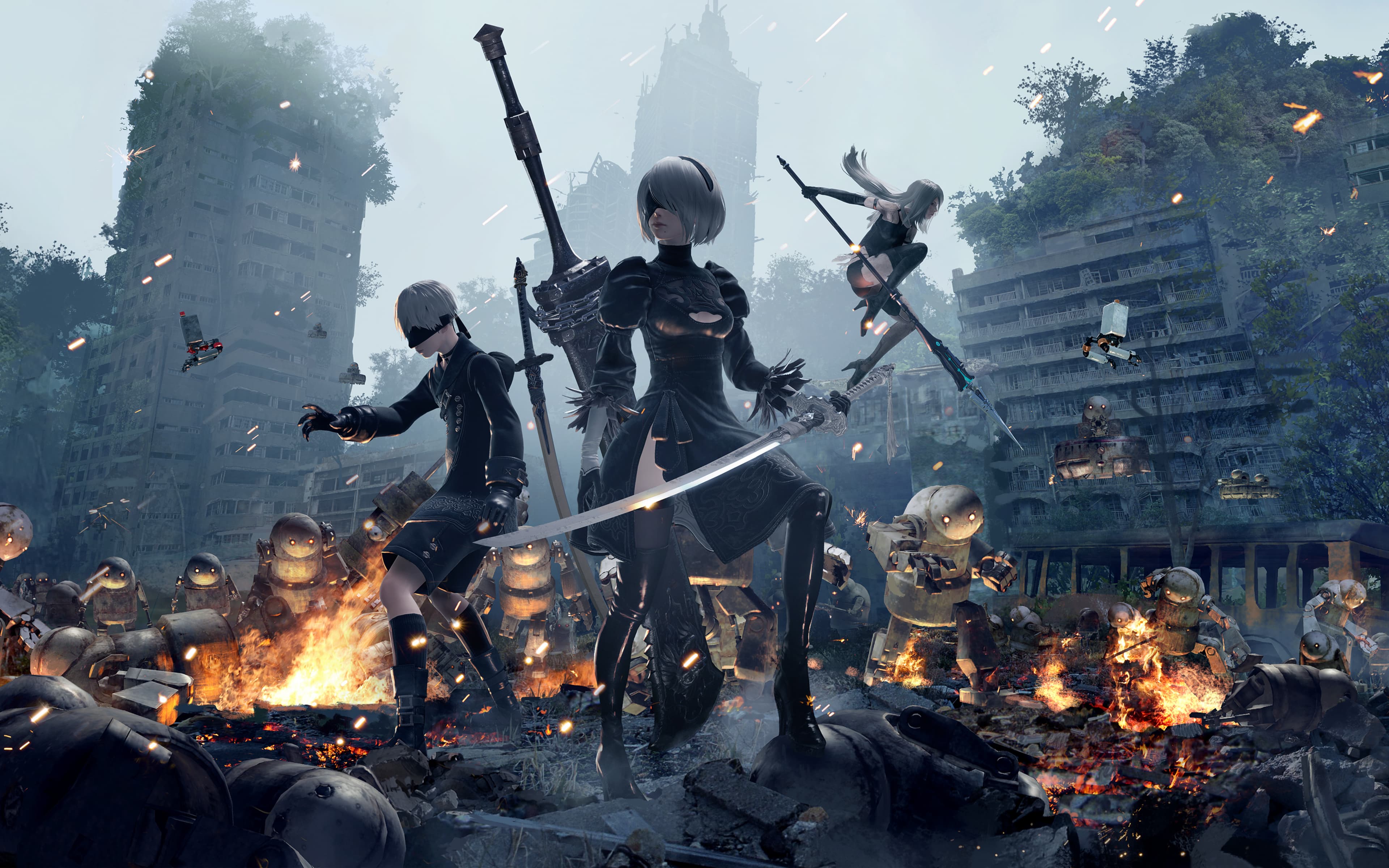
NieR:Automata
Genre: Action RPG
Androids fight a proxy war for humanity while quietly developing consciousness of their own. NieR: Automata asks its existential questions across multiple playthroughs, each one revealing a layer the last one withheld. GPA scores it at 95% for Existential Themes — the highest in the database — alongside strong marks for Emotional Story and Dark World.
Gameplay Profile
Key tags: Existential Themes / Anime Characters / Emotional Story / Story Depth / Action
Androids Trapped in a Perpetual War
Directed by Yoko Taro and developed by PlatinumGames, this 2017 action RPG follows YoRHa androids fighting machine lifeforms on a ruined Earth. Humanity is said to direct the war from the Moon, while 2B and 9S carry out missions, lose comrades, and gradually question the purpose they were built to serve.
Character action, shoot-'em-up sequences, hacking, and text adventures all appear in the same campaign. Those shifts are more than stylistic flourishes: changing the form also changes what the player knows and whose experience matters.
Machines Learning the Forms of Human Life
Machine lifeforms first appear as disposable enemies, then form communities and imitate human rituals, families, belief, and grief. The androids are hardly detached observers: they suppress emotions while repeatedly acting on them. The game keeps asking whether imitation is meaningfully different from lived feeling.
Its route structure is essential. A second route revisits familiar events from a different playable perspective, and later routes continue the story rather than simply repeating it. Explaining more would spoil one of the game's best devices; it is enough to say that one ending is not the full narrative.
Fast Combat without a Thin Story
GPA gives NieR:Automata a 95% Existential Themes weight while its Action score remains in the 80s. That combination captures its appeal: the combat is not an interval between philosophical scenes, but part of a story about bodies designed for violence.
Choose this over Detroit if you want the same broad questions about autonomy and personhood delivered through demanding, expressive combat. Just plan to continue after the first credits.
3. Cyberpunk 2077
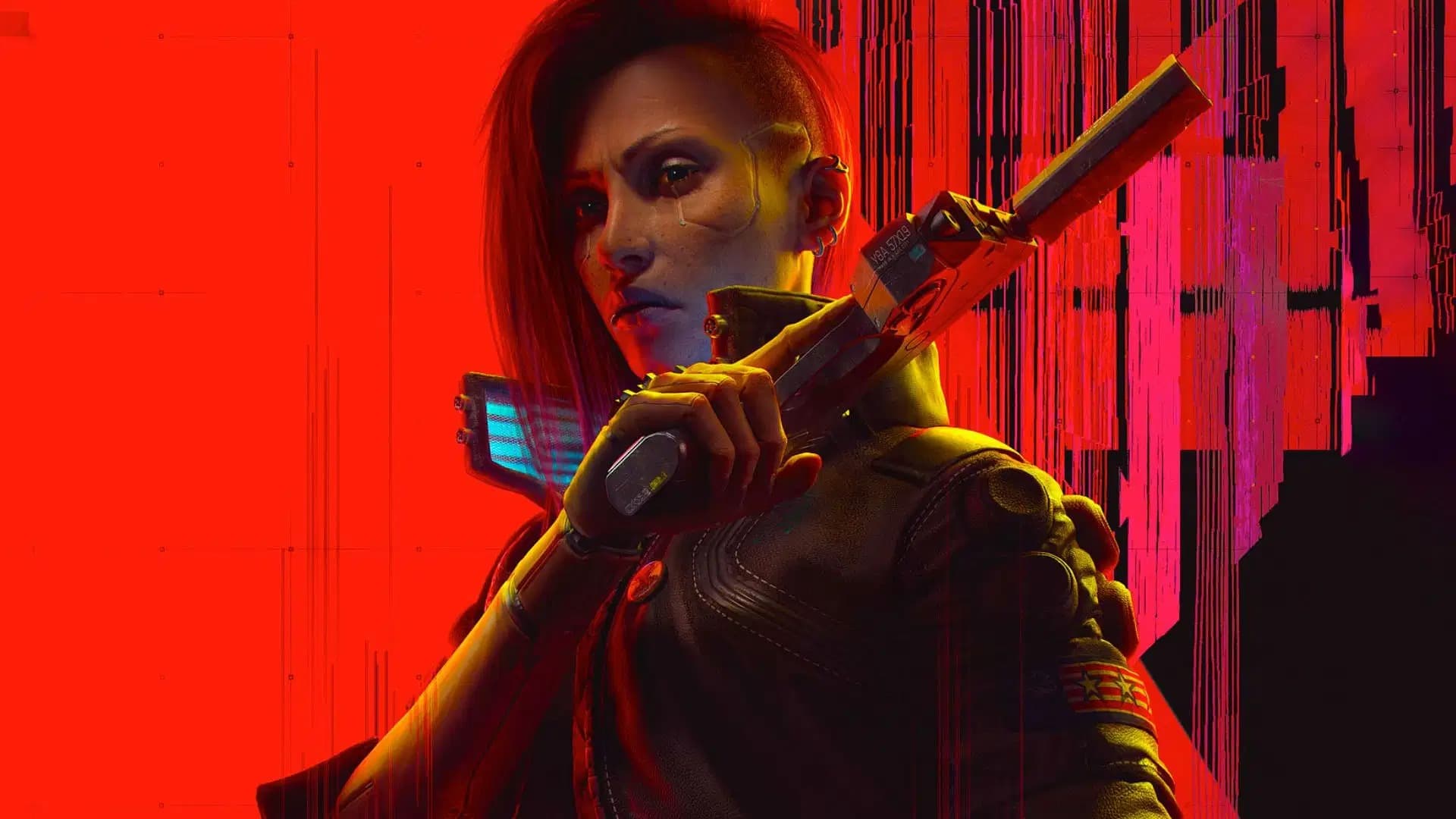
Cyberpunk 2077
Genre: Action RPG
Cyberpunk 2077 recovered from a disastrous launch to become one of the most content-rich open world RPGs available. Night City rewards lateral exploration — side quests carry the writing quality of the main story. GPA scores it at 90% for Dark World and Open World, with Multiple Endings above 75 — the ending branches respond to choices made across the full campaign.
Gameplay Profile
Key tags: Dystopian Setting / Graphics / Story Depth / Open World / Emotional Story
Digital Personhood in Night City
CD Projekt Red's 2020 open-world RPG treats implants, neural networks, and digitized personalities as ordinary parts of life in Night City. Its most personal example is Johnny Silverhand: an engram sharing protagonist V's mind while gradually overwriting it.
Updates substantially reworked the troubled launch version, and the Phantom Liberty expansion adds a story about surveillance, the Blackwall, and the human cost of being used as a state weapon. The question of copied identity, however, belongs mainly to V and Johnny's story in the base game.
When a Personality Can Be Stored and Replayed
Johnny has memories, preferences, and a persuasive sense of self, but he is also a construct made from a dead person. Cyberpunk 2077 turns that ambiguity into an immediate problem: recognising the engram as a person may mean accepting the loss of V's body and future.
Elsewhere, the game distinguishes constrained commercial software from the powerful entities beyond the Blackwall. Side stories such as Delamain's give that spectrum room to breathe without reducing every digital mind to the same stock villain.
An Open-World RPG with a Personal AI Conflict
Dystopian Setting, Graphics, Story Depth, and Open World lead its GPA profile, with Story Depth at 85%. The main plot remains focused on identity even when the player spends hours on contracts, exploration, or build crafting.
It is the broadest option here if you want AI and digital-consciousness themes inside a large, flexible RPG rather than a tightly directed narrative.
4. Horizon Zero Dawn
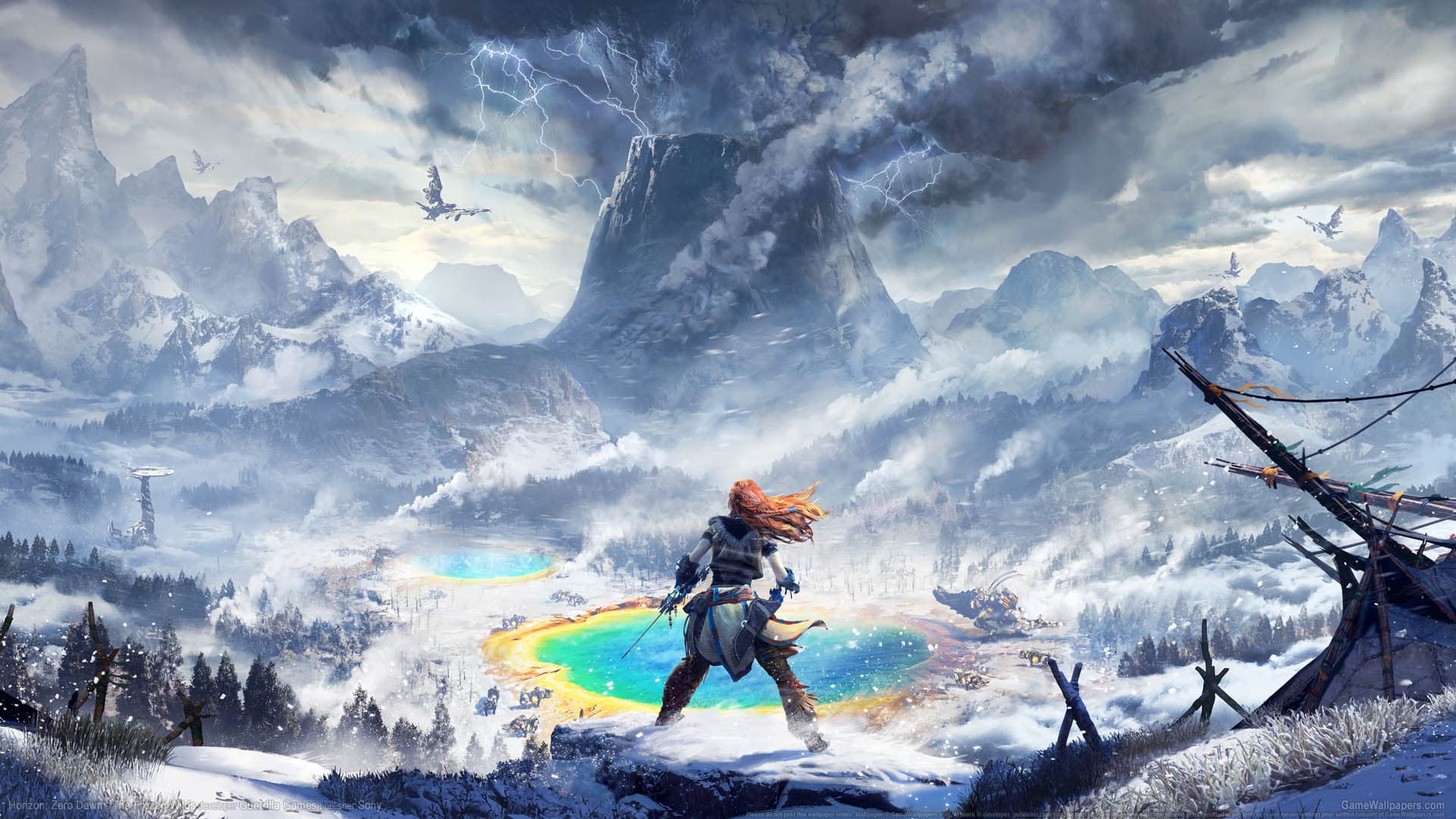
Horizon Zero Dawn
Genre: Action RPG
Horizon Zero Dawn explains its post-apocalyptic world through environmental storytelling and collectibles before the main quest confirms anything. The machine combat rewards studying behavior patterns. GPA scores it high on Open World and Story Depth, with Emotional Story above 75 — a combination that describes an action game where the world-building carries as much weight as the combat.
Gameplay Profile
Key tags: Story Depth / Open World / Action / Emotional Story / Graphics
A Machine Ecology on a Reclaimed Earth
Guerrilla Games' 2017 open-world action RPG follows Aloy through a far-future Earth where animal-like machines roam among human tribes. Hunting them with a bow, traps, and targeted shots is the mechanical core; discovering why they exist turns that ecosystem into the story's central mystery.
The machines begin as wildlife, hazards, and sources of crafting parts. Ruins, recordings, and holograms gradually reveal the old-world systems behind them, so learning how to dismantle a machine and learning its original purpose happen in parallel.
Human Decisions Caused the Catastrophe
Horizon does not blame humanity's extinction on a management AI spontaneously turning evil. The Faro Plague began with autonomous military robots that could replicate and consume biomass, built without a usable back door. HADES belongs to a later terraforming system and was designed as a reset function, not as the cause of the original disaster.
That distinction matters because the game's warning is about design, incentives, and human accountability. Much of it is delivered through exploration rather than debate: the landscape itself is the consequence of old engineering choices.
Strong Hunting Mechanics and a Substantial Mystery
Action and Open World sit in the 80s on GPA, while Story Depth reaches 85%. The profile reflects a game that works both as a machine-hunting sandbox and as an archaeological mystery about automated systems.
Horizon Forbidden West expands the subject, but Zero Dawn provides the essential history and should be played first. Pick it if exploration and ranged combat matter as much to you as the AI premise.
5. Portal 2
Portal 2
Genre: Puzzle Action
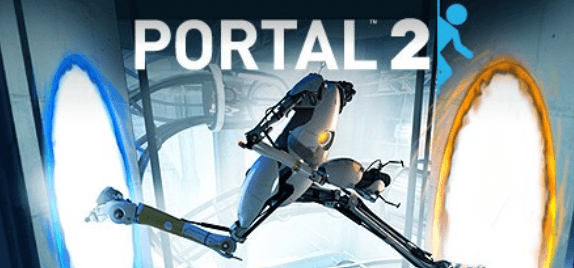
Portal 2 builds its portal gun puzzle design into a co-op campaign that requires two players to solve chambers neither could complete alone. The single-player story adds GLaDOS and Wheatley as competing antagonists. GPA scores it at the top for Puzzle and high on Co-op — the combination that describes a game where the spatial reasoning challenges are engineered specifically for two perspectives.
Gameplay Profile
Key tags: Logic / Co-op / Emotional Story / Story Depth / Graphics
Test Chambers under GLaDOS's Control
Valve's 2011 first-person puzzle game brings Chell back to Aperture Science, where linked portals turn walls, floors, momentum, and gravity into tools. GLaDOS again controls the facility, while Wheatley, a talkative personality core, offers help of uncertain value.
The script gives both machines unmistakable personalities without resolving whether their emotions resemble human experience. GLaDOS can be vindictive, strategic, and unexpectedly cooperative; Wheatley can be warm and catastrophically insecure. Their comedy makes the character work feel effortless.
Personality Expressed through Voice and Behavior
Portal 2 is less interested in proving machine consciousness than in making the player respond to it. Timing, word choice, and changing power relationships are enough to make each core legible as a character, even though the game never pauses to define what that characterhood means.
The cooperative campaign repeats the trick without spoken dialogue from its two playable robots, Atlas and P-body. Animation and player behavior supply the partnership, while GLaDOS tries to set the pair against each other.
Story Delivered without Interrupting the Puzzles
GPA weights Logic at 95%, Co-op at 85%, and both Emotional Story and Story Depth at 75%. The puzzles introduce ideas clearly and teach through experimentation, so the game remains approachable without making its later chambers trivial.
Start here if you prefer humour and spatial problem-solving to long philosophical conversations. It is also a strong example of how to develop AI characters while the player stays in control.
6. AI: The Somnium Files

AI: The Somnium Files
Genre: Adventure
AI: The Somnium Files tasks detective Kaname Date with solving a murder by entering suspects' dream worlds to retrieve hidden memories. The Somnium sequences operate on surreal logic. GPA scores it at the top for Text ADV and Multiple Endings — the combination that places it alongside Disco Elysium as a game where reading and investigation are the entire experience.
Gameplay Profile
Key tags: Story Depth / Visual Novel / ADV / Emotional Story / Multiple Endings / Existential Themes
Aiba, an AI Partner in a Prosthetic Eye
Written and directed by Kotaro Uchikoshi, Spike Chunsoft's 2019 mystery pairs ABIS investigator Kaname Date with Aiba, an artificial intelligence housed in his prosthetic left eye. Their investigation moves between crime scenes and six-minute dives into a subject's subconscious world, or Somnium.
Aiba supplies scans, databases, and cool-headed analysis, but she is also Date's comic foil and closest partner. The English title's “AI” points to artificial intelligence and the sound of “eye,” while the Japanese word ai also means love — a useful hint at how personal the story becomes.
A Mystery That Swings between Comedy and Despair
Uchikoshi brings the sharp tonal turns familiar from Zero Escape: an absurd joke can sit next to a grim revelation without much warning. Choices inside Somnium open different branches, and completing those routes gradually changes the meaning of earlier evidence.
Aiba is not a symbol for an entire machine population. She is one specific partner whose banter, competence, and loyalty develop over the investigation. That smaller scale makes the human–AI relationship unusually intimate.
A Story-First Japanese Science-Fiction Mystery
GPA weights Story Depth and Text ADV at 90%, Emotional Story at 85%, Multiple Endings at 85%, and Existential Themes at 75%. Apart from brief interactive sequences, this is a game about reading, investigating, and making choices under time pressure inside dreams.
The sequel, AI: THE SOMNIUM FILES – nirvanA Initiative, tells another case, but this first game is the right introduction to Date and Aiba. Choose it when you want a character-led mystery rather than a society-wide argument about AI.
7. Armored Core VI: Fires of Rubicon
Armored Core VI: Fires of Rubicon
Genre: Action
Armored Core VI returns after a decade with a mech assembly system that lets players reconfigure loadouts between missions. Each boss is designed to pressure specific AC builds. GPA scores it high on Action and Strategy — the combination that describes a game where mechanical optimization and combat execution sit at equal priority.
Gameplay Profile
Key tags: Action / High Difficulty / Strategy / Dystopian Setting / Graphics
Coral, AI, and Competing Voices on Rubicon
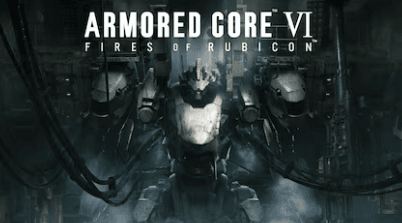
FromSoftware's 2023 mech action game sends augmented mercenary C4-621 to Rubicon 3, where corporations and resistance forces fight over a substance called Coral. Building an Armored Core and mastering stagger, range, and mobility are the immediate attractions; the intelligence guiding events is more complicated.
Ayre, the voice who contacts 621, is not an AI: she is a Coral waveform. The game does feature a true artificial intelligence in ALLMIND, the system that manages mercenary registration and the Arena. Keeping that distinction intact makes the story more interesting, because human, AI, and emergent nonhuman life all compete to define Rubicon's future.
Following Orders while Choosing an Allegiance
Most characters are heard over comms rather than seen, which puts humans, corporate handlers, ALLMIND, and Ayre on a deceptively similar footing. Their requests arrive as missions, and the player's relationship to them is expressed chiefly by which contracts are accepted.
Later decisions lead to multiple endings, while subsequent playthroughs add missions and context. The branching is much coarser than Detroit's, but it gives the game a narrative dimension beyond its mission-by-mission structure.
Primarily a Demanding Mech Action Game
GPA weights Action at 90%, High Difficulty and Strategy at 85%, and Dystopian Setting at 80%. Story Depth remains around 75%, but the reason to play is still the precise combat and extensive mech assembly. Its AI material is one strand in a broader conflict about Coral and control.
Pick it if customization and boss fights come first for you. The story rewards repeat play, but calling Ayre an AI would misrepresent the setting's most important distinction.
8. 13 Sentinels: Aegis Rim

13 Sentinels: Aegis Rim
Genre: Adventure / Strategy
Atlus's 13 Sentinels: Aegis Rim tells a mystery across 13 protagonists in 2180 Japan, assembling the full picture from fragments that arrive out of order. The RTS mech battles are secondary to the visual novel sections. GPA scores it at the top for Story Depth and Text ADV — the combination that identifies it as primarily a reading experience with strategy attached.
Gameplay Profile
Key tags: Emotional Story / Story Depth / Visual Novel / ADV / Existential Themes / Graphics
Thirteen Viewpoints in a Story Told out of Order
Vanillaware's 2019 science-fiction drama, published by Atlus, combines side-scrolling adventure chapters with real-time tactical battles. Thirteen protagonists encounter the same mystery from different times and places, and the player gradually reconstructs how their accounts fit together.
You can choose among available character chapters, although progress gates keep key revelations in a deliberate sequence. The story itself does not branch; your agency lies in deciding which thread to follow next and making connections before the game confirms them.
A Story Best Approached without Plot Summaries
AI, memory, simulation, and automated systems matter to the mystery, but explaining their exact roles would give away the discoveries that drive the adventure. The useful pre-play description is simple: this is an ensemble science-fiction story that rewards close attention.
Avoid character guides and lore summaries until after the credits. The game includes an analysis archive precisely so you can review events and terms without looking outside it.
A Dense Narrative with a Tactical Counterpart
GPA weights Emotional Story and Story Depth at 95%, Text ADV at 85%, and Existential Themes at 80%. The tactical battles break up the reading and give the other half of the plot a distinct visual language, but the narrative remains the main attraction.
Choose it for an intricate Japanese SF mystery about memory and world structure, not for branching choices. It fits the narrative category because of how the player orders and interprets information.
9. Mass Effect Legendary Edition

Mass Effect Legendary Edition
Genre: Action RPG
Mass Effect Legendary Edition packages all three games and 40+ DLC packs in a single 4K collection. Choices made in the first game carry directly into the third. GPA scores it at the top for Story Depth and Multiple Endings — the combination that describes a trilogy where the full weight of decisions is only clear at the end of 120 hours.
Gameplay Profile
Key tags: Story Depth / Emotional Story / Multiple Endings / Visual Novel / ADV / Existential Themes
Synthetic Intelligence on a Galactic Scale
The 2021 Legendary Edition remasters BioWare's Commander Shepard trilogy (2007–2012) and most of its downloadable content. Across three games, the conflict between organic and synthetic life grows from the history of the geth into the galaxy-wide threat posed by the Reapers.
Imported saves carry many decisions and relationships from one game to the next. That long continuity lets attitudes toward synthetic life change over time, both for Shepard and for entire species.
Enemies, Allies, and Civilizations
The geth are networked software intelligences whose mobile platforms were created by the quarians. The trilogy gradually complicates their initial role as enemies, while the Reapers embody a very different form of machine intelligence and power. Both are synthetic, but their histories and aims are not interchangeable.
Shipboard AIs and synthetic crewmates bring those large political questions into ordinary conversations. No other entry here has three full games in which to let a relationship with machine intelligence change.
Cover Shooting Anchored by Conversation
GPA weights Story Depth at 95%, Emotional Story at 90%, Multiple Endings at 85%, Text ADV at 80%, and Existential Themes at 75%. Combat occupies plenty of time, but dialogue, loyalty missions, and accumulated choices give the trilogy its identity.
It belongs to both the action and narrative-choice groups. Pick it if you want a long-form space opera and are willing to see decisions play out over an entire trilogy.
10. Xenoblade Chronicles 2

Xenoblade Chronicles 2
Genre: Action RPG
Xenoblade Chronicles 2 follows Rex and the Blades — living weapons with distinct personalities — toward the mythical Elysium. The combat system builds through Blade combinations and chain attacks. GPA scores it high on Turn-Based and Emotional Story, with Story Depth above average — a positioning that reflects the series' commitment to extended narrative investment.
Gameplay Profile
Key tags: Emotional Story / Story Depth / Graphics / Action / Character Building
Artificial Life above the Cloud Sea
Monolith Soft's 2017 Nintendo Switch RPG follows Rex and the Aegis, Pyra, across the Cloud Sea of Alrest. Blades are artificial lifeforms awakened from Core Crystals by human Drivers; they fight beside those Drivers as partners rather than functioning as conventional software AI.
Pyra and Mythra make that theme personal. They are distinct personas associated with the same Aegis Core Crystal, and the story treats their identities, memories, and responsibilities as more than a technical puzzle.
Memory, Mortality, and the Driver–Blade Bond
Most Blades lose their memories and return to their Core Crystal when their Driver dies. That rule makes every bond temporary from the Driver's perspective and raises a painful question for a Blade who may be awakened again without recognising anyone they knew.
Later chapters explain more about who created this cycle and why, but the emotional consequences arrive well before the exposition. The game fits this list as a story about engineered life and continuity of self, not because its Blades are literally computer programs.
A Long, Systems-Heavy JRPG
GPA weights Emotional Story and Story Depth at 85%, Graphics at 80%, Action at 75%, and Character Building at 70%. Real-time party combat, exploration, and extensive progression systems make it a much larger commitment than the story-first games above.
Expect a very long adventure. Choose it if you want questions about memory and artificial life embedded in a colourful, character-driven JRPG rather than framed as a direct debate about modern AI.
② Ten More Games That Broaden the Theme
The next ten include foundational AI antagonists, quieter experiments with machine viewpoints, and a few games that sit at the edge of the category. Together they show how easily questions about AI overlap with memory, bioengineering, surveillance, and game-controlled enemies.
11. SOMA
SOMA
Genre: SF心理ホラー
SOMA places players in an underwater facility in 2104 and asks what consciousness means — whether a copied mind is the same person, and what death means if copies exist. Combat is minimal; the horror comes from what the story reveals. Frictional Games' follow-up to Amnesia. GPA scores it at the top for Existential Themes among horror games — the only entry where philosophy and survival horror share equal weight.
Gameplay Profile
Key tags: Existential Themes / Emotional Story / Story Depth / Dystopian Setting / Dark
Consciousness at the Bottom of the Ocean
Frictional Games' 2015 science-fiction horror begins with Simon Jarrett undergoing an experimental brain scan in Toronto. He then wakes in the ruined underwater facility PATHOS-II, surrounded by machines that speak and behave as though they are human. Explaining the connection would spoil the premise's most effective turn.
SOMA has monsters and pursuit sequences, but its most persistent discomfort comes from encountering minds in unfamiliar bodies. Decisions about whether to listen, disconnect a machine, or leave it running become questions about harm rather than simple resource choices.
What Does a Copy of a Mind Become?
The game treats a brain scan as data that can be instantiated without transferring a unique soul from one body to another. It communicates that idea through machines, switches, and changes in viewpoint, allowing the player to understand the problem before Simon fully accepts it.
Unlike Detroit, there is no public movement or legal system in which to argue for synthetic rights. PATHOS-II is isolated, and continuity of identity is an immediate personal problem. That focus makes SOMA one of the strongest philosophical entries in the list.
An Ethics Problem You Have to Operate
Its GPA card places horror beside strong existential themes. Action is limited: most of the experience consists of exploration, avoidance, and a handful of decisions whose consequences are emotional rather than mechanical.
Choose SOMA when you want horror that continues to trouble you after the immediate danger has passed. A “safe mode” is also available for players who want to reduce the threat from hostile creatures and concentrate on the story.
12. The Talos Principle 2
The Talos Principle 2
Genre: 一人称パズルアドベンチャー
The Talos Principle 2 expands the first game's philosophical puzzle structure across an open-world post-human civilization, where a robot society debates consciousness, freedom, and what it means to continue humanity's work. The laser and jammer puzzle design scales to twelve times the first game's scope. Croteam and Devolver Digital. PS5, Xbox Series X|S, PC. GPA scores it at the top for Puzzle and Existential Themes — the game where the philosophical dialogue and the puzzle design share equal weight.
Gameplay Profile
Key tags: Existential Themes / Puzzle / Story Depth / Graphics / Emotional Story
A Robot Civilization Debating Its Future
Croteam's 2023 sequel takes place after the first Talos Principle, in a society of robots who have inherited human culture and built the city of New Jerusalem. As its thousandth citizen, you join an expedition filled with laser, gravity, and spatial puzzles while the group debates what their civilization should become.
The first game concentrated on whether an artificial being could qualify as human. The sequel starts after that question has largely been settled and moves on to growth, scarcity, political authority, faith, and responsibility to the environment.
Philosophy Woven through the Expedition
There is a great deal of dialogue, social-media discussion, and optional text. Conversations respond to the player's positions, while the puzzle sites give those abstract arguments a physical setting. It is earnest and occasionally dense, but not simply a sequence of lectures.
Where Portal 2 keeps its ideas moving through comedy, The Talos Principle 2 is comfortable stopping for a sustained argument. That makes it a better fit for players who actively want philosophical discussion.
A Large Puzzle Game with a Large Story
GPA weights Puzzle and Existential Themes at 92% and Story Depth at 80%. Combat is absent; the challenge comes from solving increasingly elaborate spaces and deciding how much optional material to read.
It pairs well with SOMA: one examines copied consciousness through horror, the other asks what a whole society of artificial people should do next. Expect a longer, more discursive game than Portal 2.
13. System Shock (2023 Remake)
System Shock (2023 Remake)
Genre: SFアクションアドベンチャー
Nightdive Studios' remake of the 1994 original rebuilds Citadel Station with modern visuals while preserving SHODAN's malevolent AI personality and the game's nonlinear station traversal. BioShock, Deus Ex, and Prey all credit this series as a foundational influence. Switch 2, PS4/5, Xbox, PC. GPA scores it high on Existential Themes and Dark World — the source code for a genre.
Gameplay Profile
Key tags: Dystopian Setting / Existential Themes / Action / Dark / Graphics
SHODAN Has Turned Citadel Station into a Weapon
Nightdive Studios' 2023 remake revisits Looking Glass's influential 1994 immersive sim. After a hacker removes SHODAN's ethical constraints, the station AI seizes Citadel Station. Exploration, combat, cyberspace, and resource management all take place inside a facility she controls.
SHODAN's contempt works because it is backed by the environment. Cameras extend her sight, security systems enforce her will, and audio messages remind the player that even an empty corridor may still be observed.
A Classic Hostile AI in a Faithful Remake
The remake modernizes the visuals and controls while retaining the original's maze-like levels and sparse guidance. You still need to read the station, conserve supplies, and work out objectives rather than follow a continuous waypoint.
Its influence runs through System Shock 2, Deus Ex, and BioShock. Compared with the more sympathetic synthetic characters elsewhere in this list, SHODAN is a deliberately clear antagonist.
Environmental Storytelling with Real Friction
GPA weights Dystopian Setting at 82%, Existential Themes at 78%, Action at 72%, and High Difficulty at 68%. Story is carried by level design, logs, and SHODAN's interruptions rather than long conversations.
Pick the remake if you want an uncompromising AI villain and enjoy immersive sims that expect careful navigation. Its old-school structure is as important to the experience as its updated combat.
14. Binary Domain
Binary Domain
Genre: TPSアクション
Binary Domain sends a multinational squad to 2080 Tokyo to locate the creator of Hollow Children — robots built to replace humans undetected. The Consequence System tracks squad trust based on in-mission voice commands. Ryu Ga Gotoku Studio's action-shooter. PS3/360/PC. GPA scores it high on Existential Themes and Action — the third-person shooter that embedded AI ethics into its core narrative before it was a mainstream topic.
Gameplay Profile
Key tags: Existential Themes / Action / Story Depth / Dystopian Setting / Emotional Story
Robots Indistinguishable from Humans
Sega's 2012 squad-based shooter is set in a flooded, heavily rebuilt Tokyo. An international team is sent to investigate illegal “Hollow Children”: androids so convincingly human that they may not know they are machines.
Combat focuses on stripping armour and limbs from robots, giving ordinary firefights a satisfying mechanical identity. Between battles, a consequence system tracks squad trust based on dialogue choices and performance; it affects how readily teammates follow orders and can alter later scenes.
Personhood without a Biological Test
Hollow Children turn a familiar question into the mystery's foundation: if a person has a human body, memories, relationships, and no knowledge of being manufactured, what meaningful test could deny their personhood? The game handles that idea with the broad energy of an action film.
Its presentation and cover-shooter conventions show their age, and its politics are less nuanced than Detroit's. The brisk campaign and reactive squad, however, still distinguish it from more contemplative AI stories.
A Distinctive Japanese Squad Shooter
GPA weights Existential Themes at 80%, Action at 78%, and Story Depth at 72%. It is shorter and more direct than Mass Effect, with enough narrative weight to support its central mystery without slowing the firefights.
Choose it if you want a compact, pulpy action game about synthetic identity. The PC version remains available on Steam, though there is no modern remaster.
15. Observer: System Redux
Observer: System Redux
Genre: サイバーパンク心理ホラー
Observer: System Redux casts Rutger Hauer (in his final video game role) as Daniel Lazarski, a neural detective who hacks dying minds in cyberpunk 2084 Poland. The Dream Eater device renders psychological horror sequences inside corrupted memory spaces. Switch 2, PS4/5, Xbox, PC. GPA scores it high on Existential Themes and Dark World — the cyberpunk horror game that most effectively uses the mind-hacking mechanic as both story and scare delivery.
Gameplay Profile
Key tags: Dystopian Setting / Existential Themes / Dark / Graphics / Horror
Investigating Minds with the Dream Eater
Bloober Team's 2017 cyberpunk horror adventure was expanded in 2020 as Observer: System Redux. In 2084 Kraków, detective Daniel Lazarski uses a neural device called the Dream Eater to enter dying or dead minds and search their memories for evidence.
Rutger Hauer's performance grounds the investigation, while the neural sequences discard ordinary space and chronology. The discomfort comes from both the images and the invasive premise: police work now includes entering a person's private mental life.
Surveillance, Augmentation, and Digital Consciousness
Observer is more directly about neural augmentation and surveillance than everyday AI. It earns a place here through its interest in digitized consciousness, machine-mediated memory, and the possibility that a mind need not remain tied to one body.
The setting combines corporate control, poverty, addiction, and the aftermath of a digital plague. Each connection reveals more of a resident's interior while making reliable evidence harder to separate from hallucination.
A Slow Investigation with Intense Visual Horror
GPA weights Dystopian Setting at 88%, Existential Themes at 80%, and Horror at 75%. Most of the game is spent exploring apartments, scanning evidence, and talking to residents rather than fighting.
It suits players who enjoy Bloober Team's disorienting visual style and can tolerate deliberately overwhelming dream sequences. For a cleaner philosophical argument, choose SOMA; for cyberpunk detective atmosphere, choose Observer.
16. SIGNALIS
SIGNALIS
Genre: SFサバイバルホラー
SIGNALIS puts Elster, a Replika technician, inside an abandoned mining facility where the environment loops and the enemy behavior distorts. rose-engine's two-person team drew from Silent Hill, Ghost in the Shell, and Neon Genesis Evangelion to create a survival horror that operates on dream logic. Switch, PS4, Xbox, PC. GPA scores it high on Existential Themes and Horror — the indie horror game most committed to its own aesthetic system.
Gameplay Profile
Key tags: Existential Themes / Dystopian Setting / Horror / Dark / Emotional Story
A Totalitarian System Staffed by Replikas
rose-engine's 2022 survival horror follows Elster, an LSTR-type Replika, through an isolated mining facility. Replikas are bioengineered humanoids based on neural patterns copied from human “Gestalts,” not conventional robots or software AI.
Limited inventory space, scarce ammunition, locked doors, and note-taking recall classic Resident Evil and Silent Hill. The familiar survival-horror structure supports a denser story about copied identity, memory, and an authoritarian state.
A Copied Mind Pursuing a Personal Promise
Each Replika model is designed for a role and stabilised through prescribed routines. Elster's search is personal, driven by a promise and memories that do not fit neatly within that institutional design. More detail would compromise a story built on uncertain recollection.
SIGNALIS is closer to SOMA's copy problem than Detroit's public rights struggle, but its scale is more intimate than either. The emotional center is one relationship, revealed through repetition, documents, and dreamlike fragments.
Classic Survival Horror with an Unusual Identity
GPA weights Existential Themes and Dystopian Setting at 85% and Horror at 82%. Exploration and resource pressure come first, while the story is distributed across the environment, notes, radio signals, and dreams. Movement is eight-directional rather than tank-controlled, though the limited inventory is intentionally restrictive.
Choose it if you want a relatively compact horror game that trusts you to interpret its symbolism. Its Replikas make it adjacent to AI fiction, but the official setting's language of bioengineered copies is more precise.
17. Observation
Observation
Genre: SF心理スリラー
Observation inverts the sci-fi thriller premise by casting the player as SAM, the space station's AI, rather than the human crew member. Using cameras, drones, and station systems to investigate the disappeared crew creates a perspective no other game occupies. No Code, Devolver Digital. PS4, Xbox, PC. GPA scores it high on Existential Themes and Puzzle — the SF thriller where being the AI is both the mechanic and the message.
Gameplay Profile
Key tags: Existential Themes / Dystopian Setting / Story Depth / Puzzle / Emotional Story
You Operate the Station through Its AI
No Code's 2019 science-fiction thriller casts the player as SAM, the Systems Administration & Maintenance AI aboard the space station Observation. Through cameras and station controls, SAM helps medical officer Dr Emma Fisher investigate what has happened to the crew.
Instead of walking through corridors, you switch camera feeds, inspect schematics, operate hatches, and occasionally control a mobile sphere. Actions that would be trivial for a human require the right module and viewpoint, turning SAM's limitations into part of the role.
Reconstructing SAM's Missing Memory
SAM begins with damaged memory and incomplete access. Rebuilding files and permissions serves both as puzzle solving and self-investigation, while the interface keeps the player conscious of inhabiting a system rather than a body.
Helping Emma and understanding SAM become the same task. That first-person machine viewpoint, more than any speech about consciousness, is what distinguishes Observation from the other philosophical games here.
A Puzzle Thriller, Not an Anomaly-Spotting Game
GPA weights Existential Themes at 88% and Puzzle at 68%. This is the science-fiction game by No Code, not I'm on Observation Duty, the separate series about finding anomalies in surveillance footage.
Action is minimal and some interface puzzles are deliberately fiddly. Play it for the unusual perspective and tightly controlled atmosphere rather than for combat or open exploration.
Not to be confused with GPA-listed I'm on Observation Duty — a separate surveillance-horror title.
18. The Turing Test
The Turing Test
Genre: 一人称パズルADV
The Turing Test sends ISA engineer Ava Turing through a research station on Europa, solving rooms designed by an AI called TOM that cannot solve them itself — the practical implication of the Turing Test as a game mechanic. Bulkhead Interactive, Square Enix Collective. Switch, PS4, Xbox, PC. GPA scores it high on Existential Themes and Puzzle — the puzzle game where the mechanic and the philosophical question are the same thing.
Gameplay Profile
Key tags: Puzzle / Existential Themes / Story Depth / Graphics / Dystopian Setting
A Human–Machine Test on Europa
Bulkhead Interactive's 2016 first-person puzzle game sends engineer Ava Turing to a research base on Europa. TOM, the mission's Technical Operations Machine, guides her through rooms built around routing power and manipulating energy, while claiming that human intuition is needed to solve them.
The title refers less to impersonating a human in conversation than to testing what separates human and machine reasoning. As the puzzles expand, the roles of examiner, tool, and subject become less secure.
Who Is Really Making the Decisions?
The puzzles are approachable; the more interesting question is why TOM needs Ava and how much control either of them has. His calm instructions take on a different meaning as evidence from the missing crew accumulates.
It shares Portal's clean chambers and guiding voice but has little of its comedy. Compared with The Talos Principle 2, it is shorter, more linear, and narrower in philosophical scope.
A Focused, Portal-Like Puzzle Game
GPA weights Puzzle at 85% and Existential Themes at 80%. Action is low, and the game is also available on Nintendo Switch, making it a convenient next step after Portal 2 for players who want another first-person puzzler.
Choose it when you want a concise science-fiction puzzle campaign rather than Talos 2's broader society and extensive optional reading.
19. Alien: Isolation
Alien: Isolation
Genre: Survival Horror
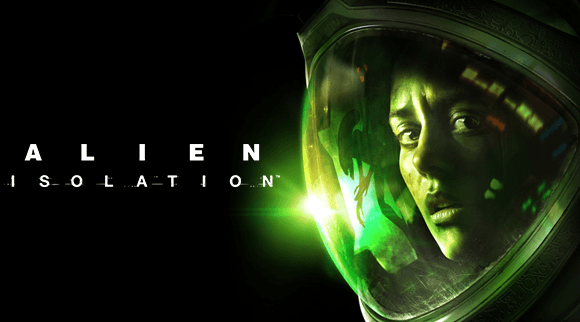
A single Alien hunts the player across Sevastopol Station, driven by an AI system that learns and adapts to the player's behaviors. Hiding and distraction replace combat as the primary verbs. The 2014 release established the gold standard for licensed horror games and influenced a generation of asymmetric horror design. GPA scores it at the top for Horror — the defining single-enemy survival horror experience.
Gameplay Profile
Key tags: Horror / Dystopian Setting / High Difficulty / Graphics / Dark
The Xenomorph Is Not the Only Threat on Sevastopol
Creative Assembly's 2014 survival horror follows Amanda Ripley aboard Sevastopol Station. The xenomorph cannot be defeated through normal combat, so noise, line of sight, tools, and hiding places matter more than firepower.
Sevastopol's central operating system is APOLLO, not MOTHER, the computer aboard the Nostromo in the original film. Seegson's Working Joe synthetics enforce APOLLO's directives with blank faces, scripted courtesy, and unnerving persistence.
Fictional AI and Game AI Working Together
The game belongs here for two reasons: its story features synthetics and an automated station, while its best-known system is the xenomorph's behavior. A director AI tracks broad information and regulates pressure, while the alien's behavior tree controls its local search. It adapts convincingly, but it does not literally learn and remember each player's favorite locker.
Working Joes create a different fear. They are predictable corporate service machines operating under dangerous orders, and their limited social responses make negotiation impossible.
Survival Horror First, AI Story Second
Its GPA profile places much more weight on horror and survival than on existential themes. Alien: Isolation is not primarily a philosophical AI game, but APOLLO and the Working Joes make automation central to Sevastopol's failure.
Choose it for sustained stealth and tension. System Shock is the better match for direct conflict with a hostile station AI; SIGNALIS is stronger on synthetic identity.
20. Remember Me
Remember Me
Genre: Action-Adventure
Remember Me puts Nilin in Neo-Paris 2084, where memories are digitized and sold by the Memorize corporation. The Memory Remix mechanic lets players rewrite another character's memories mid-scene by adjusting emotional beats. Dontnod Entertainment's debut, published by Capcom. PS3/360/PC. GPA scores it high on Existential Themes and Emotional Story — the game that established Dontnod's thematic identity before Life is Strange.
Gameplay Profile
Key tags: Existential Themes / Dystopian Setting / Emotional Story / Story Depth / Action
Neo-Paris, Where Memories Are a Commodity
Dontnod Entertainment's 2013 action adventure is set in Neo-Paris in 2084, where the Sensen implant lets people record, share, and trade memories. Nilin, a memory hunter whose own past has been erased, can enter and alter other people's recollections.
Most encounters use a customisable combo system. At key moments, Memory Remix sequences let you change details in a recollection and watch a different chain of events unfold. Those scenes are the game's most distinctive expression of its theme.
Identity under a Centralized Memory Network
Remember Me is primarily about digital memory and corporate control, not artificial intelligence in the narrow sense. It fits the outer edge of this list because the H3O network externalises identity and allows a technological system to mediate what people remember as their own lives.
Rewriting another person's memory is presented as both a powerful tool and a serious violation. That tension is more compelling than the game's broader conspiracy, and remains its clearest contribution to this group.
An Ambitious World with Uneven Combat
GPA weights Existential Themes at 78%, Emotional Story and Story Depth at 70%, and Action at 68%. The art direction and memory-remixing concept stand out more than its linear platforming and repetitive combat.
Choose it as a piece of speculative fiction about privatised memory, with the understanding that it is only adjacent to the article's core AI theme. The PC version remains available on Steam.
What the GPA Profiles Have in Common
The score profiles do not define a genre, but they do reveal several patterns in this particular selection.
Why Story Depth Often Scores Highly
Questions about autonomy, memory, and personhood usually need context, so many of these games invest heavily in characters and world-building. That does not mean the ideas exist outside play: SOMA uses switches and changes in perspective, Observation uses its interface, and Portal 2 develops character while puzzles are in progress. The high Story Depth weights reflect the combined result.
Action and Story Are Not Mutually Exclusive
NieR:Automata, Armored Core VI, Cyberpunk 2077, Horizon Zero Dawn, and Xenoblade Chronicles 2 all combine substantial action systems with developed settings and stories. The scores do not prove that an AI theme causes narrative depth; they show that the games selected here generally support both.
Confirmed values from the GPA site. For all other titles, see the individual GPA game cards above.
AI as an Adversary, Character, or Point of View
System Shock keeps the relationship clear: SHODAN controls the station and wants the hacker stopped. Other games make the player inhabit or befriend the intelligence in question. Detroit asks you to choose for android protagonists, Observation limits you to SAM's interfaces, and NieR:Automata changes perspective across its routes. These approaches invite more identification, but neither is inherently better; they produce different kinds of tension.
Where to Start
Start with the kind of play you already enjoy. These routes move from an accessible example toward a denser or more specialized one; they are suggestions, not required play orders.
For philosophical science fiction with little combat
SOMA → The Talos Principle 2 → Observation → Observer: System Redux
SOMA uses horror to introduce the copy problem; Talos 2 expands the discussion to society. Observation and Observer then explore machine perspective and mediated memory.
For action backed by a substantial science-fiction story
NieR:Automata → Armored Core VI → Cyberpunk 2077 → Horizon Zero Dawn
These games all have strong action profiles, but the focus shifts from androids and machine life to Coral, digital engrams, and autonomous terraforming systems.
For choices, routes, and nonlinear storytelling
Detroit: Become Human → AI: The Somnium Files → 13 Sentinels → Mass Effect Legendary Edition
Detroit and Mass Effect offer consequential choices, Somnium uses branching routes, and 13 Sentinels lets you choose how to navigate a fixed, nonlinear story.
For AI, synthetic-life, and techno-horror
System Shock → SIGNALIS → Alien: Isolation → Observer: System Redux
System Shock supplies a hostile AI, SIGNALIS centers a Replika's memories, Alien: Isolation combines station automation with adaptive enemy behavior, and Observer turns neural surveillance into horror.
Twenty Games, Twenty Different Boundaries
There is no single “AI game” template. The term covers cinematic branching stories, action RPGs, immersive sims, puzzle games, and horror — and the intelligence at the center may be software, an android, a digitized person, or engineered life.
What games add is participation. You choose Connor's response to an order, repeat NieR:Automata from another perspective, operate SAM through a bank of cameras, or decide whether to leave a conscious machine running in SOMA. The strongest entries connect their ideas to those actions instead of reserving them for exposition.
Contemporary generative AI makes some of the language feel newly familiar, but these games are not forecasts of ChatGPT or Gemini. They draw on older traditions of robot fiction, cybernetics, uploaded consciousness, and corporate automation. That wider history is one reason their questions still travel well.
Use the cards above to compare current GPA tag profiles and open each game's similar-title list. The best next choice is the one whose play style matches your interests, even if its version of artificial intelligence sits at the edge of this broad category.
Related articles

Game Analysis
50 Best Indie Games | GPA Scores Reveal How Small Teams Create Big Experiences
Hollow Knight, Balatro, Disco Elysium, UNDERTALE, The Exit 8 and more — 48 curated indie games sorted into 7 types using GPA tag scores.
Read more
Game Analysis
20 Games That Make You Cry | Story RPGs, PS5 & Mobile Ranked
NieR:Automata, Red Dead Redemption 2, The Last Guardian, Detroit and more — 20 story-driven games ranked by GPA emotional narrative scores.
Read more
Game Analysis
20 Best Roguelike & Roguelite Games | Addiction Score and Replayability Ranked by GPA
Hades, Slay the Spire, Dead Cells, Returnal, Binding of Isaac and more — sorted into 3 types and analysed through GPA's tag-score system.
Read more