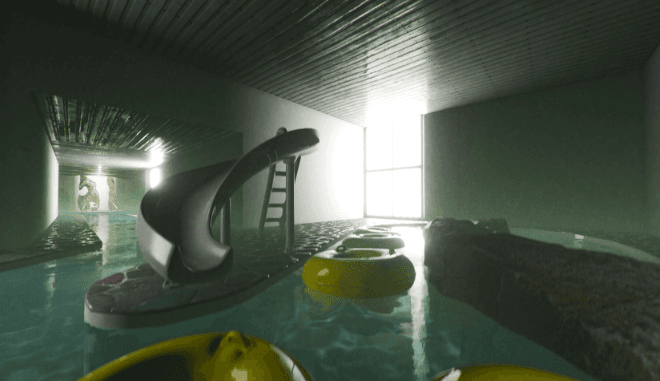
Anemoiapolis recreates malls, pools, and transitional spaces with the visual fidelity to make the emptiness feel accurate rather than digital. The term 'anemoiapolis' describes the game's central emotion: nostalgia for places you have never been. GPA scores it high on Dark World — the combination that places it at the purest end of the liminal space genre.
Game Characteristics
Dystopian Setting
85%
Graphics
80%
Existential Themes
75%
Horror
65%
Dark
65%
Emotional Story
55%
Player profile fit
Recommended for: Beginner to Advanced players (A score of 50 or higher indicates a good fit.)
Blair Witch follows Ellis, a former police officer, into the Black Hills Forest with his dog Bullet in an official sequel to the 1999 film. Bullet functions as both companion and tool. Bloober Team's licensed horror. GPA scores it high on Horror and Dark World — the licensed horror game where the canine companion mechanic genuinely changes the emotional texture of the fear experience.
Tag Similarity
Dystopian Setting
80%
Graphics
68%
Existential Themes
60%
Horror
80%
Dark
78%
Emotional Story
65%
Chart tags: Dystopian Setting / Graphics / Existential Themes / Horror / Dark / Emotional Story
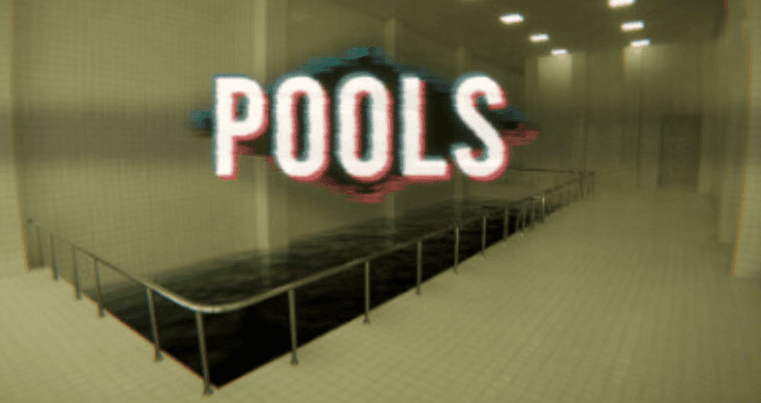
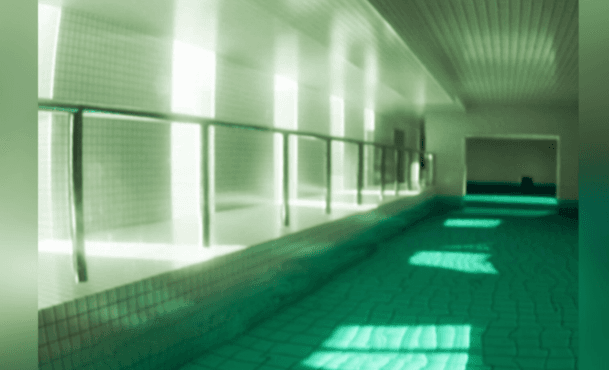
POOLS renders endless indoor swimming facilities through vintage video camera grain, using footsteps and water echoes as the entire audio design. There are no threats and no objectives. GPA scores it high on Dark World and Existential Themes — the experience is defined entirely by absence and atmosphere.
Tag Similarity
Dystopian Setting
90%
Graphics
75%
Existential Themes
70%
Horror
75%
Dark
70%
Emotional Story
0%
Chart tags: Dystopian Setting / Graphics / Existential Themes / Horror / Dark / Emotional Story
Dreamcore builds its exploration spaces in UE5, rendering Y2K color palettes and institutional furniture in photorealistic detail. The nostalgia referenced is for spaces that never quite existed. GPA scores it high on Dark World and Graphics — a positioning that describes an aesthetic experience built around the uncanny rather than threat.
Tag Similarity
Dystopian Setting
85%
Graphics
85%
Existential Themes
65%
Horror
60%
Dark
60%
Emotional Story
0%
Chart tags: Dystopian Setting / Graphics / Existential Themes / Horror / Dark / Emotional Story
The Complex: Found Footage renders Backrooms Level 0 through VHS processing that makes the yellow fluorescent corridors feel genuinely documented. The found footage framing is structural, not decorative. GPA scores it high on Horror and Graphics — the visual commitment to the format is the primary reason to play.
Tag Similarity
Dystopian Setting
85%
Graphics
90%
Existential Themes
65%
Horror
85%
Dark
80%
Emotional Story
0%
Chart tags: Dystopian Setting / Graphics / Existential Themes / Horror / Dark / Emotional Story
ANATOMY walks through an empty house while cassette tapes deliver a theory about the architecture of habitation. The theory becomes true over multiple playthroughs. GPA scores it high on Existential Themes and Horror — a short-form horror where the central idea is the game mechanic.
Tag Similarity
Dystopian Setting
80%
Graphics
35%
Existential Themes
85%
Horror
70%
Dark
65%
Emotional Story
55%
Chart tags: Dystopian Setting / Graphics / Existential Themes / Horror / Dark / Emotional Story
LSD: Dream Emulator is available through emulation. The 1998 PlayStation title was built from ten years of dream diary entries, generating environments through a day counter system that produces different results over time. GPA scores it at the top for Existential Themes — the game predates the liminal space concept by twenty years while embodying it completely.
Tag Similarity
Dystopian Setting
80%
Graphics
40%
Existential Themes
90%
Horror
65%
Dark
60%
Emotional Story
0%
Chart tags: Dystopian Setting / Graphics / Existential Themes / Horror / Dark / Emotional Story
The Backrooms: Lost Media uses the visual language of discovered media — degraded footage, missing frames — to present its Backrooms content as documentation. GPA scores it high on Horror and Dark World — the found footage analog horror aesthetic runs through the presentation more deliberately than most Backrooms titles.
Tag Similarity
Dystopian Setting
85%
Graphics
55%
Existential Themes
65%
Horror
85%
Dark
85%
Emotional Story
0%
Chart tags: Dystopian Setting / Graphics / Existential Themes / Horror / Dark / Emotional Story
Gensokyo Night Festival walks players through a deserted Japanese town after the festival crowd has gone. The absence of the crowd is more unsettling than any added horror element. GPA scores it high on Dark World and Existential Themes — a purely atmospheric walking experience without conventional gameplay mechanics.
Tag Similarity
Dystopian Setting
80%
Graphics
70%
Existential Themes
65%
Horror
0%
Dark
55%
Emotional Story
55%
Chart tags: Dystopian Setting / Graphics / Existential Themes / Horror / Dark / Emotional Story
The Convenience Store sends a night shift worker through a closing routine in a store where the customers stopped coming. Chilla's Art's VHS filter and abrupt transitions carry the horror. GPA scores it high on Horror and Dark World — the combination that defines a liminal horror built around institutional spaces.
Tag Similarity
Dystopian Setting
80%
Graphics
55%
Existential Themes
60%
Horror
85%
Dark
80%
Emotional Story
0%
Chart tags: Dystopian Setting / Graphics / Existential Themes / Horror / Dark / Emotional Story
Interior Worlds sends players through unlit rooms with only a flash camera for visibility. Each press of the shutter illuminates the space for a fraction of a second. GPA scores it high on Horror and Dark World — the mechanic makes darkness the primary material.
Tag Similarity
Dystopian Setting
80%
Graphics
70%
Existential Themes
65%
Horror
85%
Dark
85%
Emotional Story
0%
Chart tags: Dystopian Setting / Graphics / Existential Themes / Horror / Dark / Emotional Story
The Platform 8 traps players on a commuter train that never arrives, applying the anomaly detection mechanic from Exit 8 to a moving environment. GPA scores it high on Horror and Puzzle.
Tag Similarity
Dystopian Setting
80%
Graphics
70%
Existential Themes
65%
Horror
80%
Dark
70%
Emotional Story
0%
Chart tags: Dystopian Setting / Graphics / Existential Themes / Horror / Dark / Emotional Story
The Night Way Home sends Rina home from school through a route that shifts into something else. Chilla's Art's survival elements appear here earlier in the catalog. GPA scores it high on Horror and Dark World — the liminal commute setting that has become the studio's most recurring horror context.
Tag Similarity
Dystopian Setting
75%
Graphics
45%
Existential Themes
55%
Horror
80%
Dark
70%
Emotional Story
50%
Chart tags: Dystopian Setting / Graphics / Existential Themes / Horror / Dark / Emotional Story
The Backrooms: Found Footage runs its maze survival on audio cues rather than visual information, reducing the yellow corridor environment to sound as the primary input. GPA scores it high on Horror — the design commits fully to sensory reduction as the horror mechanism.
Tag Similarity
Dystopian Setting
85%
Graphics
50%
Existential Themes
60%
Horror
90%
Dark
85%
Emotional Story
0%
Chart tags: Dystopian Setting / Graphics / Existential Themes / Horror / Dark / Emotional Story
SEPTEMBER 1999 runs for five and a half minutes. A VHS recording moves through a house with something wrong. Free to play. GPA scores it high on Horror and Dark World — the entire game is a tone delivery system at minimum viable length.
Tag Similarity
Dystopian Setting
70%
Graphics
40%
Existential Themes
55%
Horror
75%
Dark
70%
Emotional Story
0%
Chart tags: Dystopian Setting / Graphics / Existential Themes / Horror / Dark / Emotional Story
Generalized Anxiety Disorder renders mental health states as physical environments, making the architecture of each space correspond to an internal condition. The game's title is its central design statement. GPA scores it high on Existential Themes and Dark World — the combination that identifies a game built around psychological experience rather than gameplay systems.
Tag Similarity
Dystopian Setting
80%
Graphics
50%
Existential Themes
85%
Horror
80%
Dark
85%
Emotional Story
0%
Chart tags: Dystopian Setting / Graphics / Existential Themes / Horror / Dark / Emotional Story
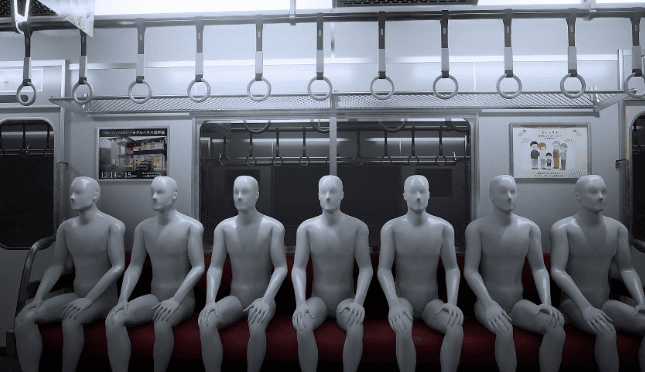
Shinkansen 0 uses the Shinkansen platform and car interior as its liminal setting, alternating between the empty station and the moving train. The anomaly detection runs across both environments. GPA scores it high on Horror and Puzzle — the combination that places it in the Exit 8 lineage of walking horror designed around observational attention.
Tag Similarity
Dystopian Setting
75%
Graphics
70%
Existential Themes
60%
Horror
80%
Dark
65%
Emotional Story
0%
Chart tags: Dystopian Setting / Graphics / Existential Themes / Horror / Dark / Emotional Story
Observer: System Redux casts Rutger Hauer (in his final video game role) as Daniel Lazarski, a neural detective who hacks dying minds in cyberpunk 2084 Poland. The Dream Eater device renders psychological horror sequences inside corrupted memory spaces. Switch 2, PS4/5, Xbox, PC. GPA scores it high on Existential Themes and Dark World — the cyberpunk horror game that most effectively uses the mind-hacking mechanic as both story and scare delivery.
Tag Similarity
Dystopian Setting
88%
Graphics
75%
Existential Themes
80%
Horror
75%
Dark
80%
Emotional Story
68%
Chart tags: Dystopian Setting / Graphics / Existential Themes / Horror / Dark / Emotional Story
Layers of Fear traps a mad painter in a mansion where every room rearranges itself to reflect his deteriorating mind. Environmental storytelling through portrait fragments and scattered writings builds the backstory. Bloober Team's breakout title. GPA scores it high on Horror and Existential Themes — the first-person psychological horror built entirely around architecture as a mental state.
Tag Similarity
Dystopian Setting
80%
Graphics
65%
Existential Themes
70%
Horror
80%
Dark
80%
Emotional Story
0%
Chart tags: Dystopian Setting / Graphics / Existential Themes / Horror / Dark / Emotional Story
Scorn drops players into a world of biomechanical architecture drawn directly from H.R. Giger and Zdzisław Beksiński without explanation or dialogue. The environment is the horror. Puzzles use organs and living machinery. Ebb Software's debut. GPA scores it high on Dark World and Existential Themes — the art-horror game where the visual language is the entire experience.
Tag Similarity
Dystopian Setting
92%
Graphics
80%
Existential Themes
80%
Horror
80%
Dark
90%
Emotional Story
0%
Chart tags: Dystopian Setting / Graphics / Existential Themes / Horror / Dark / Emotional Story
Backrooms: The Project starts in empty corporate offices before descending through level structures rendered in UE5. The photorealistic fluorescent corridors are the highest production value entry in the Backrooms genre. GPA scores it high on Horror and Graphics.
Tag Similarity
Dystopian Setting
85%
Graphics
65%
Existential Themes
60%
Horror
80%
Dark
70%
Emotional Story
0%
Chart tags: Dystopian Setting / Graphics / Existential Themes / Horror / Dark / Emotional Story
About "Anemoiapolis: Simulated Reality"
▸Game Composition (GPA Analysis)
Anemoiapolis: Chapter 1(アネモイアポリス) leads with its Walking Simulator identity, anchored by the core feel of "Anemoiapolis recreates malls, pools, and transitional spaces with the visual fidelity to make the emptiness feel accur…." The headline profile reads Dystopian Setting 85% / Graphics 80% / Existential Themes 75%, making it a strong pick for fans of Dystopian Setting and Graphics. Accessible enough for newcomers while offering enough depth to satisfy veterans.
▸Characteristics & Analysis
Our editorial team scored "Anemoiapolis: Chapter 1(アネモイアポリス)" by using its feel of アネモイア, 商業施設廃墟, and ノスタルジー as the primary lens, weighting Dystopian Setting and Graphics most heavily. Top similar titles include "ブレア・ウィッチ(Blair Witch)", "POOLS(プールズ)", "Dreamcore(ドリームコア)".
What Is Anemoiapolis? Platforms, Gameplay, and Liminal Horror Explained
The Short Answer — Currently Available on Windows PC
Anemoiapolis: Chapter 1 is a first-person liminal-space game about exploring empty malls, indoor pools, and hotel-like corridors while searching for a way out. As of this article's October 2026 update, the released version is available for Windows through Steam and itch.io.
No official PS5, Nintendo Switch, Nintendo Switch 2, iOS, or Android release or store listing has been announced. That may change in the future, but it is currently a PC game.
Overview
Anemoiapolis: Chapter 1 is a liminal-space exploration game created by solo developer Andrew Quist.
The game takes players through places that are familiar in everyday life but are rarely destinations in themselves: shopping malls, indoor pools, movie theaters, hotel-like corridors, convention spaces, and other large commercial environments.
Released on Steam as Anemoiapolis: Chapter 1 on March 3, 2023, the game was heavily inspired by liminal spaces and the Backrooms phenomenon, as well as the developer's hometown of Michigan. However, it is not a direct Backrooms adaptation. (Steam Store)
The key difference is that these places are not presented as conventional abandoned ruins. They are still largely intact. The lights work. The pools are filled with water. The buildings look functional. But the people are gone. A shopping mall with no shoppers. A swimming pool with no swimmers. A corridor with no one walking through it. Everything looks familiar, yet nothing feels quite right. That contradiction is the heart of Anemoiapolis.
Gameplay Analysis
When “Nothing Happening” Becomes the Game
The core gameplay is deliberately simple. Walk. Look around. Find a way forward. Solve occasional environmental puzzles. Keep moving.
Steam describes the game as an exploration experience that lets players run, swim, jump, slide, and climb while manipulating the environment, breaking windows, and interacting with electrical panels to access new areas. (Steam Store)
But the most important part of the gameplay is not what the player does. It is what the player is surrounded by. In a conventional game, a shopping mall would be filled with people. A pool would have swimmers. A movie theater would have an audience. Anemoiapolis removes all of them. As a result, spaces that would normally function as background scenery become the main attraction.
How far does this hallway go? Why is nobody here? What is this place actually for? The player is constantly moving through spaces that feel as though they should have a purpose, while never quite behaving like normal places.
Walking Through Liminal Space
The term “liminal space” is often associated with photographs: empty schools, deserted shopping malls, hotel corridors, or brightly lit buildings photographed outside normal operating hours. A photograph lets you look at such a place. Anemoiapolis lets you walk through it. You turn corners. You climb stairs. You enter another room. You realize that the space is much larger than it first appeared.
That shift from observing a liminal space to physically inhabiting one is one of the game's strongest ideas. Final Weapon similarly highlighted how removing people from familiar locations such as offices, malls, and movie theaters transforms ordinary architecture into something strange and otherworldly. (Final Weapon)
With little dialogue or character interaction, the layout and atmosphere of each facility carry the exploration.
Getting Lost Is Part of the Design
Getting lost is usually a problem in games. In Anemoiapolis, it is part of the experience. The game's Steam description explicitly emphasizes procedural labyrinths designed to make players feel lost and confused. Doors and layouts may not behave exactly as expected, reinforcing the sensation that the player is moving through an unstable space. (Steam Store)
That creates a very specific kind of gameplay tension. You may find yourself thinking: “Didn't I already walk through here?” The objective is not always to memorize the perfect route. It is to experience the feeling of losing your sense of place.
Anemoiapolis Through GPA
Title tendency chart (Anemoiapolis)
Decaying World ◀
85%
Graphics ◀
80%
Existential Themes ◀
75%
Horror
65%
* Based on GPA sub-tag scores. Space, atmosphere, and silence carry the run.
Decaying World: 85%
Anemoiapolis scores 85% for Decaying World, the highest GPA category on the page. The score does not mean that the buildings are physically destroyed. It reflects the loneliness of artificial spaces separated from the people who normally give them meaning. The buildings are often clean and functional. But without people, they become strangely empty. That distinction is important. This is not a game about walking through ruins. It is about walking through places that should still be alive.
Graphics: 80%
The 80% Graphics score is not simply about visual fidelity. The realistic presentation is important because it makes the liminal spaces convincing. Flooring, lighting, walls, pools, bathrooms, theater interiors, and other architectural details look close enough to real environments that the absence of people becomes more noticeable. Reviews have particularly praised the game's 1990s-inspired environments, hotel-like corridors, resorts, and movie theaters. (Goomba Stomp Magazine)
The goal is not to create a beautiful fantasy world. It is to make an ordinary place look just realistic enough to become deeply unsettling when something is missing.
Existential Themes: 75%
Anemoiapolis scores 75% for Existential Themes. This does not come from a heavily philosophical story. Instead, it comes from the experience of simply existing inside these spaces. Nobody is around. You don't fully understand where you are. You don't know where the exit is. And yet you keep walking. Liminal spaces are interesting precisely because they transform places that normally exist only as transitional areas into places where the player is forced to remain. A hallway is normally somewhere you pass through. In Anemoiapolis, the hallway becomes the destination.
Horror: 65%
The game scores 65% for Horror. That may sound modest compared with traditional survival horror, but Anemoiapolis is not primarily built around monsters or jump scares. Its horror comes from the environment itself. The emptiness. The scale. The repetition. The uncertainty. The feeling that a familiar building has somehow been separated from normal reality. Reviews have described the game primarily as a walking simulator built around wandering through liminal spaces, while also noting that players looking for a strong story or deeper gameplay systems may find it lacking. (Final Weapon)
So it is more accurate to think of Anemoiapolis as a game about walking through an unsettling place than simply a game designed to scare you.
Games Like Anemoiapolis, Grouped by What You Want
GPA's live ranking can change as the catalog grows. These comparisons avoid fixed ranks and similarity percentages, focusing instead on the part of Anemoiapolis you want to find in another game.
For empty pools and silence
POOLS
POOLS narrows the setting to deserted indoor pools and removes most explanation and story. It is the stronger choice when water, footsteps, and architectural silence matter more than varied locations.
Current GPA scores (key traits)
Decaying World
90%
Horror
75%
Graphics
75%
Existential Themes
70%
Dark
70%
For large dreamlike spaces
Dreamcore
Dreamcore moves through broad, surreal environments shaped by Y2K imagery and uneasy nostalgia. Choose it when you want more visual variety and spaces that change like scenes in a dream.
Current GPA scores (key traits)
Decaying World
85%
Graphics
85%
Existential Themes
65%
Horror
60%
Dark
60%
For Backrooms-style footage
The Complex: Found Footage
The Complex presents Backrooms environments through found-footage effects. It places more weight on visual noise and overt horror than Anemoiapolis, making it a better fit for players who want the camera style as much as the architecture.
Current GPA scores (key traits)
Graphics
90%
Decaying World
85%
Horror
85%
Dark
80%
Existential Themes
65%
Who Should Play Anemoiapolis?
Enjoy liminal spaces
Like the atmosphere of Backrooms-style horror
Find empty malls and abandoned commercial spaces fascinating
Enjoy exploration for its own sake
Prefer atmosphere over constant jump scares
Like being alone in strangely familiar environments
Care more about world and atmosphere than character-driven storytelling
Enjoy getting lost inside a game world
Players looking for combat, character progression, dense storytelling, or constant objectives may find the gameplay too minimal. Unlike POOLS or The Exit 8, this title spans malls, pools, theaters, and more in one run.
Final Thoughts
Anemoiapolis: Chapter 1 turns shopping malls, swimming pools, movie theaters, hotel corridors, and convention centers into the focus of exploration. Removing the people and stretching familiar layouts beyond their expected scale makes those ordinary places difficult to read.
GPA gives the game 85% for Decaying World, 80% for Graphics, and 75% for Existential Themes. Those scores are not primarily about action or story. They reflect how effectively the game turns the experience of simply existing in an empty place into gameplay.
Anemoiapolis relies less on enemies and jump scares than on the uncertainty of walking through empty spaces without a clear exit. It is best suited to players who enjoy the uneasy familiarity of liminal architecture.
Frequently Asked Questions
Q: What kind of game is Anemoiapolis?
A: Anemoiapolis: Chapter 1 is a first-person liminal-space exploration game set in empty malls, indoor pools, hotel corridors, and other familiar public spaces. It focuses on observation, navigation, and atmosphere rather than combat.
Q: Is Anemoiapolis available on PS5?
A: As of this article's October 2026 update, no official PS5 release or store listing has been announced. The released version is available for Windows through Steam and itch.io.
Q: Is Anemoiapolis available on Nintendo Switch?
A: As of this article's October 2026 update, there is no official Nintendo Switch or Nintendo Switch 2 release or store listing.
Q: Can you play Anemoiapolis on mobile?
A: As of this article's October 2026 update, there is no official iOS or Android version. The released game is available on Windows PC.
Q: What does Anemoiapolis mean?
A: The name is commonly interpreted as a combination of “anemoia,” nostalgia for a time one never experienced, and “polis,” meaning city. The official store description does not explicitly confirm that etymology.