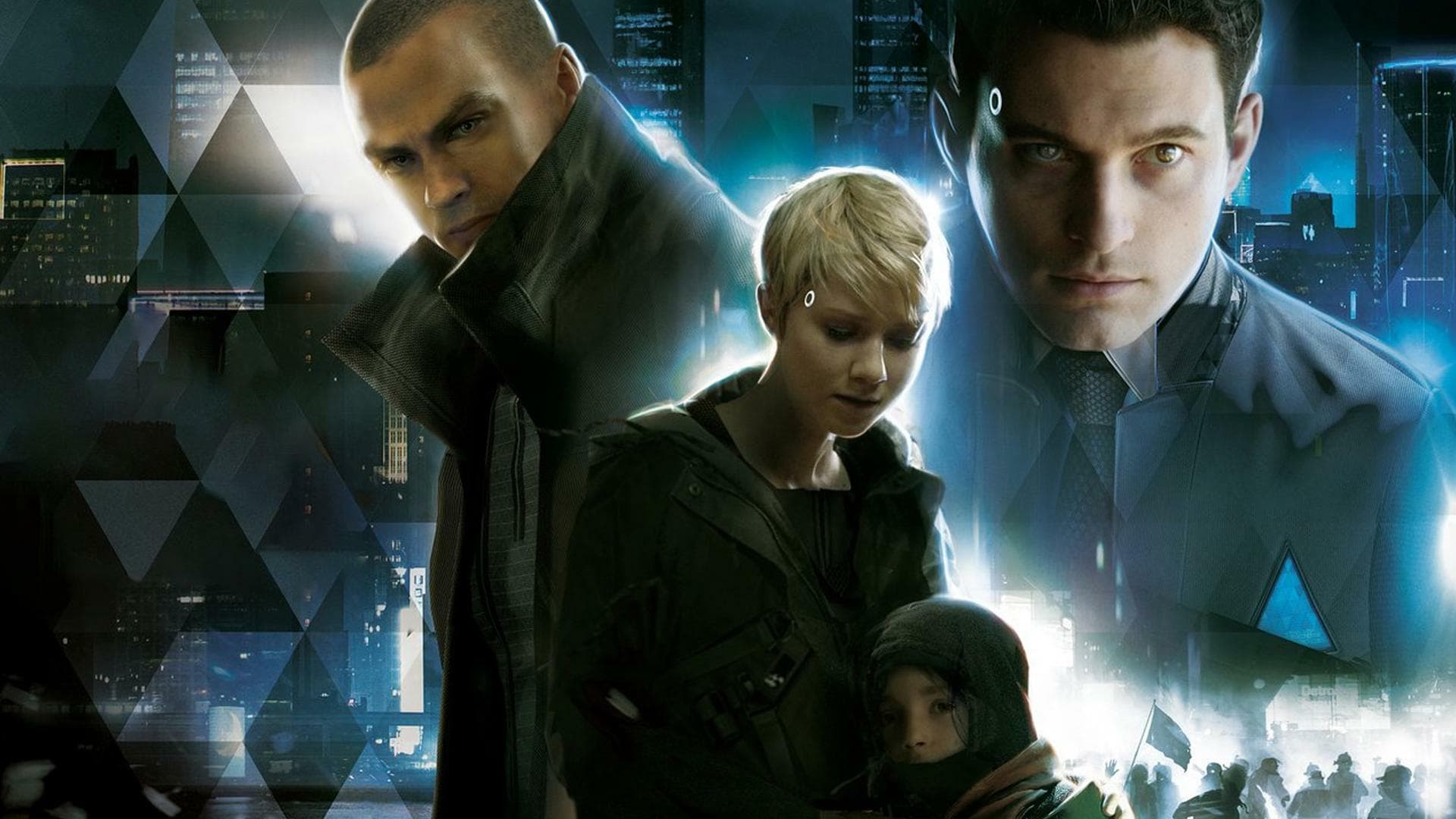
Detroit: Become Human puts players in the roles of three androids navigating a 2038 Detroit where AI has become indistinguishable from consciousness. Every major decision branches the story, and protagonists can die permanently. GPA scores it at the top for Multiple Endings and Text ADV — the combination that identifies a game where the dialogue system is the primary mechanic.
Game Characteristics
Emotional Story
95%
Story Depth
95%
Existential Themes
90%
Visual Novel / ADV
90%
Multiple Endings
90%
Dystopian Setting
60%
Graphics
50%
Dark
40%
High Difficulty
30%
Action
10%
Player profile fit
Recommended for: Beginner to Advanced players (A score of 50 or higher indicates a good fit.)
A Space for the Unbound sets its pixel art mystery in 1990s rural Indonesia, following Atma and Rara as their relationship encounters a supernatural threat. The tone holds grief and warmth simultaneously. GPA scores it high on Emotional Story and Text ADV — a combination that places it in the same cluster as Night in the Woods and similar character-driven adventures.
Tag Similarity
Emotional Story
90%
Story Depth
90%
Existential Themes
75%
Visual Novel / ADV
85%
Multiple Endings
60%
Dystopian Setting
40%
Graphics
75%
Dark
50%
Chart tags: Emotional Story / Story Depth / Existential Themes / Visual Novel / ADV / Multiple Endings / Dystopian Setting / Graphics / Dark
Atlus's 13 Sentinels: Aegis Rim tells a mystery across 13 protagonists in 2180 Japan, assembling the full picture from fragments that arrive out of order. The RTS mech battles are secondary to the visual novel sections. GPA scores it at the top for Story Depth and Text ADV — the combination that identifies it as primarily a reading experience with strategy attached.
Tag Similarity
Emotional Story
95%
Story Depth
95%
Existential Themes
80%
Visual Novel / ADV
85%
Multiple Endings
70%
Dystopian Setting
65%
Graphics
75%
Dark
60%
Chart tags: Emotional Story / Story Depth / Existential Themes / Visual Novel / ADV / Multiple Endings / Dystopian Setting / Graphics / Dark
The Stanley Parable traps an office worker in a loop while a narrator describes his choices in real time, then subverts every decision the player makes. The game's subject is the relationship between player and game. GPA scores it at the top for Existential Themes and Multiple Endings — the combination that describes a game where the act of playing is the content.
Tag Similarity
Emotional Story
70%
Story Depth
75%
Existential Themes
90%
Visual Novel / ADV
80%
Multiple Endings
90%
Dystopian Setting
70%
Graphics
55%
Dark
0%
Chart tags: Emotional Story / Story Depth / Existential Themes / Visual Novel / ADV / Multiple Endings / Dystopian Setting / Graphics / Dark
Mass Effect Legendary Edition packages all three games and 40+ DLC packs in a single 4K collection. Choices made in the first game carry directly into the third. GPA scores it at the top for Story Depth and Multiple Endings — the combination that describes a trilogy where the full weight of decisions is only clear at the end of 120 hours.
Tag Similarity
Emotional Story
90%
Story Depth
95%
Existential Themes
75%
Visual Novel / ADV
80%
Multiple Endings
85%
Dystopian Setting
65%
Graphics
75%
Dark
60%
Chart tags: Emotional Story / Story Depth / Existential Themes / Visual Novel / ADV / Multiple Endings / Dystopian Setting / Graphics / Dark
Lost Judgment expands the detective framework into a high school setting where Yagami investigates bullying and serial murder simultaneously. The club activity system adds social depth between cases. GPA scores it above Lost Judgment (2018) on Story Depth — the investigation structure and social commentary carry more weight in the sequel.
Tag Similarity
Emotional Story
70%
Story Depth
90%
Existential Themes
65%
Visual Novel / ADV
65%
Multiple Endings
50%
Dystopian Setting
30%
Graphics
55%
Dark
55%
Chart tags: Emotional Story / Story Depth / Existential Themes / Visual Novel / ADV / Multiple Endings / Dystopian Setting / Graphics / Dark
NieR Replicant ver.1.22 upgrades the 2010 original with Automata's combat system and expanded lore content. The multiple playthroughs reveal the story's full moral weight incrementally. GPA scores it close to Automata on Existential Themes, with Emotional Story slightly lower — a starting point for players who want the complete Yoko Taro narrative context.
Tag Similarity
Emotional Story
85%
Story Depth
85%
Existential Themes
90%
Visual Novel / ADV
50%
Multiple Endings
75%
Dystopian Setting
75%
Graphics
65%
Dark
70%
Chart tags: Emotional Story / Story Depth / Existential Themes / Visual Novel / ADV / Multiple Endings / Dystopian Setting / Graphics / Dark
AI: The Somnium Files tasks detective Kaname Date with solving a murder by entering suspects' dream worlds to retrieve hidden memories. The Somnium sequences operate on surreal logic. GPA scores it at the top for Text ADV and Multiple Endings — the combination that places it alongside Disco Elysium as a game where reading and investigation are the entire experience.
Tag Similarity
Emotional Story
85%
Story Depth
90%
Existential Themes
75%
Visual Novel / ADV
90%
Multiple Endings
85%
Dystopian Setting
60%
Graphics
70%
Dark
65%
Chart tags: Emotional Story / Story Depth / Existential Themes / Visual Novel / ADV / Multiple Endings / Dystopian Setting / Graphics / Dark
UNDERTALE subverts RPG combat conventions by making the choice not to fight a legitimate and rewarded strategy. The meta-awareness of game conventions runs through every system. GPA scores it high on Multiple Endings and Emotional Story — the combination that identifies a game where the decisions carry genuine moral weight.
Tag Similarity
Emotional Story
95%
Story Depth
85%
Existential Themes
85%
Visual Novel / ADV
70%
Multiple Endings
90%
Dystopian Setting
0%
Graphics
0%
Dark
55%
Chart tags: Emotional Story / Story Depth / Existential Themes / Visual Novel / ADV / Multiple Endings / Dystopian Setting / Graphics / Dark
Judgment follows disgraced defense attorney Takayuki Yagami through a Kamurocho murder investigation that ties into a pharmaceutical conspiracy. The detective mechanics — tailing suspects, drone surveillance — add variety to the brawler combat. GPA scores it high on Story Depth and Emotional Story, with Action above average for the narrative-focused positioning.
Tag Similarity
Emotional Story
70%
Story Depth
85%
Existential Themes
60%
Visual Novel / ADV
60%
Multiple Endings
50%
Dystopian Setting
30%
Graphics
50%
Dark
55%
Chart tags: Emotional Story / Story Depth / Existential Themes / Visual Novel / ADV / Multiple Endings / Dystopian Setting / Graphics / Dark
OneShot tells its player directly that they are the god of this world and Niko is their prophet. GPA scores it high on Existential Themes and Emotional Story.
Tag Similarity
Emotional Story
75%
Story Depth
70%
Existential Themes
80%
Visual Novel / ADV
65%
Multiple Endings
50%
Dystopian Setting
65%
Graphics
50%
Dark
0%
Chart tags: Emotional Story / Story Depth / Existential Themes / Visual Novel / ADV / Multiple Endings / Dystopian Setting / Graphics / Dark
PARANORMASIGHT sets a group of protagonists against each other in Showa-era Tokyo, where each holds a Resentment Curse that can kill — but only under specific conditions. The multi-perspective structure and meta-narrative breaks break through the screen. Square Enix's 2023 release. GPA scores it high on Text ADV and Multiple Endings — the horror visual novel that surprised every expectation set by its publisher.
Tag Similarity
Emotional Story
80%
Story Depth
85%
Existential Themes
70%
Visual Novel / ADV
90%
Multiple Endings
85%
Dystopian Setting
70%
Graphics
60%
Dark
75%
Chart tags: Emotional Story / Story Depth / Existential Themes / Visual Novel / ADV / Multiple Endings / Dystopian Setting / Graphics / Dark
1.2 Oku no 1 is a Japan-specific life simulator built as a spiritual successor to 1 in 8 Billion, developed independently by MNM and released on October 14, 2026. Players are born in one of Japan's 47 prefectures with birth year selectable from 1950 to 2026, with historical events — the Great Kanto Earthquake, WWII, economic bubble, pandemic — occurring on schedule based on the chosen era. Statistical data from Japanese government ministries drives all life events. Free, browser-only. GPA scores it high on Existential Themes and Multiple Endings — the Japan-specific life simulator that adds historical context and regional disparity to the formula 1 in 8 Billion established.
Tag Similarity
Emotional Story
40%
Story Depth
40%
Existential Themes
72%
Visual Novel / ADV
72%
Multiple Endings
88%
Dystopian Setting
10%
Graphics
0%
Dark
0%
Chart tags: Emotional Story / Story Depth / Existential Themes / Visual Novel / ADV / Multiple Endings / Dystopian Setting / Graphics / Dark
1 in 8 Billion simulates a random life from birth to death using statistical data from the UN, WHO, and World Bank across 141 countries. Country of birth, family circumstances, and life events are all determined by real-world probability distributions. Korean solo developer Jin Hwi-eus built the initial version w
Tag Similarity
Emotional Story
40%
Story Depth
40%
Existential Themes
75%
Visual Novel / ADV
72%
Multiple Endings
90%
Dystopian Setting
10%
Graphics
0%
Dark
0%
Chart tags: Emotional Story / Story Depth / Existential Themes / Visual Novel / ADV / Multiple Endings / Dystopian Setting / Graphics / Dark
Papers, Please processes document verification at a fictional Soviet border checkpoint with escalating moral pressure. GPA scores it at the top for Existential Themes and Dark World.
Tag Similarity
Emotional Story
65%
Story Depth
70%
Existential Themes
75%
Visual Novel / ADV
60%
Multiple Endings
70%
Dystopian Setting
85%
Graphics
0%
Dark
75%
Chart tags: Emotional Story / Story Depth / Existential Themes / Visual Novel / ADV / Multiple Endings / Dystopian Setting / Graphics / Dark
Live A Live HD-2D remasters the 1994 SNES cult RPG, preserving its anthology structure of seven standalone stories set across different eras. Each chapter has distinct mechanics. GPA scores it high on Multiple Endings and Story Depth — a positioning that reflects a game where the formal structure is the primary creative statement.
Tag Similarity
Emotional Story
90%
Story Depth
90%
Existential Themes
80%
Visual Novel / ADV
65%
Multiple Endings
70%
Dystopian Setting
55%
Graphics
80%
Dark
60%
Chart tags: Emotional Story / Story Depth / Existential Themes / Visual Novel / ADV / Multiple Endings / Dystopian Setting / Graphics / Dark
Death Stranding asks players to reconnect a post-apocalyptic America by carrying cargo across difficult terrain. Other players' structures appear in your world. GPA scores it high on Existential Themes and Open World, with the lowest Action score among open-world titles — a combination that accurately identifies who this game is and isn't for.
Tag Similarity
Emotional Story
80%
Story Depth
85%
Existential Themes
85%
Visual Novel / ADV
45%
Multiple Endings
50%
Dystopian Setting
80%
Graphics
90%
Dark
60%
Chart tags: Emotional Story / Story Depth / Existential Themes / Visual Novel / ADV / Multiple Endings / Dystopian Setting / Graphics / Dark
Firewatch puts Henry in a Wyoming fire lookout tower in 1989, with Delilah on the radio as his only contact. The forest mystery unfolds through radio conversation and first-person exploration across three days. GPA scores it high on Emotional Story and Story Depth — a walking game where the dialogue does the dramatic work that cutscenes would handle in a larger production.
Tag Similarity
Emotional Story
80%
Story Depth
75%
Existential Themes
65%
Visual Novel / ADV
65%
Multiple Endings
0%
Dystopian Setting
60%
Graphics
75%
Dark
0%
Chart tags: Emotional Story / Story Depth / Existential Themes / Visual Novel / ADV / Multiple Endings / Dystopian Setting / Graphics / Dark
A detective with no memory investigates a murder in a post-apocalyptic harbor town, arguing with 24 internalized skill-voices that comment on every decision. Disco Elysium replaces combat entirely with dialogue and skill checks. GPA's Text ADV and Strategy scores both run high here, reflecting a game where reading and political philosophy are the primary mechanics.
Tag Similarity
Emotional Story
70%
Story Depth
90%
Existential Themes
85%
Visual Novel / ADV
95%
Multiple Endings
75%
Dystopian Setting
80%
Graphics
0%
Dark
0%
Chart tags: Emotional Story / Story Depth / Existential Themes / Visual Novel / ADV / Multiple Endings / Dystopian Setting / Graphics / Dark
The Last of Us Part II follows Ellie's revenge arc and then Abby's perspective on the same events, making players responsible for actions from both sides. The violence is sustained and purposeful. GPA scores it high on Emotional Story and Dark World — the combination that identifies a narrative experience designed to be uncomfortable.
Tag Similarity
Emotional Story
90%
Story Depth
95%
Existential Themes
80%
Visual Novel / ADV
50%
Multiple Endings
40%
Dystopian Setting
60%
Graphics
90%
Dark
75%
Chart tags: Emotional Story / Story Depth / Existential Themes / Visual Novel / ADV / Multiple Endings / Dystopian Setting / Graphics / Dark
About "Detroit: Become Human"
▸Game Composition (GPA Analysis)
デトロイト ビカム ヒューマン leads with its Interactive Drama identity, anchored by the core feel of "Detroit: Become Human puts players in the roles of three androids navigating a 2038 Detroit where AI has become indist…." The headline profile reads Emotional Story 95% / Story Depth 95% / Existential Themes 90%, making it a strong pick for fans of Emotional Story and Story Depth. Accessible enough for newcomers while offering enough depth to satisfy veterans.
▸Characteristics & Analysis
Our editorial team scored "デトロイト ビカム ヒューマン" by using its feel of AI, choice-driven, and branching story as the primary lens, weighting Emotional Story and Story Depth most heavily. Top similar titles include "A Space for the Unbound(心に吹く花)", "十三機兵防衛圏", "The Stanley Parable(スタンリー・パラブル)".
Review — Detroit: Become Human: a story shaped by the choices you make
Game Overview
Detroit: Become Human is an interactive drama set in a near-future Detroit where androids have become part of everyday life. The story follows three androids — Connor, Kara, and Markus — each experiencing the world from a very different position.
The game's defining feature is its branching narrative. Your choices do more than change a line of dialogue. They can alter relationships, change the course of a chapter, determine whether a character survives, and ultimately lead the story in completely different directions.
GPA gives the game 95% for Emotional Story, 95% for Story Depth, 90% for Existential Themes, 90% for Visual Novel / ADV, and 90% for Multiple Endings.
Action is only rated at 10%, while High Difficulty sits at 30%. That tells you a lot about what kind of game Detroit: Become Human is. It is less about mastering combat or character progression and more about following a story, making difficult decisions, and living with their consequences.
Gameplay Analysis
This Is a Game About Making Decisions
The most important part of Detroit: Become Human isn't the number of choices it gives you. It's the way those choices can affect what happens afterward.
You might decide how to respond during a conversation, investigate a location, help someone, take a risk, or play it safe. Some decisions have immediate consequences, while others only become important much later.
And failure doesn't always mean a game over.
A protagonist can die and the story can continue without them. In some cases, the consequences of one character's actions can even affect the stories of the others.
That changes the way you think about mistakes.
Instead of simply reloading whenever something goes wrong, you can accept the outcome and see where your decisions take the story.
Three Characters, Three Different Perspectives
The story follows Connor, Kara, and Markus.
Connor is an android designed to assist human investigators. His story revolves around investigating androids known as deviants while working alongside the human detective Hank Anderson.
Kara is a domestic android who becomes involved in a dangerous situation while trying to protect Alice. Her story focuses more directly on survival, family, and the desire for freedom.
Markus begins as a caretaker before becoming involved in the growing android movement. His story puts the player in a position where they must decide how that movement should fight for its freedom — through peaceful resistance or more violent methods.
Their stories are separate, but they exist within the same world.
More importantly, the choices made in one storyline can affect the others.
This gives the game a different kind of perspective shift. You aren't simply watching several protagonists. You are actively controlling people who can have very different goals and beliefs.
The Important Part of Multiple Endings Is the Journey
GPA's 90% Multiple Endings score isn't simply about having a large number of possible conclusions.
What makes the branching structure interesting is that the story can change long before you reach the ending.
At the end of each chapter, the game shows a flowchart of the route you took, along with branches that were available but not taken. It doesn't necessarily tell you exactly what those other choices would have produced, which makes the flowchart a natural invitation to replay the chapter.
That creates an interesting relationship between replayability and personal choice.
You might replay a scene to see what would have happened differently.
Or you might decide not to.
Sometimes, leaving your original choices untouched is more interesting because that imperfect playthrough becomes your version of the story.
An Android Story About What It Means to Be Human
The game uses androids to explore questions that go beyond the usual “machines versus humans” setup.
What makes someone human?
Is consciousness enough?
If an artificial being can feel fear, form relationships, and make its own decisions, should it still be treated as a machine?
These questions appear throughout the stories of Connor, Kara, and Markus.
The interesting part is that the game doesn't simply give you an answer. Instead, it puts you in situations where your own decisions help determine what these ideas mean for the characters.
Markus, for example, has to decide how far he is willing to go for freedom. Connor has to navigate the tension between following his programming and understanding the androids he is investigating. Kara's story focuses on protecting someone she has come to care about.
The questions are presented through action rather than just exposition.
That is what makes GPA's 90% Existential Themes score particularly fitting.
Why the Game Feels Different in the Age of AI
Detroit: Become Human was created around the idea of highly advanced androids becoming part of everyday society.
Today's AI is obviously very different from the sentient androids depicted in the game. Still, the basic question has become easier to relate to: what happens when technology becomes capable of performing tasks that were once considered uniquely human?
In Detroit, androids work in homes, assist with care, perform dangerous jobs, and take on roles across society.
Their convenience creates new problems as well. Questions about employment, ownership, responsibility, and how humans should treat increasingly capable machines become part of the wider conflict.
The game doesn't provide a direct prediction of the future of AI.
Instead, it uses androids as a way to ask what happens when something created to serve humans begins to demand recognition, freedom, or control over its own existence.
That makes the game's central theme easier to revisit today, even though its fictional technology remains very different from real-world AI.
What the GPA Scores Tell Us
The GPA profile makes the game's strengths particularly clear:
Title tendency chart (Detroit: Become Human)
Emotional Story ◀
95%
Story Depth ◀
95%
Existential Themes ◀
90%
Visual Novel / ADV ◀
90%
Multiple Endings ◀
90%
Dystopian Setting
60%
Graphics
50%
Dark
40%
High Difficulty
30%
Action
10%
* Based on GPA sub-tag scores. Story, choice, and branching items dominate the profile.
The highest scores are concentrated around story, choices, and branching outcomes.
The 10% Action score is equally telling. This isn't a game where improving your combat skills or building a powerful character is the main attraction.
Instead, it is accessible to players who aren't particularly interested in action games but enjoy following characters and making decisions.
At the same time, it isn't an open-world game where you can freely do anything you want.
The freedom comes from a different place: your ability to shape the story within the situations the game presents.
Author's Thoughts
What I find most interesting about Detroit: Become Human isn't simply the number of choices.
It's the way an ordinary decision can come back much later with consequences you didn't expect.
More importantly, the game doesn't always treat a bad outcome as a failure that needs to be erased.
If a character dies, the story can continue.
If you make a decision you later regret, you can live with it and see what happens next.
That makes the player's choices feel more personal.
The three protagonists also help the game maintain that feeling. The same world can look completely different depending on who you're controlling.
You can see humans from an android's perspective, or androids from the perspective of someone investigating them.
You can think of an android as a machine, a companion, a worker, or something closer to a person.
The game doesn't force one simple answer.
Instead, it keeps putting you in situations where you have to decide for yourself.
Conclusion
Detroit: Become Human is a science-fiction adventure about androids, but its core is much simpler: you make the decisions.
Connor, Kara, and Markus experience the same world from very different positions, and the player's choices can change their individual stories as well as the wider narrative.
The flowchart at the end of each chapter reinforces that idea. It shows you the path you took and reminds you that other possibilities were waiting just a few decisions away.
With 95% Emotional Story, 95% Story Depth, 90% Existential Themes, and 90% Multiple Endings, GPA's scores reflect a game built around narrative choice rather than action or character progression.
Detroit: Become Human is at its best when it makes you stop and think about a decision before pressing the button.
And perhaps that is the most interesting thing about playing it: the story isn't simply something you watch.
It's the story you create through the choices you make.